
Main Courses
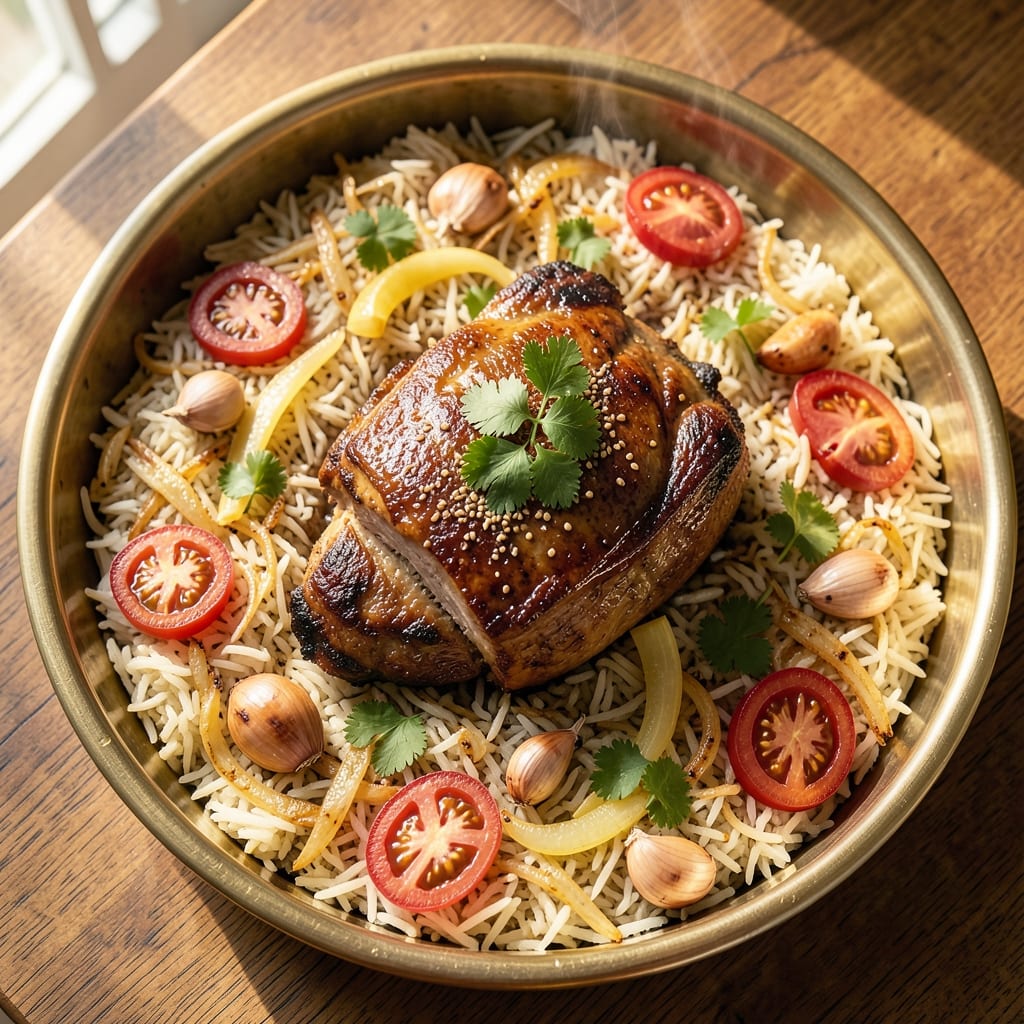
This Arabic kabsa rice recipe delivers the heart of Saudi Arabia's most beloved dish—fragrant, spiced lamb slow-cooked until tender, served over toasted basmati rice perfumed with cardamom, cloves, and cinnamon. The magic lies in the layered spices simmered with tomatoes and onions, creating a rich, aromatic broth that transforms simple ingredients into a restaurant-worthy feast. I've perfected this version to balance traditional authenticity with home-cook simplicity, ensuring every bite delivers the bold flavors of the Arabian Peninsula.
The key to authentic kabsa is patience—allowing the lamb to cook low and slow until it practically falls apart, while the rice absorbs the deeply flavorful broth. Traditional techniques like toasting the rice in ghee before cooking create that signature nutty aroma and firm texture, while the spice blend (baharat) adds layers of warmth that linger long after the last bite. This recipe serves 6-8 and comes together in about 2 hours of active time, with most of that being hands-off cooking.
What you'll end up with is a golden, toasted rice base studded with tender lamb pieces, all drenched in a sauce that's rich yet balanced—sweet from the tomatoes, spicy from the baharat, and deeply aromatic from the whole spices. The dish is complete with charred vegetables on the side, adding smoky contrast to the creamy rice and meat. This is comfort food at its finest, perfect for special occasions or when you want to bring a taste of Arabia to your dinner table.
Whether you're cooking for family gatherings or simply craving a flavorful main course, this kabsa recipe delivers restaurant-quality results with minimal effort. The slow-cooking process means you'll have time to prepare the sides or simply relax while the aromas fill your home. Serve with traditional flatbread or a simple cucumber-yogurt salad to complete the meal. Let's get started on creating this aromatic feast.
Ingredients for arabic kabsa rice
Spiced lamb, fragrant rice, and whole spices—just eight core ingredients transform into Arabia's most beloved dish.
| Ingredient | Amount | Notes |
|---|---|---|
| Lamb Shoulder 🐑 | 3 lb | Bone-in for flavor, cut into chunks |
| Basmati Rice 🍚 | 2 cups | Long-grain, uncooked |
| Ghee 🧈 | ½ cup | For toasting rice |
| Yellow Onions 🧅 | 2 whole | Medium size, thinly sliced |
| Garlic Cloves 🧄 | 8 cloves | Peeled, minced |
| Fresh Tomatoes 🍅 | 4 whole | Ripe, chopped |
| Ground Cumin 🌿 | 1 tbsp | Toasted for depth |
| Ground Coriander 🌿 | 1 tbsp | Freshly ground preferred |
| Ground Cardamom 🌿 | 1 tsp | Whole pods preferred |
| Ground Cloves 🌿 | ½ tsp | Freshly ground |
| Ground Cinnamon 🌿 | ½ tsp | Sweet variety |
| Fresh Ginger 🧅 | 1 ½ tbsp | Grated finely |
| Salt 🧂 | 1 ½ tsp | Kosher or sea salt |
| Black Pepper 🌶️ | ½ tsp | Freshly ground |
| Water 💧 | 4 cups | For rice cooking |
| Fresh Cilantro 🌿 | ¼ cup | Chopped, for garnish |
| Lemon Wedges 🍋 | 2 whole | For serving |
The lamb is the star—look for bone-in shoulder at your butcher or Middle Eastern market. Costco or Whole Foods usually carry good quality, but if you're buying a whole shoulder, ask for it cut into 2-inch chunks. Fresh whole spices (cardamom, cloves, cinnamon) make a world of difference—spice counters at Middle Eastern markets are your best bet, but the regular grocery store stuff works in a pinch. For the basmati rice, Indian or Pakistani brands like India Gate or Tilda are ideal—they're long-grain and stay fluffy. Toast the rice in ghee until it smells nutty—that's where the authentic flavor starts.
No fresh ginger? Substitute with 1 tbsp ground ginger—it's less potent, but works. Running short on lamb? Beef chuck holds up just as well, though the flavor will differ slightly. The tomatoes can be canned (San Marzano if you want to splurge) or fresh—just chop them small so they blend into the sauce. For the baharat spice blend, if you can't find it pre-mixed, combine the individual spices (cumin, coriander, cardamom, cloves, cinnamon) in the ratios listed. The lemon wedges are non-negotiable for serving—Meyer lemons add a touch of sweetness, but regular lemons work too.
This dish tastes even better the next day—make a double batch and freeze portions for up to 3 months. Store the cooked rice and lamb separately in airtight containers. Reheat gently with a splash of water or broth to restore moisture. The spices keep indefinitely in a cool, dark place, but fresh ginger lasts only about 2 weeks in the fridge. For extra authenticity, serve with flatbread and a cucumber-yogurt salad—both pair perfectly and are easy to find at Middle Eastern grocery stores.
Why You'll Love This Recipe
- One-Pan Magic: The lamb and rice cook together—no separate pots, no extra dishes. Just brown the meat, toss in the onions and garlic, then layer the rice on top and let it steam. Honestly, I’ve made this on days when I forgot to take the rice pot out of the cabinet.
- Ghee-Garlic Glow: That first bite? Rich, nutty, and packed with flavor from the ghee caramelizing with onions and garlic. The lamb falls apart so easily, and the rice soaks up all the savory goodness—no dry grains here. Between us, it’s the kind of dish that makes you want to skip dessert.
- Weeknight Workhorse: I keep a bag of basmati rice and a lamb shoulder in my freezer just for this. It’s my go-to for when friends drop by unexpectedly or when I need something hearty for lunch the next day. The leftovers actually taste better—yes, really—because the flavors meld overnight.
- Budget-Friendly Feast: Lamb shoulder is cheaper than you think, and a single roast feeds my family for days. I’ll be real: my kids pick out the best pieces first, but they still ask for seconds. It’s the kind of meal that stretches your grocery money without sacrificing taste—or time.
Step-by-step instructions for Arabic kabsa rice
Here's how to create this fragrant, spice-infused dish that brings the heart of Arabia to your table.
Prepare the Spiced Lamb Shoulder
In a large bowl, combine the 3 lb lamb shoulder with 1 tbsp ground cumin, 1 tbsp ground coriander, 1 tsp ground cardamom, 0.5 tsp ground cloves, 0.5 tsp ground cinnamon, 1.5 tbsp fresh ginger, 1.5 tsp salt, and 0.5 tsp black pepper. Rub the mixture all over the lamb, pressing the spices into the meat so they adhere well. This ensures every bite is packed with flavor.
Let the seasoned lamb sit at room temperature for 30 minutes while you prepare the rest of the ingredients. This step is crucial—it allows the spices to penetrate the meat deeply, creating that signature aromatic kabsa flavor. Meanwhile, thinly slice the 2 whole yellow onions and chop the 4 whole fresh tomatoes into small pieces. Mince the 8 cloves garlic finely for the next step.
Sear the Lamb and Build the Flavor Base
Heat a large, heavy pot (like a Dutch oven) over medium-high heat. Add the 0.5 cup ghee and let it melt completely. Once the ghee is shimmering, add the lamb shoulder in a single layer, searing for 4-5 minutes per side until it develops a deep golden-brown crust. Don't overcrowd the pot—this is where the Maillard reaction happens, creating that rich, caramelized flavor.
Remove the lamb from the pot and set it aside. In the same pot, add the sliced onions and cook for 5 minutes until they begin to soften and turn translucent. Add the minced garlic and chopped tomatoes, stirring for 3-4 minutes until the tomatoes break down into a thick, jam-like consistency. This forms the aromatic base that will infuse the entire dish with depth.
Toast the Rice for Authentic Flavor
Return the seared lamb to the pot and add 4 cups water. Bring the mixture to a gentle boil, then reduce the heat to low and let it simmer for 30 minutes. This allows the lamb to partially cook and infuse the water with its rich flavors. Meanwhile, in a separate large pot, heat 0.25 cup ghee over medium heat. Add the 2 cups basmati rice and toast it for 3-4 minutes, stirring constantly until the rice becomes fragrant and slightly golden. This toasting step is what gives kabsa its distinctive nutty aroma and prevents the rice from becoming mushy.
Once the rice is toasted, add it to the pot with the lamb and liquid. Stir gently to combine, then bring the mixture back to a boil. Reduce the heat to low, cover the pot with a tight-fitting lid, and let it simmer for 25-30 minutes without disturbing it. The rice should absorb all the liquid and become tender but still slightly firm to the bite—this is the perfect texture for kabsa.
Finish and Serve with Fresh Garnishes
After the rice has finished cooking, remove the pot from heat and let it sit, covered, for 5 minutes. This resting period allows the flavors to meld and the rice to steam evenly. Fluff the rice gently with a fork, then stir in the 0.25 cup chopped fresh cilantro. The bright, citrusy notes of the cilantro cut through the rich, spiced lamb and rice, balancing the dish beautifully.
Serve the kabsa hot, directly from the pot, with the 2 whole lemon wedges on the side. The acidity of the lemon brightens the dish and cleanses the palate between bites. For the best experience, serve this hearty meal with warm pita bread or a simple green salad to complement its robust flavors.
Pro Tips For Making Arabic Kabsa Rice
- Sear the Lamb First: After burning three batches of kabsa where the lamb tasted bland, I learned to sear the shoulder in chunks on high heat before slow cooking. The Maillard reaction from those browned bits builds flavor—don’t skip this, even if it means extra cleanup.
- Toast the Rice Dry: Basmati rice needs that initial toast to stay separate. Heat the ghee in the pot until it shimmers, then add the rice and stir constantly for 2-3 minutes—until it’s golden and smells nutty. I used to rush this, and the rice always turned mushy.
- Layer Onions Slowly: Don’t dump all the onions at once. Start with half, cook until deeply caramelized (about 10 minutes), then add the rest. This builds sweetness without burning them—my first attempt left the dish bitter and one-note.
- Use Cold Water for Rice: The rice absorbs better if the water is cold. Measure it precisely (1:1.5 rice-to-water ratio) and pour it in gradually while stirring. I tried room-temp water once, and the rice came out gummy—cold water locks in texture.
Perfect pairings for arabic kabsa rice
Traditional Sides
Serve kabsa with warm pita bread or markook (flatbread) to soak up the flavorful sauce. I love using whole wheat pita from my local Middle Eastern market—it's sturdy enough to hold up to the rich lamb and rice. A cucumber-yogurt salad with diced cucumbers, Greek yogurt, lemon juice, and a pinch of salt adds a refreshing contrast to the spicy dish. 🥗
Vegetable Accompaniments
For extra texture, grill or roast eggplant and zucchini with olive oil, salt, and a sprinkle of sumac until charred. These smoky vegetables complement the creamy rice and tender lamb beautifully. I often serve them on the side to let guests customize their plates. Another great option is steamed greens like spinach or kale, tossed with a squeeze of lemon.
Spiced Yogurt Dip
Create a simple spiced yogurt dip by mixing 1 cup Greek yogurt with 1 tsp ground cumin, ½ tsp ground cardamom, and a pinch of salt. This cooling accompaniment balances the heat of the kabsa and works perfectly with pita bread. For extra flavor, add 1 tbsp chopped fresh mint or cilantro before serving. 🌿
Beverage Pairings
Pair your kabsa with Arabic coffee (qahwa) for an authentic experience. The cardamom-infused brew complements the dish's warm spices beautifully. For a non-alcoholic option, mint lemonade with fresh mint and a touch of honey refreshes the palate. If you prefer beer, a light lager like Al Ahram from Egypt cuts through the richness without overpowering the flavors.
Garnish Ideas
Elevate your kabsa with toasted pine nuts or slivered almonds for crunch. I also like adding fried onions for extra depth of flavor. For a pop of color, sprinkle chopped fresh parsley or dried rose petals (a traditional Middle Eastern garnish) on top. These finishing touches add both visual appeal and subtle flavor enhancements.
Nutrition facts
Frequently asked questions
Can I substitute chicken for lamb in this kabsa recipe?
Chicken thighs work beautifully—they stay juicy and absorb the spices well. Use 4 bone-in thighs (about 2.5 lbs) instead of lamb, and reduce the cooking time to 20 minutes after adding the rice. The flavor profile will be lighter but equally delicious.
Why does the rice need to be toasted in ghee?
Toasting the rice in ghee creates that signature nutty aroma and firm texture that makes kabsa special. The ghee adds richness while the dry toasting prevents the rice from becoming mushy. Skip this step, and you'll miss the authentic flavor and texture that sets kabsa apart from other rice dishes.
How do I adjust this recipe for a slow cooker?
Transfer the seared lamb, onions, garlic, tomatoes, and spices to your slow cooker. Add 4 cups water and cook on low for 6 hours. Then stir in the toasted rice and cook on high for 30 minutes (or low for 1 hour). The rice may need a splash of water if it's too dry. The slow cooker method works well but requires extra liquid to prevent burning.
What's the best way to reheat leftover kabsa?
Reheat gently with 1-2 tablespoons of water or broth per cup of rice. Cover and warm on low heat for 5-10 minutes, stirring occasionally. Microwaving can make the rice dry—this method preserves the moisture and flavor. Leftovers taste even better the next day!
Can I make kabsa with beef instead of lamb?
Yes, but choose beef chuck (about 3 lbs) for best results. Cut it into chunks and follow the same cooking method. The flavor will be richer and slightly gamier than lamb, but equally satisfying. For extra tenderness, consider adding 1 tbsp soy sauce to the marinade.