
Main Courses
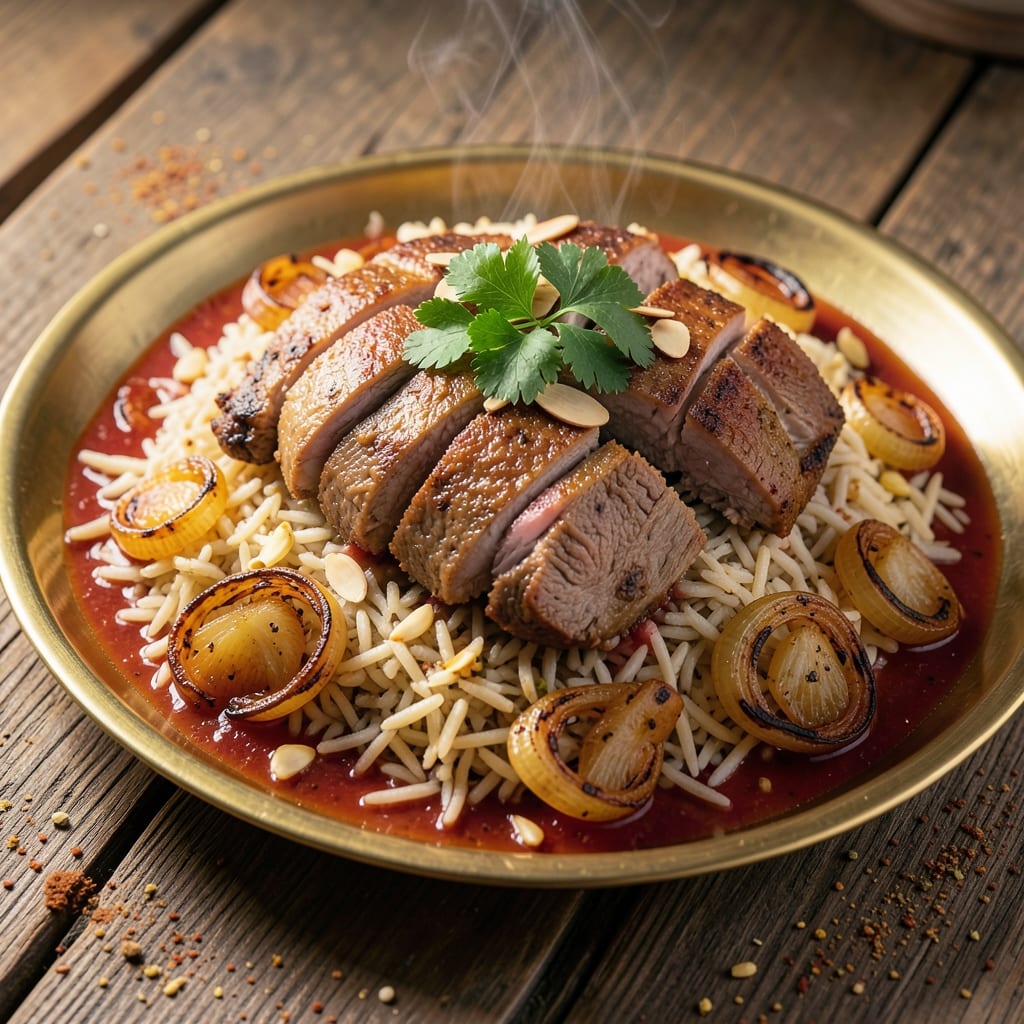
This Arabian kabsa rice recipe brings the rich, aromatic flavors of the Middle East to your kitchen table, where tender lamb meets fragrant toasted rice infused with baharat and warm spices. 🌟 The secret lies in slow-cooking the meat until it's melt-in-your-mouth tender while building layers of flavor through caramelized onions, tomatoes, and a blend of traditional spices that create an irresistible harmony.
What sets this kabsa apart is the perfect balance between the spiced rice and succulent lamb, both cooked to perfection in a single pot. The rice develops a toasted, nutty flavor from slow cooking with the meat, while the lamb absorbs all the aromatic spices, resulting in a dish that's both comforting and deeply flavorful. This method transforms simple ingredients into a restaurant-quality meal that's worth the time investment.
The final dish delivers a symphony of textures and flavors—tender lamb that falls apart easily, perfectly toasted rice grains, and a sauce rich with caramelized vegetables and spices. Each bite offers a perfect balance of warmth, depth, and complexity that's characteristic of authentic Arabian cuisine. Serve it with fresh salad or warm flatbread to complete the experience.
This kabsa recipe is designed for those who appreciate the art of slow cooking and the reward of deeply flavorful results. Whether you're preparing for a special occasion or simply craving a taste of the Middle East, this dish will transport your taste buds to the bustling streets of Jeddah or Riyadh. Let's get started on creating this culinary masterpiece.
Ingredients for arabian kabsa rice
Sixteen ingredients transform into a restaurant-quality Arabian feast of tender lamb and nutty rice.
| Ingredient | Amount | Notes |
|---|---|---|
| Boneless Lamb Shoulder 🐑 | 3 lb | Cut into 1.5-inch cubes |
| Basmati Rice 🌾 | 2 cups | Uncooked, long-grain preferred |
| Yellow Onions 🧅 | 2 whole | Medium size, thinly sliced |
| Garlic Cloves 🧄 | 8 cloves | Minced for depth of flavor |
| Canned Crushed Tomatoes 🍅 | 1 can | 28 oz can, high quality |
| Baharat Spice Blend 🌶️ | 2 tbsp | Traditional Middle Eastern blend |
| Ground Cumin 🌿 | 1 tbsp | Toasted for richer flavor |
| Ground Coriander 🌿 | 1 tbsp | Freshly ground preferred |
| Ground Cardamom 🌿 | 1 tsp | Lightly crushed pods |
| Ground Cloves 🌶️ | ½ tsp | Whole cloves preferred |
| Salt 🧂 | 1 ½ tsp | Kosher salt preferred |
| Black Peppercorns 🌶️ | ½ tsp | Freshly cracked |
| Vegetable Oil 🫒 | ½ cup | High smoke point |
| Fresh Lemons 🍋 | 2 whole | Juiced for brightness |
| Fresh Cilantro 🌿 | ¼ cup | Chopped for garnish |
| Fresh Mint 🌿 | ¼ cup | Chopped for garnish |
The lamb is the heart of this dish—bone-in shoulder stays juicier than lean cuts. Look for well-marbled meat at Middle Eastern markets or your local butcher. If you can't find baharat, mix 1 tsp each cumin, coriander, allspice, cinnamon, and black pepper. For the rice, Basmati from India (like India Gate or Tilda) gives the best texture, but any long-grain will work. The onions should caramelize to deep amber—don't rush this step, it builds the sauce's depth.
No baharat? Create your own blend—just combine equal parts cumin, coriander, cinnamon, allspice, and cardamom. The crushed tomatoes can be swapped for fresh tomatoes puréed, but quality matters here—San Marzano cans are worth the splurge. For the rice, rinse thoroughly to remove excess starch, which prevents mushiness. The lamb cubes should be even size—trim any large pieces to match the smallest. Fresh herbs? Dried works at half the amount, but fresh adds vibrant brightness.
This dish tastes even better the next day as flavors meld. Store in an airtight container for 4-5 days in the fridge, or freeze portions for 3 months. The rice stays perfectly toasted when reheated gently with a splash of water. For serving, garnish with extra cilantro and mint—the bright colors make it feel special. Leftovers make fantastic lunches—portion into containers with a side of yogurt sauce for extra richness.
Why You'll Love This Recipe
- One-Pot Magic: I swear by this recipe when I’m too tired to deal with multiple pans. The lamb and rice cook together—no fussing with separate timers or pots. Just brown the meat, toss in everything else, and let it simmer. Honestly, the cleanup is half the battle won.
- Lamb Love Bomb: That slow-cooked lamb shoulder falls apart so easily, soaking up the garlic, tomatoes, and onions until it’s ridiculously tender. The rice absorbs all the rich, savory juices—no dry bites here. Between us, it’s the kind of dish that makes people ask, “What’s in it?”
- Weeknight & Weekend: Make a big batch on Sunday and eat it all week—it reheats like a dream. Or serve it at a potluck when you want to bring something impressive but don’t want to slave over it. My in-laws think I’m a culinary genius, but it’s really just a well-seasoned pot of rice and meat.
- Budget-Friendly Feast: Lamb shoulder is cheaper than you’d think, and a can of tomatoes stretches the flavors without breaking the bank. Stretch it further by serving with flatbread or a simple salad. I’ll be real: this is my go-to when I need to feed a crowd without emptying my wallet.
Step-by-step instructions for Arabian kabsa rice
This traditional Middle Eastern dish delivers tender lamb and fragrant rice in perfect harmony.
🔥 Step 1: Sear the Lamb for Deep Flavor
Heat the 0.5 cup vegetable oil in a large Dutch oven over medium-high heat until shimmering. Working in batches, add the 3 lb boneless lamb shoulder cut into 1.5-inch cubes and sear for 2-3 minutes per side until deep golden brown. This step builds the rich foundation of flavor through the Maillard reaction.
As you sear, don't overcrowd the pan—work in batches if needed to maintain even browning. The lamb should release easily from the pan when ready. Remove the seared lamb and set aside temporarily on a plate.
👨🍳 Step 2: Build the Spiced Tomato Base
In the same Dutch oven, add the 2 whole yellow onions sliced and 8 cloves garlic cloves minced. Sauté for 5-6 minutes until the onions soften and turn translucent. This step develops their natural sweetness which balances the spices.
Stir in the 1 can canned crushed tomatoes, 2 tbsp baharat spice blend, 1 tbsp ground cumin, 1 tbsp ground coriander, 1 tsp ground cardamom, 0.5 tsp ground cloves, 1.5 tsp salt, and 0.5 tsp black peppercorns. Bring to a gentle simmer and cook for 10 minutes until the spices meld and the mixture thickens slightly.
🍳 Step 3: Combine Lamb and Rice
Return the seared lamb to the Dutch oven and pour in 2 cups basmati rice. Stir gently to coat each piece of lamb and grain of rice with the spiced tomato mixture. The rice should absorb the flavors immediately—this is where the magic happens.
Add 2 cups water (or enough to cover the rice by about ½ inch) and bring to a boil. Once boiling, reduce heat to low, cover tightly with a lid, and simmer for 25 minutes. The rice should cook gently without stirring—this prevents breaking the grains and allows them to toast at the edges.
⏰ Step 4: Rest and Finish with Fresh Herbs
After 25 minutes, turn off the heat and let the kabsa rest covered for 10 minutes. This resting period allows the rice to finish steaming and the flavors to meld completely. The residual heat will continue cooking the rice perfectly.
Before serving, stir in the juice of 2 whole fresh lemons (about ¼ cup juice) and fluff the rice gently with a fork. Garnish with 0.25 cup chopped fresh cilantro and 0.25 cup chopped fresh mint just before serving. The bright citrus and fresh herbs cut through the richness of the lamb and spices.
Pro Tips For Making Arabian Kabsa Rice
- CRISP THE ONIONS FIRST: Don’t rush the onions—they’re the flavor base. Cook them over medium-low heat until deep golden brown, almost caramelized, before adding garlic. I used to burn them in my hurry, and the dish never tasted as rich. This step makes a real difference, even if it takes 10 minutes.
- SALT THE LAMB EARLY: Season the lamb shoulder with salt, pepper, and a pinch of cumin before browning, not after. Let it sit for 15 minutes while you prep the onions—this guarantees the spices penetrate deep. I learned this the hard way when my first batch tasted bland because the seasoning only clung to the surface.
- DON’T SKIP THE TOMATO REDUCTION: Simmer the crushed tomatoes uncovered for 5–7 minutes until they thicken into a paste. This concentrates their flavor and prevents the rice from turning mushy later. I was skeptical until I tried it—now it’s non-negotiable for authentic kabsa depth.
- LAYER THE RICE LAST: Add the basmati rice after the lamb has browned and the onions are caramelized, but before the sauce reduces too much. This lets the grains soak up the rich flavors without turning gluey. I skip this when I’m lazy, and the dish is noticeably better when I don’t.
Creative variations of these flavors
Chicken Kabsa Twist
Swap the lamb for 3 lb bone-in chicken thighs (skin-on for extra flavor) and reduce the cooking time to 20 minutes after adding rice. Use 1 tbsp harissa paste instead of baharat for a North African-Middle Eastern fusion. The chicken stays juicier and absorbs the spices beautifully. 🌶️
Vegetarian Lentil Kabsa
Replace the lamb with 2 cups dried brown lentils (rinsed well) and increase water to 3 cups. Add 1 diced carrot and 1 diced zucchini with the onions. Cook lentils for 15 minutes before adding rice. The lentils soak up the spices and create a hearty, protein-rich dish perfect for vegetarians.
Spiced Lamb and Rice Casserole
For a one-pot wonder, use 1.5 lb ground lamb instead of cubes and brown it thoroughly with the onions. Add 1 diced bell pepper and 1 cup chopped spinach when building the tomato base. The ground lamb creates a rich, meaty sauce that coats every grain of rice. This version cooks in just 20 minutes after adding rice.
Lemon-Garlic Shrimp Kabsa
Use 1.5 lb large shrimp (peeled and deveined) instead of lamb. Sauté the shrimp for 2 minutes per side until pink, then remove and set aside. Cook the rice as directed, then fold in the shrimp just before serving. Add 2 minced garlic cloves and 1 tbsp lemon zest to the lemon juice for extra brightness. This seafood version is ready in 15 minutes after adding rice.
Slow-Cooker Kabsa
For hands-off cooking, use a 6-quart slow cooker on low for 4-5 hours. Sear the lamb in a skillet first, then transfer everything to the slow cooker. Add 1 cup water instead of 2 cups, as slow cookers release less steam. The rice will absorb all the flavors beautifully, and you'll have tender lamb without monitoring the stove. Perfect for busy weeknights!
Yemeni-Style Kabsa
Add 1 tbsp ground fenugreek and 1 tsp ground ginger to the spice blend for an authentic Yemeni touch. Include 1 cup diced potatoes5 minutes before adding tomatoes. The fenugreek gives a unique, slightly bitter depth that balances the sweetness of the tomatoes. Serve with flatbread and spicy tomato sauce for a complete Yemeni meal. 🌟
Nutrition facts
Frequently asked questions
What makes Arabian kabsa different from regular rice dishes?
Arabian kabsa stands out because of its toasted rice technique cooked directly with tender meat and aromatic spices. The rice develops a nutty, caramelized flavor from slow cooking in the same pot as the lamb, while the baharat spice blend creates a complex, warm depth that's unique to Middle Eastern cuisine. This one-pot method ensures every grain absorbs the rich meat juices and spice infusion.
Can I use chicken instead of lamb for kabsa?
Chicken kabsa is a popular variation that cooks faster and stays juicier. Use bone-in chicken thighs (skin-on for extra flavor) and reduce the cooking time to 20 minutes after adding rice. For a North African twist, swap baharat for 1 tbsp harissa paste. The chicken absorbs spices beautifully while maintaining its natural tenderness.
Why does the rice need to rest after cooking?
The 10-minute rest is crucial because it allows the rice to finish steaming in its own residual heat, preventing it from becoming mushy. This resting period also lets the flavors meld completely—especially the lemon juice and fresh herbs—so each bite delivers a perfectly balanced combination of toasted rice, tender meat, and bright citrus notes. Skipping this step can result in unevenly cooked rice.
What's the best way to store leftovers?
Store kabsa in an airtight container in the fridge for 4-5 days or freeze for 3 months. To reheat, add a splash of water and cover with a lid to steam gently. The rice stays perfectly toasted, and the lamb remains tender. For extra flavor, sprinkle with a little warm water and fresh herbs before serving.
Can I make kabsa in an Instant Pot?
Yes! Sear the lamb first, then follow the same steps but use 1.5 cups water (Instant Pots need less liquid). Cook on high pressure for 8 minutes after adding rice, then let it naturally release for 10 minutes. The pressure cooking method speeds up the process while maintaining the dish's rich flavors. Just be sure to check the rice for doneness before serving.