
Main Courses
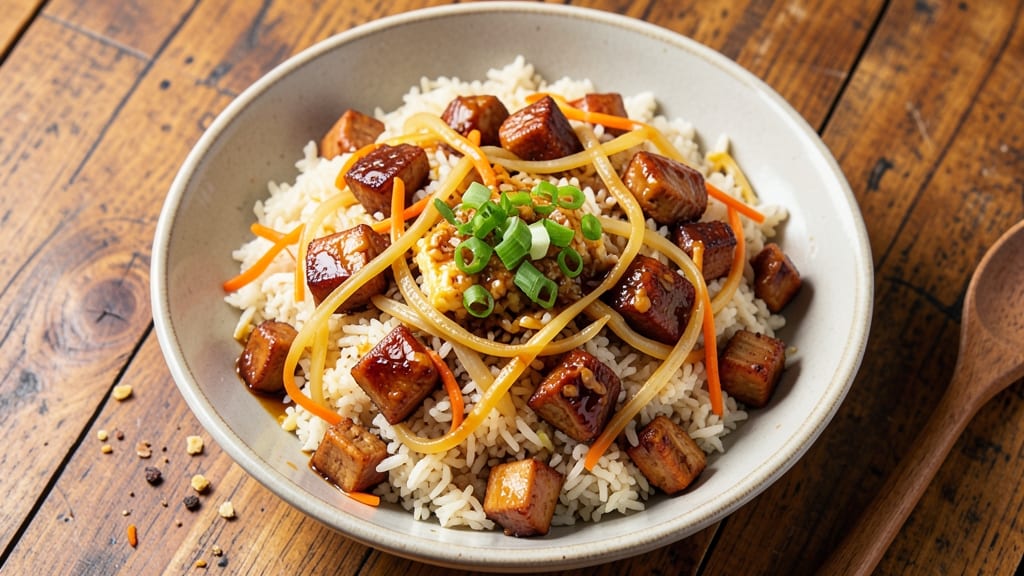
This Chinese restaurant-style pork fried rice delivers the same bold flavors and smoky wok hei you crave at home. The secret lies in high-heat stir-frying, crispy pork, and perfectly seasoned jasmine rice that stays separate yet cohesive.
I've perfected this recipe after years of recreating my favorite takeout dish—every bite delivers that savory, slightly charred taste with a five-spice crunch.
What sets this apart is the technique: day-old rice gets tossed with pork prepped in a five-spice soy sauce marinade, then stir-fried with eggs and vegetables at high heat. The result is restaurant-quality fried rice with tender pork, silky eggs, and aromatic jasmine rice that holds its shape.
It's the kind of dish that transforms a simple weeknight dinner into a flavorful experience worth repeating.
Ingredients for chinese restaurant pork fried rice
Day-old rice, crispy pork, and aromatic five-spice blend create restaurant-style fried rice at home.
| Ingredient | Amount | Notes |
|---|---|---|
| Day-Old Jasmine Rice 🍚 | 4 cups | Cold and broken into pieces |
| Boneless Pork Shoulder 🥩 | 1 lb | Cut into 1-inch cubes |
| Large Eggs 🥚 | 4 whole | Freshly beaten |
| Yellow Onion 🧅 | 1 whole | Thinly sliced |
| Carrots 🥕 | 1 cup | Julienned or finely diced |
| Green Onions 🧅 | ¼ cup | White and green parts separated |
| Vegetable Oil 🫒 | ½ cup | High smoke point preferred |
| Soy Sauce 🥢 | ¼ cup | Light or regular |
| Oyster Sauce 🥢 | 2 tbsp | For umami depth |
| Chinese Five-Spice Powder 🌶️ | 1 tsp | For authentic flavor |
| Garlic Cloves 🧄 | 4 cloves | Minced |
| Sesame Oil 🫒 | 1 tbsp | Toasted for aroma |
| Salt 🧂 | 1 tsp | Kosher or sea salt |
| Black Pepper 🌶️ | ½ tsp | Freshly ground |
| Toasted Sesame Seeds 🌾 | 1 tbsp | For garnish |
The jasmine rice is non-negotiable here—it needs to be day-old for that perfect texture. Lundberg Farms or Jasmine Rice by Mahanidol are my go-tos, but any jasmine rice will work. Break it up into rough pieces before cooking—this helps it absorb flavors better. For the pork, boneless shoulder gives the best texture, but pork tenderloin works in a pinch. Cut it into even 1-inch cubes so they cook uniformly. The five-spice powder is what elevates this from basic fried rice to something that tastes like it came straight from a wok—Penzeys Spices has a great blend, but any authentic Chinese five-spice will do.
No five-spice powder? Mix 1/4 tsp each of cinnamon, star anise, fennel, cloves, and pepper for a DIY version. Substituting pork? Chicken thigh works best—it stays juicy during stir-frying. The green onions are split because you want both the white (for cooking) and green (for garnish) parts. If you can't find oyster sauce, hoisin sauce plus a pinch of MSG gets you close. The sesame oil might seem like an afterthought, but that toasted aroma is what makes it taste restaurant-quality—don't skip it. For extra crunch, toast your sesame seeds in a dry pan until golden before adding.
This dish tastes even better the next day—double the batch and save half for lunch. Store leftovers in an airtight container for 4-5 days in the fridge. Freezes beautifully for 3 months if you want to prep ahead. I always keep a stash of day-old rice in the fridge for quick fried rice nights. The pork and veggies can be prepped the night before and stored separately—just stir-fry when ready. Garnish with the toasted sesame seeds right before serving to keep them crisp.
Why You'll Love This Recipe
- Uses Day-Old Rice: I swear by this trick—day-old jasmine rice is the secret weapon. It’s dry, separates easily, and soaks up that savory pork and egg flavor like a sponge. No sticky mess, just perfect texture every time.
- One-Pan Magic: Between us, this recipe is low-effort in the best way. You brown the pork, scramble the eggs, and toss everything in one pan—no chopping boards to scrub, no extra dishes. Just stir, taste, and repeat.
- Budget Crowd-Pleaser: Pork shoulder stretches far, and you’re using rice that’s already cooked. Honestly, it feeds four for under $10, and my picky-eater friends always ask for seconds. That’s a win for my wallet and my social life.
- Saves Leftovers (Seriously): The flavor deepens overnight—yes, really. I make a double batch on Sundays, and by Wednesday, it’s even better. Pack it for lunch or reheat it with a splash of soy sauce. (Yes, even on a Tuesday night.)
Step-by-step instructions for Chinese restaurant-style pork fried rice
Here's how to recreate that perfect balance of smoky pork, fragrant jasmine rice, and umami-rich sauce.
Prep the Pork and Vegetables for Maximum Flavor
Begin by cutting the 1 lb boneless pork shoulder into 1-inch cubes—this size ensures even cooking without drying out. Pat them dry with paper towels to help them sear properly. In a small bowl, mix together 1 tsp Chinese five-spice powder, ½ tsp black pepper, and 1 tsp salt. Toss the pork cubes in this mixture until fully coated, pressing the spices into the meat so they adhere well.
While the pork marinates, prepare the vegetables. Thinly slice the 1 whole yellow onion and julienne or finely dice the 1 cup carrots into matchstick-sized pieces. Separate the ¼ cup green onions, keeping the white and green parts distinct for different uses later. The smaller the pieces, the faster they'll cook and the more evenly distributed they'll be in your final dish.
Sear the Pork Until Deeply Flavorful
Heat ½ cup vegetable oil in a large wok or skillet over high heat until shimmering. Add the seasoned pork cubes in a single layer, leaving space between each piece to prevent steaming. Let them sear undisturbed for 2-3 minutes until they develop a rich golden-brown crust. This step is critical—it builds the deep, savory foundation of your dish.
Once the pork is browned on one side, stir and cook for another 2-3 minutes until all sides are evenly seared. Remove the pork from the wok and set it aside on a plate. If the oil starts to smoke excessively, reduce the heat slightly but keep it hot enough to maintain a vigorous sizzle. Don't drain the oil; those flavorful browned bits will form the base of your sauce.
Cook the Vegetables and Build the Sauce
In the same wok, add the sliced yellow onion and carrots. Stir-fry over high heat for 2-3 minutes until the onions turn translucent and the carrots begin to soften. Add the 4 minced garlic cloves and cook for another 30 seconds until fragrant—this prevents the garlic from burning and adds a sweet, aromatic depth.
Pour in the ¼ cup soy sauce and 2 tbsp oyster sauce, scraping up any browned bits from the bottom of the wok with a wooden spoon. This deglazing step captures all the pork's caramelized flavors. Let the sauce simmer for 1 minute until it thickens slightly. If the mixture looks too dry, add 1-2 tablespoons of water to loosen it, but aim for a thick, glossy consistency.
Scramble the Eggs and Combine Everything
Push the vegetables to one side of the wok, leaving space in the center. Add the 4 freshly beaten large eggs to the empty space and let them sit undisturbed for 5-10 seconds until they begin to set slightly. Using a spatula, gently scramble the eggs into soft, silky curds—you want them just set but still slightly runny, so they absorb into the rice later.
Add the 4 cups cold day-old jasmine rice to the wok, breaking up any large clumps with your hands. Stir-fry everything together for 2-3 minutes over medium-high heat until the rice is heated through and the eggs are fully incorporated. The rice should be hot but still slightly sticky—this ensures each grain remains distinct rather than mushy.
Finish with Aromatics and Garnish
Lower the heat to medium and drizzle in the 1 tbsp toasted sesame oil. Immediately stir to distribute it evenly—this adds a nutty aroma and balances the dish's richness. Add the white parts of the ¼ cup green onions and toss everything together for 30 seconds to wilt the greens slightly. Taste and adjust seasoning with a splash more soy sauce if needed, or a pinch of salt if the flavors feel flat.
Transfer the fried rice to serving plates and garnish each portion with the remaining green onion tops and 1 tbsp toasted sesame seeds. Serve immediately while still hot and fragrant. The dish should have a perfect balance of textures—crispy pork, tender rice, silky eggs, and crunchy vegetables—with layers of umami, smokiness, and aromatic warmth.
Pro Tips For Making Chinese Restaurant Pork Fried Rice
- CRISP THE PORK FIRST: I used to toss raw pork shoulder straight into the wok with the rice, thinking it’d cook through in the scramble. Wrong. Cut the pork into ½-inch cubes, then sear them in a dry, screaming-hot pan until the edges brown and the inside hits 160°F—about 5-6 minutes. Pull them out, let them rest, and slice against the grain before adding back. That’s what gives restaurant-style fried rice its tender-but-firm texture.
- USE COLD RICE: Day-old rice is non-negotiable, but cold rice is better. Spread your cooked rice on a tray, pop it in the fridge for 2 hours, then break up any clumps with your hands before using. The chill prevents mush and makes the grains separate perfectly when stir-fried. (Yes, even if you’re impatient like me—just don’t skip the fridge step entirely.)
- SCRAMBLE EGGS SEPARATELY: I learned this after one too many batches where the eggs turned into a gluey mess. Push the pork and veggies to one side of the wok, crack the eggs into the empty space, and scramble them fast on medium-high heat until just set—no overcooking. Then mix everything together. The eggs stay fluffy and distinct, not rubbery.
- SAVE THE WOK LIQUOR: After stir-frying the pork and veggies, don’t dump that flavorful oil and fond down the drain. Deglaze the wok with 2 tablespoons of soy sauce and a splash of water, scraping up every last bit of browned goodness. Pour that back over the rice at the end—it’s the difference between "home cook" and "restaurant-quality" depth of flavor. (I know, I know, it’s an extra step—but trust me.)
Wine and beer pairings for chinese restaurant pork fried rice
Light Beer Pairings
For this dish, I always reach for a crisp, light lager like Tsingtata or Asahi Super Dry—their clean, slightly sweet profiles balance the dish's bold flavors without overpowering them. The subtle maltiness complements the pork's savory depth, while the effervescence cuts through the richness.
A Sapporo also works beautifully, especially if you prefer a slightly more neutral beer that lets the fried rice shine. 🍺
Sake for Authentic Harmony
If you're aiming for authenticity, a dry junmai ginjo sake like Dassai 23 elevates the dish to new heights. Its delicate umami notes mirror the five-spice marinade, while the crisp acidity refreshes your palate between bites.
For a more affordable option, Kubota Junmai delivers similar balance without breaking the bank. Serve it slightly chilled to enhance its clarity.
Rice Wine Cocktails
For a fun twist, mix sake with a splash of lychee juice and a squeeze of lime to create a refreshing cocktail that mirrors the dish's sweet-savory profile. I like to add a pinch of Chinese five-spice powder to the rim of the glass for an extra aromatic touch.
This drink pairs perfectly with the fried rice's complex layers, offering a harmonious sipping experience.
Red Wine Contrast
While not traditional, a light-bodied Pinot Noir from China's Yangtze River Valley can work surprisingly well. Look for a Cabernet Franc like Chateau Ste. Michelle—its bright acidity and red fruit notes complement the pork's smokiness. Avoid heavy reds like Cabernet Sauvignon, which would overpower the dish's delicate balance.
Non-Alcoholic Options
For a non-alcoholic pairing, try a jasmine tea infused with toasted sesame seeds—the floral notes mirror the rice's aroma while the sesame adds a nutty harmony. Alternatively, a ginger beer with a hint of lime provides the effervescence and zing needed to cleanse your palate between bites.
Both options keep the meal refreshing without alcohol.
Nutrition facts
Frequently asked questions
Why does my fried rice turn out mushy instead of separate?
Mushy fried rice usually means the rice was too fresh or had too much moisture. Always use day-old jasmine rice—it should be completely cooled and broken into pieces before cooking. Also, avoid overcrowding the wok, and stir-fry over medium-high heat rather than low heat to maintain texture.
Can I make this with chicken instead of pork?
Yes, but use chicken thigh instead of pork shoulder for juicier results. Cut it into 1-inch pieces and marinate with the same five-spice blend. Cook it for 3-4 minutes until golden brown, as chicken cooks faster than pork. The texture will be slightly different but still delicious!
What’s the best way to reheat leftover pork fried rice?
Reheat in a dry skillet over medium heat with a splash of water or soy sauce to restore moisture. Stir frequently to prevent sticking. Microwaving works too, but it can make the rice gummy—add 1 tsp sesame oil afterward to revive the aroma. Leftovers taste even better the next day!
Do I need a wok to make this recipe?
No, a large skillet or deep frying pan works perfectly! Just ensure it has high sides to prevent splatter. For extra wok hei (smoky flavor), crank the heat to maximum and stir-fry in batches if needed. A cast-iron skillet retains heat well for authentic results.
How can I make this vegetarian?
Swap the pork for tofu or mushrooms (shiitake or oyster work best). Press extra-firm tofu to remove moisture, cube it, and pan-fry until crispy. Add 1 tbsp soy sauce and ½ tsp five-spice powder to the tofu while cooking. For extra umami, include 1 tbsp vegetarian oyster sauce in the stir-fry.