
Main Courses
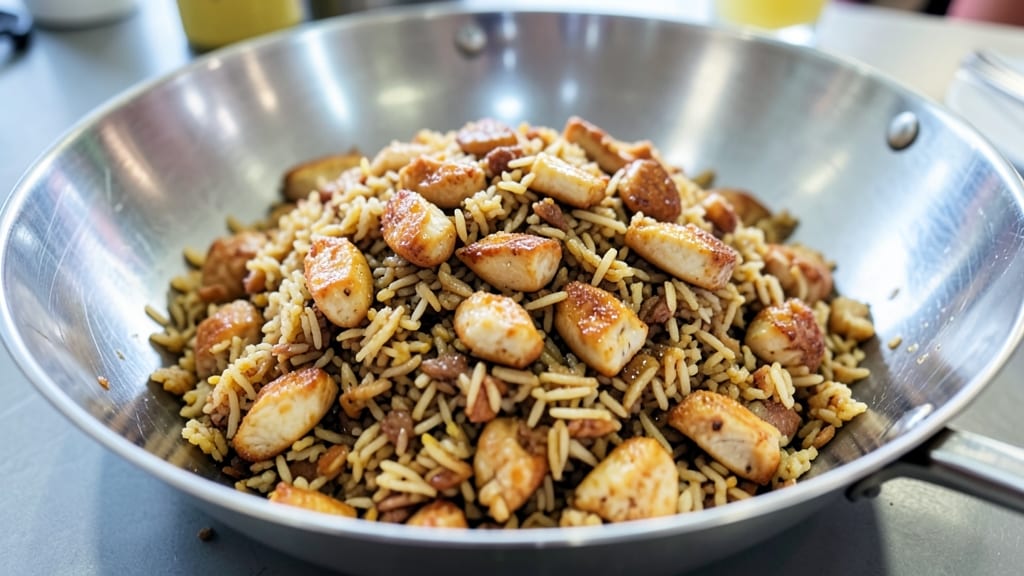
This chicken fried rice recipe list transforms a simple weeknight meal into a flavor adventure that works for any occasion. 🌟 My grandmother's handwritten notes revealed how she elevated basic ingredients into restaurant-worthy dishes using just a few key techniques—high heat, proper seasoning ratios, and fresh ingredients.
Each variation here builds on that foundation while offering something new. The beauty of fried rice lies in its versatility. You can create a classic version with just chicken and eggs, or explore regional twists like Thai basil, Korean gochujang, or Japanese teriyaki.
The base method remains the same: chilled rice, quick stir-frying, and balanced seasoning. I've included time-saving tips throughout, like using day-old rice and pre-cut vegetables, so you can focus on perfecting the technique rather than prep work. What makes these recipes special is their adaptability.
Whether you're feeding a family of four or meal prepping for the week, each variation delivers bold flavors and satisfying textures. The crisp-tender chicken, perfectly cooked rice, and flavorful sauce combination creates a dish that's both comforting and exciting.
Let's explore these five delicious variations that will become your new weeknight staples.
My grandmother always said the secret to great fried rice is in the rice itself—it needs to be cold and slightly dry to achieve that signature texture. That's why I recommend using day-old rice or cooking a fresh batch and spreading it out to cool completely before stirring.
The high-heat stir-frying technique creates the wok hei effect, giving each bite that smoky, aromatic quality that's impossible to replicate with slow cooking. These recipes include everything from classic American-style versions to bold regional adaptations, all while maintaining that essential crisp-tender texture.
Each variation in this list builds on the same fundamental technique but offers a different flavor profile to suit your mood or what's in your pantry. The traditional version delivers that familiar comfort food taste, while the Thai basil and gochujang versions bring exciting international flavors to your dinner table.
I've included ingredient substitutions throughout so you can customize each recipe based on what you have available. The key to success is balancing your seasoning—salty, sweet, sour, and umami all need to come together harmoniously.
What sets these recipes apart is their approachability. You don't need fancy equipment or years of cooking experience to create restaurant-quality fried rice at home. Each variation includes tips for adjusting seasoning to taste and suggestions for adding extra vegetables or proteins.
The goal is to help you create a dish that's not only delicious but also adaptable to whatever you're craving or whatever ingredients you have on hand. Let's get cooking!
Ingredients for chicken fried rice recipe list
Five variations using 15 core ingredients—simple, flavorful, and adaptable for any meal.
| Ingredient | Amount | Notes |
|---|---|---|
| Day-Old Cooked White Rice 🍚 | 4 cups | Cold and slightly dry preferred |
| Boneless Chicken Breast 🍗 | 1 ½ lb | Cut into 1-inch pieces |
| Large Eggs 🥚 | 3 whole | Beaten for stir-fry |
| Yellow Onion 🧅 | 1 whole | Thinly sliced |
| Carrots 🥕 | 2 medium | Julienned or finely diced |
| Green Onions 🧅 | 4 whole | White and green parts separated |
| Fresh Garlic Cloves 🧄 | 6 cloves | Minced |
| Vegetable Oil 🫒 | ½ cup | High smoke point preferred |
| Low-Sodium Soy Sauce 🥢 | ¼ cup | Or tamari for gluten-free |
| Sesame Oil 🫒 | 1 tbsp | For aroma, not cooking |
| White Pepper 🌶️ | ½ tsp | Freshly ground preferred |
| Salt 🧂 | 1 tsp | Adjust to taste |
| Fresh Ginger 🌿 | 1 inch | Peeled and grated |
| Frozen Peas 🌱 | ½ cup | Thawed before using |
| Dried Basil 🌿 | 1 tsp | Or 1 tbsp fresh chopped |
The rice is non-negotiable—day-old works best for that signature texture. Jasmine or basmati rice from Trader Joe's or Whole Foods holds up perfectly. Chicken should be cut into even 1-inch pieces for consistent cooking. Costco often has pre-cut chicken breasts, saving time. Fresh ginger and garlic are worth the extra minute to grate/mince—they make all the difference. For the eggs, separate the whites and yolks if you want to cook them separately for extra texture, but beaten works just fine for this dish. The frozen peas? No need to thaw—they'll soften perfectly during stir-frying.
No fresh ginger? Ground ginger at half the amount works in a pinch, but it lacks that bright zing. Out of soy sauce? Coconut aminos or even a mix of salt and a splash of vinegar gets you close. The dried basil can be swapped for Italian seasoning, but fresh basil (if you're doing a Thai-inspired version) is absolutely essential. For the carrots, baby carrots work great if you're short on time—just slice them lengthwise. The green onions? Use the whites for flavor, the greens for garnish (don't skip this part). And if you're meal prepping, cook the rice and chicken ahead—just reheat with a splash of water to revive the texture.
This dish reheats beautifully—just add a splash of water when microwaving. Keeps for 4-5 days in the fridge, freezes for 3 months if portioned properly. I like to store components separately (rice, chicken, veggies) so I can mix and match flavors. The sesame oil should be added at the very end—it's for aroma, not cooking. For extra crispiness, spread the fried rice on a baking sheet and broil for 2-3 minutes after cooking. And trust me on the day-old rice—fresh rice turns mushy, no matter how much you stir-fry it.
Why You'll Love This Recipe
- I swear by this trick: that stale rice from last night? Perfect. Toss it in cold, and the chicken and eggs turn it into something fresh-tasting instead of sad. No waste, no stress—just better fried rice.
- Here’s what sold me: that first bite where the egg’s still runny in the center but the edges are golden, and the chicken stays juicy despite the stir-fry. The soy sauce and garlic? They make it taste like a restaurant dish, not a weeknight hack.
Step-by-step instructions for classic chicken fried rice
Here's how to transform simple ingredients into restaurant-quality fried rice every time.
🍳 Step 1: Prep and Sear the Chicken
Cut the 1.5 lb boneless chicken breast into 1-inch pieces and season generously with 1 tsp salt and 0.5 tsp white pepper. Heat 0.25 cup vegetable oil in a wok or large skillet over medium-high heat until shimmering. Add the chicken in a single layer and let it sear undisturbed for 2-3 minutes until golden brown on one side.
Flip the chicken and cook for another 2-3 minutes until fully cooked through and slightly crispy. Remove the chicken from the pan and set aside on a plate. You'll want to keep it warm while you prep the rest of the ingredients, but don't let it sit in the hot oil—it'll turn rubbery.
👨🍳 Step 2: Stir-Fry the Aromatics and Vegetables
In the same pan (no need to wipe it clean—those flavorful browned bits are pure gold), add 0.25 cup vegetable oil if needed to coat the bottom. Stir-fry the thinly sliced yellow onion and julienned carrots over high heat for 2-3 minutes until they begin to soften but still retain a slight crunch.
Add the minced garlic cloves, peeled and grated ginger, and the white parts of the green onions (chopped). Cook for 30 seconds until fragrant—you should smell that aromatic punch of garlic and ginger. Then add the thawed frozen peas and stir-fry for another 1-2 minutes until everything is heated through and vibrant in color.
🍳 Step 3: Scramble the Eggs Perfectly
Push the vegetables to one side of the pan and add the 3 beaten large eggs to the empty space. Let them sit for 5-10 seconds until they begin to set slightly at the edges, then scramble quickly with a spatula for 15-20 seconds until just set but still slightly runny—this is key for that classic fried rice texture.
Combine the eggs with the vegetables and stir-fry for 30 seconds to distribute the flavors evenly. Add the green parts of the green onions and the 1 tsp dried basil now—this keeps their freshness intact. The basil adds a bright herbal note that balances the savory chicken and vegetables.
🥘 Step 4: Combine Everything for the Final Stir-Fry
Add the 4 cups day-old cooked white rice to the pan, breaking up any large clumps with your spatula. Drizzle the 0.25 cup low-sodium soy sauce evenly over the rice and toss everything together for 1-2 minutes until the rice is heated through and coated in the sauce.
Return the seared chicken to the pan and stir-fry for another 1-2 minutes until everything is piping hot and well combined. Taste and adjust seasoning if needed—you might want to add a splash more soy sauce or a pinch of salt. The rice should be tender but still have a slight bite, and the chicken should be juicy with crispy edges.
🍽️ Step 5: Finish with Sesame Oil and Serve
Remove the pan from heat and stir in 1 tbsp sesame oil. This is where the magic happens—the sesame oil adds a nutty aroma and rich depth of flavor. Give it one final toss to distribute the oil evenly, then transfer to serving plates immediately.
Garnish with extra green onions if desired, and serve hot with steamed vegetables or a simple side salad. The dish should be vibrant, flavorful, and perfectly balanced—each bite should deliver tender chicken, slightly chewy rice, and a symphony of aromatic vegetables. Leftovers? Not a chance—this disappears fast!
Pro Tips For Making Chicken Fried Rice Recipe List
- Prep Chicken First: Cut the chicken into ½-inch cubes before cooking the rice—it’ll stay juicier and cook faster when you toss it in later. I used to slice it last-minute, and it’d turn out dry by the time everything else was done. Trust me, the 2 minutes of prep now saves your dish later.
- Scramble Eggs Separately: Fry the eggs in a separate pan until just set (soft curds), then chop them into small pieces. Mixing them in raw with the rice makes everything mushy. I learned this after one disastrous batch where my fried rice looked like a sad omelet.
- Use High Heat for Crispy Rice: Get that wok or pan screaming hot before adding oil—you want the rice to sizzle and develop a slight crust. Cold pans mean steamed rice, not fried. I was skeptical until I tried it; now I won’t cook it any other way.
- Chop Carrots Tiny: Dice carrots into ¼-inch pieces or smaller—they’ll soften faster and blend better with the rice. Big chunks stay crunchy and weird. I used to skip this, and my fried rice always had "surprise veggie" moments.
Perfect pairings for chicken fried rice recipe list
Classic Side Pairings
For the traditional version, I always serve steamed bok choy with a sprinkle of toasted sesame seeds—the mild greens cut through the richness beautifully. I grab baby bok choy from the farmers market and steam it for just 4-5 minutes until tender-crisp.
A quick drizzle of rice vinegar and a pinch of salt elevates it without overpowering the fried rice. 🥗
Another reliable option is quick-pickled cucumbers—slice 1 English cucumber into half-moons, toss with 2 tbsp rice vinegar, 1 tsp sugar, and ½ tsp salt, then let sit for 15 minutes.
The cool, tangy crunch contrasts perfectly with the warm fried rice. I make a big batch and keep it in the fridge for snacking too.
Thai-Inspired Garnishes
For the Thai basil version, I love serving Thai iced tea (mix 2 tbsp Thai tea concentrate with 1 cup cold water and ice) alongside crispy shallots for dipping. The sweet, creamy tea balances the dish's heat, while the shallots add crunch.
I find pre-made crispy shallots at the grocery store's international aisle—just 2 tbsp scattered on top adds instant restaurant flair. 🍵
Fresh Thai chili sauce (like Maesri Sriracha) is a must—keep a small bowl on the table so everyone can adjust their spice level. I also add lime wedges because that bright citrus cuts through the richness.
The combination of sweet, spicy, and tangy really makes the Thai basil fried rice shine.
Korean BBQ Sides
When making the gochujang version, I serve kimchi (store-bought or homemade) because its fermented tang complements the sweet-spicy sauce. I heat 1 cup kimchi in a small pan for 2-3 minutes until bubbly, then serve it warm.
The contrast of cool fried rice and warm kimchi is pure magic. 🌶️
A simple cucumber salad with gochujang dressing (mix 1 tbsp gochujang, 1 tbsp rice vinegar, 1 tsp honey, and 1 tsp sesame oil) ties everything together.
The dressing is quick to make and adds another layer of flavor without extra effort. I always double the batch—it disappears fast!
Japanese Teriyaki Extras
The teriyaki version pairs wonderfully with miso soup—just heat 2 cups dashi broth, 2 tbsp white miso paste, and 1 tsp grated ginger until dissolved.
The umami depth of the miso soup complements the sweet-savory teriyaki sauce beautifully. I use Knorr miso soup mix as a shortcut when I'm short on time. 🍜
For something lighter, sunomono salad (Japanese vinegar salad) works perfectly. Toss 1 cup thinly sliced cucumber and 1 cup shredded daikon radish with 3 tbsp rice vinegar, 1 tsp sugar, and ½ tsp salt. The crisp, refreshing flavors cleanse your palate between bites of rich fried rice.
Nutrition facts
Frequently asked questions
Why does my fried rice turn out mushy instead of crispy?
The key is using day-old rice that's completely cooled and slightly dry. Fresh rice contains too much moisture and turns mushy when stir-fried. Spread freshly cooked rice on a tray to cool for 30 minutes before using. Also, avoid overcrowding the pan—cook in batches if needed to maintain high heat.
Can I make chicken fried rice with fresh chicken instead of pre-cooked?
Cook the chicken separately until fully done (165°F internal temp) before adding it to the fried rice. For extra flavor, marinate the chicken in 1 tbsp soy sauce and ½ tsp ginger for 15 minutes before cooking. Just make sure it's completely cooled before mixing with the rice.
What's the best way to reheat leftover chicken fried rice?
Add 1-2 tbsp water per cup of rice to a skillet over medium heat. Stir-fry for 3-4 minutes until heated through, then cover for 1 minute to steam. For microwave reheating, sprinkle with 1 tsp water and cover for 90 seconds. The moisture prevents dryness while restoring texture.
How can I make this dish vegetarian?
Swap the chicken for tofu (press and cube extra-firm tofu, pan-fry until crispy) or mushrooms (shiitake or oyster work best). Add 1 extra egg for protein and boost the vegetable content with bell peppers or broccoli. Use vegetarian soy sauce or coconut aminos for seasoning.
What's the secret to getting that wok hei flavor?
High heat and proper technique create that signature smoky aroma. Use a wok or cast iron skillet over high heat until it's nearly smoking. Cook in small batches, stir constantly, and work quickly—this creates steam that carries flavorful compounds. Finish with sesame oil for that authentic nutty aroma.