
Main Courses
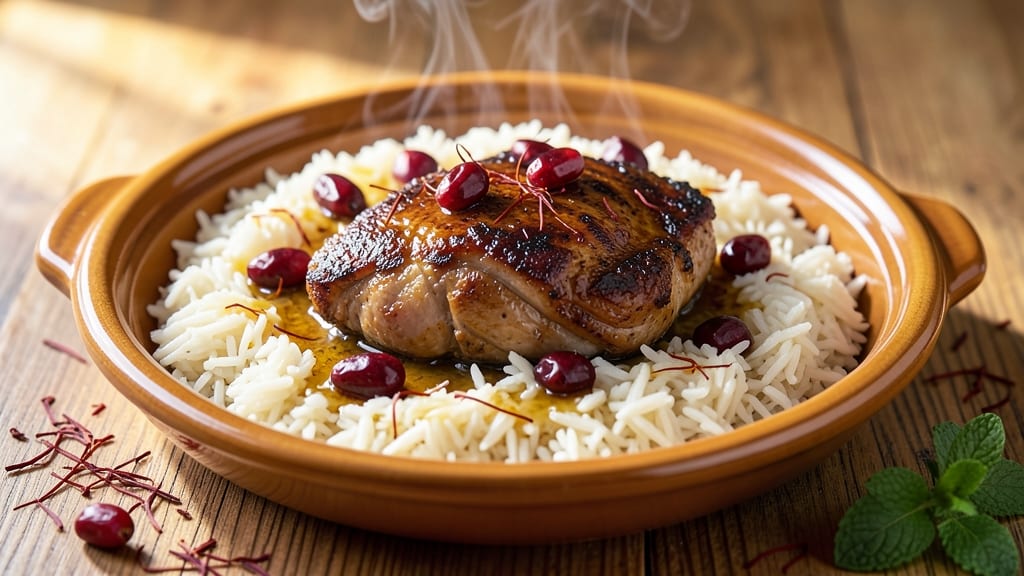
This chelo rice recipe brings the heart of Persian cuisine to your kitchen with its signature saffron aroma and crispy bottom layer. The secret lies in parboiling the rice, layering it with barberries, and steaming it to perfection—creating a dish that’s both elegant and deeply comforting.
Every bite delivers tender grains, toasted barberry bites, and the delicate floral notes of saffron, making it a centerpiece for any meal.
The traditional method ensures authentic texture—crispy at the edges, fluffy inside—while the optional protein (like lamb or chicken) adds richness. Served with sabzi or stewed vegetables, this dish transforms a simple meal into a celebration.
Ready in about 45 minutes, it’s worth the effort for a taste of Iran’s culinary soul.
Ingredients for chelo rice
Authentic Persian flavors start with these carefully chosen ingredients—each playing a role in the signature crunch and saffron aroma.
| Ingredient | Amount | Notes |
|---|---|---|
| Basmati Rice 🌾 | 2 cups | Long-grain, uncooked preferred |
| Saffron Threads 🌼 | ¼ tsp | High-quality, culinary-grade |
| Barberries 🍇 | ½ cup | Fresh or dried, pitted |
| Unsalted Butter 🧈 | 4 tbsp | European-style preferred |
| Water 💧 | 3 ½ cups | Filtered preferred for clarity |
| Salt 🧂 | 1 ½ tsp | Diamond Crystal kosher |
| Lemon Juice 🍋 | 1 tbsp | Freshly squeezed |
| Ground Cumin 🌿 | ¼ tsp | Freshly toasted for depth |
| Ground Turmeric 🌿 | ¼ tsp | Bright, vibrant color |
| Lamb Leg 🐏 | 2 lb | Bone-in, optional protein |
| Garlic Cloves 🧄 | 4 cloves | Peeled, crushed |
| Olive Oil 🫒 | 2 tbsp | Extra-virgin for richness |
The saffron is non-negotiable for authentic flavor—look for culinary-grade threads from specialty stores like Penzeys or reputable Persian markets. Barberries should be plump and vibrant; dried ones need soaking if used. Basmati rice must be long-grain and uncooked for proper texture. For the lamb, bone-in cuts like leg or shoulder are traditional—ask your butcher for Persian-style cuts if available. The European-style butter adds richness that regular butter can't match, and Diamond Crystal kosher salt ensures proper seasoning without overpowering.
No saffron? Turmeric at half the amount adds color but lacks the floral notes—still better than skipping it. Fresh barberries unavailable? Dried barberries work, but soak them in warm water for 15 minutes first. Substituting lamb with chicken thighs is common, but increase cooking time by 15 minutes. For the rice, jasmine rice can work in a pinch, but it won’t achieve the same delicate texture. Olive oil should be extra-virgin—cheap brands can taste bitter and overpower the dish. The lemon juice is essential for brightness; bottled won’t cut it—fresh is a must.
Store uncooked rice in a cool, dark place for up to 6 months. Saffron keeps for 1 year in the fridge if sealed properly. Fresh barberries last 5 days in the fridge, while dried can be stored for 12 months. The cooked rice is best served immediately, but leftovers keep for 2 days in the fridge—reheat gently to preserve the crispy bottom layer. For the lamb, cook it fully and refrigerate within 2 hours of cooking, using within 3 days for optimal texture.
Why You'll Love This Recipe
- I swear by the 1: 2 rice-to-water ratio here—no guesswork, no mushy disappointment. Just rinse the basmati, let it soak while you toast the butter and saffron, and boom. Perfect grains every time.
- Foolproof Ratio: I swear by the 1:2 rice-to-water ratio here—no guesswork, no mushy disappointment. Just rinse the basmati, let it soak while you toast the butter and saffron, and boom. Perfect grains every time.
- Golden Thread Magic: That first pinch of saffron dissolved in warm butter? It turns ordinary rice into something luxurious. The berberries add a tart kick that cuts through the richness—like a little surprise in every bite.
- Weeknight to Dinner Party: Same simple method works whether I’m feeding myself after a long day or hosting guests. Add a protein like chicken or fish, and it’s a showstopper. (Yes, even on a Tuesday night.)
Step-by-step instructions for saffron-infused crunch with toasted barberry bites
Here's the method for achieving authentic Persian chelo rice with vibrant saffron color and nutty barberry crunch.
Prepare the Lamb Leg for Perfect Tenderness
Pat the 2 lb lamb leg dry with paper towels and season generously with 1.5 tsp salt, 0.25 tsp ground cumin, and 0.25 tsp ground turmeric. Let it sit at room temperature for 30 minutes while you prepare the rice—this ensures even cooking. Heat 2 tbsp olive oil in a heavy Dutch oven over medium-high heat until shimmering.
Sear the lamb on all sides for 4-5 minutes per side until developing a deep golden crust. The exterior should be richly browned while maintaining a pink center when cut. Transfer the lamb to a plate and set aside. You'll return it to the pot later, so don't overcook it now.
Infuse the Saffron and Toast the Barberries
In the same Dutch oven, melt 4 tbsp unsalted butter over low heat. Add the 0.25 tsp saffron threads and let them steep in the butter for 5 minutes, stirring occasionally. The butter should develop a beautiful golden hue and subtle floral aroma—this is when the saffron releases its full flavor.
While the saffron infuses, toast the 0.5 cup barberries in a separate dry skillet over medium heat for 3-4 minutes until they darken slightly and release their fruity aroma. Remove them immediately to prevent burning. These toasted barberries will add a delightful crunch and tart contrast to the rice.
Layer and Cook the Rice for Crispy Bottom
Rinse the 2 cups basmati rice under cold water until the water runs clear, then drain well. Add the rice to the saffron butter along with 3.5 cups water and 1 tbsp lemon juice. Stir gently once to distribute the rice evenly—this prevents sticking during cooking.
Bring to a boil over high heat, then immediately reduce to low heat, cover tightly with a lid, and cook for 12 minutes without stirring. The rice should absorb all the liquid while developing a crispy golden layer (tahdig) on the bottom. If you peek, you'll see the rice should be just tender at the edges.
Rest and Assemble the Final Dish
After the initial cooking, turn off the heat and let the rice rest covered for 10 minutes. This resting period allows the steam to redistribute, ensuring each grain is perfectly cooked. While the rice rests, return the seared lamb to the Dutch oven and cook for an additional 15-20 minutes over low heat until reaching an internal temperature of 145°F.
Remove the lamb and let it rest for 10 minutes before carving. Fluff the rice gently with a fork, then transfer it to a serving platter. Arrange the lamb leg at the center and scatter the toasted barberries over the rice. The combination of saffron-infused rice, crispy tahdig, and nutty barberries creates a symphony of textures and flavors that defines authentic Persian chelo.
Pro Tips For Making Chelo Rice
- SOAK RICE 30 MINUTES: I learned this the hard way—skipping the soak makes chelo rice turn mushy instead of fluffy. Use twice the water by volume (e.g., 1 cup rice → 2 cups water), let it sit covered at room temp, then drain thoroughly before cooking. No soggy bottoms here.
- MELT BUTTER LOW AND SLOW: After burning three batches of butter, I finally figured out: melt the unsalted butter on the lowest heat until it’s just liquid—no browning. Then swirl it into the pot after the rice has absorbed most of the water. That golden, nutty flavor sticks better this way.
- STEAM DON’T BOIL BARBERRIES: Toss the barberries in just enough water to barely cover them, then simmer for 5 minutes—no more. Drain and add them to the rice last, right before serving. Overcooking turns them into mush, and you want those tiny bursts of tartness to pop.
- USE A HEAVY POT (YES, IT MATTERS): A thin pot = uneven heat = half-cooked rice. Grab a thick-bottomed, heavy pot—cast iron or stainless steel—so the water heats evenly and the rice steams properly. I was skeptical until I tried it: the texture’s noticeably better, and no sticky bits clinging to the sides.
Make-ahead tips for chelo rice
Prep Ahead for Efficiency
Start by prepping the lamb and rice components the night before. Season the 2 lb lamb leg with salt, cumin, and turmeric, then refrigerate uncovered for 12 hours to enhance flavor penetration.
Rinse and soak the 2 cups basmati rice in cold water for 30 minutes before cooking—this removes excess starch and prevents mushiness. Toast the 0.5 cup barberries ahead of time and store in an airtight container. 💡
Rice Parboiling Shortcut
Parboil the rice in advance to save time. Bring 3.5 cups water to a boil, add the drained rice, and cook for 5 minutes—just until the grains are translucent.
Drain immediately and spread on a tray to cool. Reheat with fresh water when ready to cook, reducing the simmering time to 8 minutes instead of 12 minutes.
Saffron Infusion Hack
Infuse the saffron butter in advance for deeper flavor. Steep 0.25 tsp saffron threads in 4 tbsp melted butter for 30 minutes at room temperature. Store in the fridge and reheat gently before adding to the rice. This method extracts more of the saffron's delicate aroma and color. ✨
Protein Prep Options
For the lamb, choose between two methods: slow-cook the 2 lb lamb leg in the oven at 300°F for 2.5 hours before searing, or marinate it overnight in yogurt with garlic and lemon.
Both approaches yield tender meat that pairs perfectly with the rice. I prefer the overnight marinate for extra juiciness.
Storage for Leftovers
Store cooked chelo rice in an airtight container with a piece of parchment paper between layers to preserve the crispy tahdig. Reheat gently in a steamer over simmering water for 5-7 minutes—never microwave, as it destroys the texture.
The lamb can be reheated separately in the oven at 325°F for 15 minutes.
Freezer-Friendly Assembly
Freeze the rice and lamb separately for up to 3 months. Thaw overnight in the fridge, then reheat the rice in a steamer and the lamb in the oven.
Toast fresh barberries separately before serving to maintain their crunch. This method keeps the dish's integrity intact for future meals. 💫
Nutrition facts
Frequently asked questions
Why does chelo rice have a crispy bottom layer?
The crispy tahdig at the bottom is the soul of Persian rice! It forms when the rice absorbs all the liquid and caramelizes against the pot's surface during the final 12-minute cooking time. The key is using a heavy Dutch oven and keeping the heat low after the initial boil. This creates the signature crunch that makes chelo so special.
Can I make chelo without saffron?
While saffron gives chelo its signature flavor and color, you can substitute with 0.5 tsp turmeric for color and 0.25 tsp cardamom for aroma. However, the dish won't have the same delicate floral notes. For best results, use high-quality saffron—it makes all the difference in authentic Persian cuisine.
What's the best way to reheat leftover chelo?
Never microwave! The texture will turn mushy. Instead, place the rice in a steamer over simmering water for 5-7 minutes to restore the crispy tahdig. For the lamb, reheat separately in the oven at 325°F for 15 minutes with a splash of water to keep it moist. Toast fresh barberries before serving to maintain their crunch.
Can I substitute barberries in chelo? Barberries add a unique tart crunch, but you can substitute with 0.5 cup dried cranberries or 0.5 cup chopped dried apricots if unavailable. For a savory option, try 0.5 cup toasted pomegranate seeds. Just
How do I know when the lamb is perfectly cooked?
Use a meat thermometer to check for doneness—lamb should reach an internal temperature of 145°F for medium-rare. For a bone-in leg, the center should be slightly pink with a thick juicy center. If you don't have a thermometer, cut into the thickest part—the juices should run clear, not red. Let it rest for 10 minutes before carving to retain juices.