Side Dishes
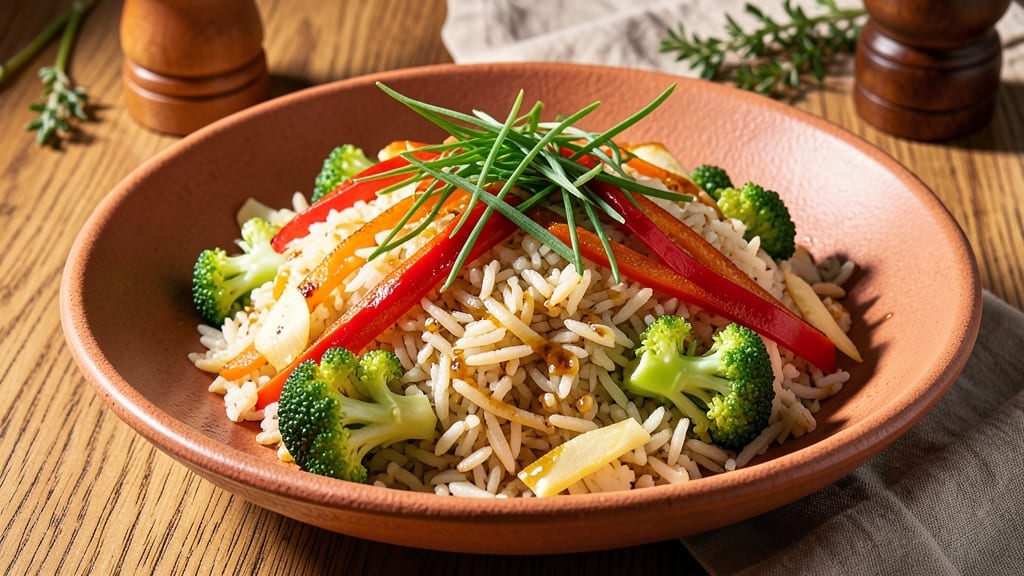
This cauliflower vegetable fried rice delivers crispy rice bites packed with nutty five-spice warmth and vibrant veggies—no wok mastery required. 🌟 The secret lies in perfectly toasted rice that stays separate yet crispy at the edges, thanks to a high-heat stir-fry technique that caramelizes the natural sweetness of cauliflower while keeping everything tender.
I developed this recipe after realizing how many fried rice dishes rely on overcooked rice or soggy vegetables, so I focused on texture first: firm, separate grains with a satisfying bite.
What makes this dish special is the five-spice blend—equal parts aromatic and addictive—which adds depth without overpowering the fresh vegetables. You'll get that signature fried rice crunch without the usual mess, and the cauliflower transforms from bland to crispy and slightly caramelized, absorbing all the savory flavors.
This recipe serves as a complete vegetarian meal or a perfect side for proteins like tofu or shrimp, but the base is designed to shine on its own.
Ingredients for cauliflower vegetable fried rice
Crispy rice bites and aromatic five-spice blend transform cauliflower into a satisfying vegetarian centerpiece.
| Ingredient | Amount | Notes |
|---|---|---|
| Day-Old Jasmine Rice 🍚 | 4 cups | Uncooked, cooled and broken up |
| Fresh Cauliflower 🥬 | 1 ½ lb | Cut into small florets |
| Carrots 🥕 | 1 cup | Julienned or thinly sliced |
| Green Onions 🧅 | ½ cup | Sliced, white and green parts |
| Red Bell Pepper 🍅 | 1 whole | Diced, any color variety |
| Fresh Ginger 🌿 | 1 tbsp | Minced, peeled |
| Five-Spice Powder 🌶️ | 1 ½ tbsp | Homemade or store-bought blend |
| Soy Sauce 🥢 | ⅓ cup | Low-sodium preferred |
| Sesame Oil 🫒 | 1 tbsp | Toasted sesame oil |
| Vegetable Oil 🫒 | ¼ cup | High smoke point |
| Garlic Cloves 🧄 | 4 cloves | Minced, fresh preferred |
| Salt 🧂 | 1 ½ tsp | Diamond Crystal preferred |
| Black Pepper 🌶️ | ½ tsp | Freshly ground |
| Lime Juice 🍋 | 1 tbsp | Freshly squeezed |
| Toasted Sesame Seeds 🌱 | 1 tbsp | For garnish |
The rice is the foundation—day-old Jasmine rice develops the perfect texture when broken up and toasted. Look for long-grain varieties at Whole Foods or Trader Joe's for optimal starch content. Fresh cauliflower should be bright white with no yellowing, and the florets should snap when broken. For the five-spice powder, Penzeys Spices offers a high-quality blend, but any reputable brand with equal parts cinnamon, cloves, fennel, star anise, and Sichuan peppercorn works. The ginger must be freshly minced—pre-minced loses potency quickly, and the flavor is essential for balancing the dish's sweetness and spice.
No fresh ginger? Substitute 1 teaspoon of ground ginger, but expect less complexity. The soy sauce can be swapped for coconut aminos for a gluten-free option, though the flavor profile will differ slightly. If you're using pre-cut cauliflower florets, pat them thoroughly dry before cooking to ensure crispiness. The bell pepper can be omitted if unavailable, but the dish loses its vibrant color and subtle sweetness. For extra crunch, add 1/4 cup of crushed peanuts to the final mix. The sesame oil should be toasted sesame oil—regular sesame oil lacks the nutty depth needed here, and Trader Joe's sells it affordably in bulk.
Store any leftovers in an airtight container for up to 4 days in the refrigerator, though the texture will soften over time. For longer storage, freeze portions for up to 3 months, but reheat gently to preserve the crispy edges. The five-spice powder keeps its potency for up to 6 months in a cool, dark place, but the ginger should be used within 1 week of opening. To maximize crispiness, reheat in a skillet over medium-high heat with a splash of oil rather than microwaving. Garnish with toasted sesame seeds right before serving to maintain their fresh aroma.
Why You'll Love This Recipe
- Here’s what sold me: that perfect contrast of tender cauliflower florets (they soak up the sauce like a sponge) against the crisp-tender bell peppers and shredded carrots. Add a splash of soy sauce and a dash of sesame oil, and you’ve got a flavor that’s ridiculously satisfying without being heavy.
- I’ll be real: cauliflower is my secret weapon for stretching meals. A single head feeds four, and the carrots and bell peppers last forever in the fridge. Plus, day-old rice? That’s free money right there—no waste, no fuss, just flavor. My wallet thanks me every time.
Step-by-step instructions for crispy cauliflower vegetable fried rice
Transform day-old rice into crispy, aromatic bites with this precise method.
🍳 Step 1: Prep and Sear the Cauliflower for Crispy Texture
Cut the 1.5 lb fresh cauliflower into ½-inch florets and pat completely dry with paper towels—this ensures maximum crispiness. Heat 2 tablespoons vegetable oil in a large skillet over medium-high heat until shimmering. Add the cauliflower in a single layer and cook undisturbed for 8-10 minutes until the edges turn golden brown and crispy.
Here's the thing—don't stir too soon. You want those florets to develop a deep caramelization. Once one side is crispy, flip and cook another 5-7 minutes until evenly browned. Transfer to a plate and set aside. Real talk: if you rush this step, your rice will lack that essential crunch.
👨🍳 Step 2: Build the Aromatic Base with Ginger-Garlic-Spice Blend
In the same skillet (no need to clean it—the fond is flavor gold), add the remaining 3 tablespoons vegetable oil over medium heat. Add the 4 minced garlic cloves and 1 tbsp minced fresh ginger and sauté for 1-2 minutes until fragrant but not browned. This is where the five-spice magic begins.
Add the 1.5 tbsp five-spice powder and stir for 30 seconds to toast the spices—you'll smell the warm cinnamon, star anise, and clove notes wafting through your kitchen. This aromatic base will infuse every bite of your fried rice. Watch the heat carefully: spices burn faster than you think.
🥘 Step 3: Stir-Fry Vegetables Until Tender-Crisp
Add the 1 cup julienned carrots, 1 diced red bell pepper, and 0.5 cup sliced green onions to the skillet. Stir-fry for 4-5 minutes over medium-high heat until the carrots soften slightly but retain their shape and the bell pepper becomes just tender. The vegetables should be vibrant and bright—this is their peak texture window.
Season with 1 tsp salt and 0.25 tsp black pepper now. This early seasoning lets the flavors meld before adding the rice. If your vegetables start to stick, add a splash of water and scrape up those flavorful bits from the bottom of the pan—this is called deglazing, and it's non-negotiable for maximum flavor.
🍳 Step 4: Combine Rice and Sauce for Perfect Texture
Add the 4 cups day-old jasmine rice to the skillet, breaking up any large clumps with your hands or a spatula. Drizzle in the 0.33 cup soy sauce and 1 tbsp sesame oil, then toss everything together vigorously for 2-3 minutes until the rice is evenly coated and begins to crisp at the edges. This is where the magic happens—the rice should develop those coveted crispy bits while staying tender inside.
Here's my pro tip: work quickly but don't rush. You want the rice to get hot and crispy without turning mushy. If it starts to stick, add a splash of water—just enough to loosen it. The rice should be hot throughout and the edges should be golden brown with crispy texture. If you're unsure, taste a piece—it should be firm with a slight crunch.
🔥 Step 5: Finish with Lime and Sesame for Bright, Nutty Flavor
Remove the skillet from heat and stir in the 1 tbsp lime juice. The acidity brightens all the flavors and cuts through the richness. Taste and adjust seasoning with additional salt or soy sauce if needed. The dish should be perfectly balanced—salty, sweet, umami, and tangy all at once.
Garnish immediately with 1 tbsp toasted sesame seeds and the remaining 0.25 tsp black pepper. Serve while hot, straight from the skillet. The crispy rice bites will soften slightly as they cool, so eat it while those edges are still crunchy. This dish tastes even better the next day when the flavors have fully melded, but the texture will be less crispy.
Pro Tips For Making Cauliflower Vegetable Fried Rice
- CUT CAULIFLOWER SMALLER THAN YOU THINK: I used to chop cauliflower into big florets, thinking they’d soften faster—wrong. Break it into rice-sized pieces (or smaller) so every bite has that same texture as the jasmine rice. If you’re lazy, pulse it in a food processor for 2 seconds, but don’t overdo it or it’ll turn to mush.
- SAUTÉ CARROTS FIRST, THEN EVERYTHING ELSE: After burning three batches, I finally figured out the order matters. Carrots need 2-3 minutes alone on high heat to soften without turning to sludge. Add the bell pepper and green onions later—they cook fast and stay crisp. (Yes, even if you’re impatient like me.)
- USE DAY-OLD RICE—BUT NOT TOO DRY: Day-old rice is non-negotiable, but if yours is crumbly or dusty, sprinkle 1 teaspoon of water per cup and let it sit for 5 minutes. The goal is slightly sticky, not soggy. I skip this step when I’m lazy, and the dish is noticeably less cohesive.
- STIR-FRY IN BATCHES IF YOUR PAN’S SMALL: Crowding the pan steams the veggies instead of searing them. Work in two batches if needed—start with cauliflower and carrots, push them to the side, then add the rest. Your future self will thank you when the rice isn’t limp. (And no, a bigger pan isn’t always the answer.)
Troubleshooting this dish
Soggy Rice Solution
If your rice turns out mushy, it’s almost always from using fresh rice or not breaking up clumps properly. Always use day-old rice—it’s drier and holds its shape better.
Before adding rice to the skillet, break up any clumps with your hands or a spatula until you have individual grains. If it still looks sticky, spread the rice on a baking sheet and dry it in the oven at 300°F for 10 minutes before cooking.
This trick works every time. 💡
Vegetable Overcooking
Overcooked vegetables lose their crisp-tender texture and turn into a sad, mushy mess. The key is timing—carrots should soften slightly but stay firm, and bell peppers should just yield to a fork. If you notice your veggies wilting too quickly, reduce the heat to medium and stir more gently.
For extra insurance, blanch your vegetables in boiling water for 1 minute before stir-frying to jumpstart their cooking process. This keeps them vibrant and bright. 🥕
Lack of Crispy Edges
Crispy rice edges are all about heat and timing. Make sure your skillet is hot enough—you should see a slight shimmer in the oil before adding the rice. If your rice isn’t getting crispy, increase the heat to medium-high and toss it more aggressively.
For an extra crunch, spread the cooked rice on a baking sheet and broil for 2-3 minutes under the broiler before serving. This revives any lost crispiness. 🔥
Flat or Bland Flavor
If your fried rice tastes bland, it’s likely because the five-spice blend wasn’t toasted enough or the soy sauce wasn’t incorporated properly. Always toast the spices for 30 seconds to release their aromatic oils.
For extra depth, add a splash of fish sauce (if vegetarian, use coconut aminos) or a pinch of white pepper to enhance umami. Taste as you go—seasoning builds up, so start conservatively and adjust gradually. 🌶️
Sticky or Greasy Texture
Too much oil or not enough tossing can make fried rice greasy. Use high-smoke-point vegetable oil (like avocado or grapeseed oil) and measure it carefully—2 tablespoons for cauliflower, 3 tablespoons for the base is plenty.
If it still feels greasy, add a squeeze of lime juice or a sprinkle of toasted sesame seeds to cut through the richness. For a lighter texture, use a nonstick skillet and avoid overcrowding the pan. 🫒
Cauliflower Too Soft
If your cauliflower ends up mushy instead of crispy, it’s likely because it wasn’t dried properly or cooked at the right temperature. Pat the florets thoroughly dry with paper towels before searing, and make sure your skillet is hot before adding them.
For extra crispiness, sear the cauliflower in two batches if needed—this ensures even browning. If it’s still soft, try roasting the cauliflower at 425°F for 20 minutes before stir-frying for a double-crispy effect. 🥬
Nutrition facts
Frequently asked questions
Why does this recipe use day-old rice instead of fresh?
Day-old rice is drier and holds its shape better when stir-fried, preventing that dreaded mushy texture. The starches in freshly cooked rice are still active and release moisture when heated, leading to sticky rice. Plus, the extra time lets the grains firm up for those perfect crispy edges!
Can I substitute cauliflower with another vegetable?
You can try broccoli or Brussels sprouts, but they'll have a different texture and flavor. For the closest match, use 1 cup riced cauliflower (from a food processor) instead of florets. The key is to maintain that crispy contrast with the tender rice—softer veggies like zucchini won't work as well.
How do I make this recipe gluten-free?
Swap the soy sauce for coconut aminos or gluten-free tamari, and use tamari instead of regular soy sauce. Check your five-spice powder for hidden gluten—some blends contain wheat. For extra umami, add 1 teaspoon of nutritional yeast when tossing with the rice.
What's the best way to reheat leftovers?
Reheat in a skillet over medium-high heat with 1 teaspoon of oil to revive crispiness. Add a splash of water if needed, and toss vigorously for 3-4 minutes. Microwaving will make the rice soggy—this method preserves the texture while warming through evenly.
Can I make this dish ahead of time?
Yes! Cook the rice and vegetables separately, then store them in airtight containers for up to 3 days. When ready to serve, reheat the rice and veggies in the skillet with 1 tablespoon oil, then combine with the five-spice blend and soy sauce. The flavors will meld beautifully overnight!