Soups & Stews
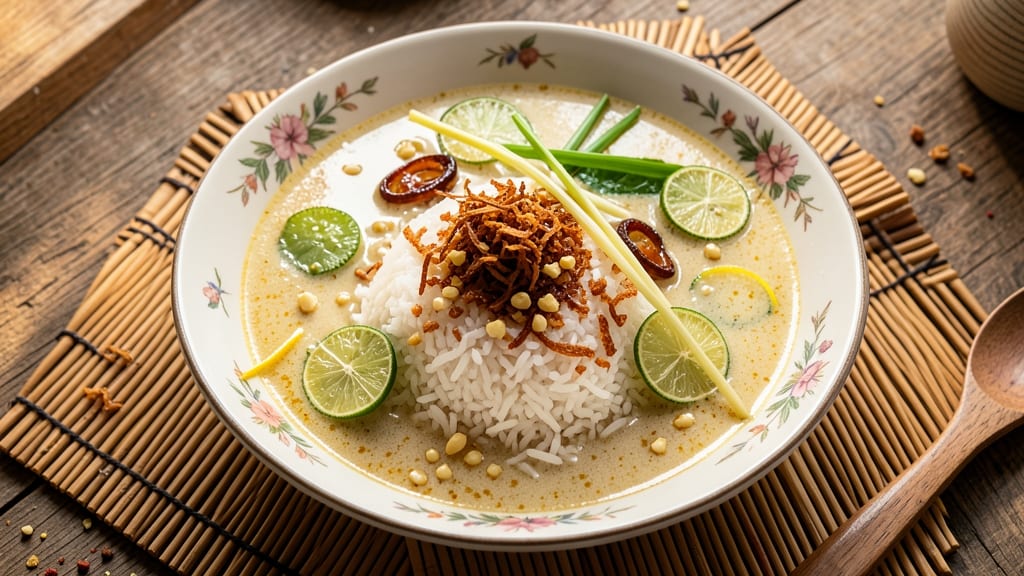
This Cambodian rice soup recipe brings the aromatic soul of Southeast Asia to your kitchen with its fragrant lemongrass and kaffir lime infusion. 🌿 The heart of this dish lies in its delicate balance of tender rice, savory broth, and bright herbs—a comforting bowl that's both traditional and adaptable for modern tastes.
What makes it special is the slow-simmered broth, where lemongrass and kaffir lime leaves infuse their citrusy essence into every spoonful, creating a flavor profile that's uniquely Cambodian.
The result is a nourishing soup where perfectly cooked rice floats in a fragrant, lightly spiced broth, topped with fresh herbs and a squeeze of lime.
Whether you're serving it as a light lunch or a comforting dinner, this recipe delivers restaurant-quality depth with minimal effort—just 45 minutes of hands-on time for a dish that feels like a warm embrace. Let's create this fragrant masterpiece together.
Ingredients for cambodian rice soup
Fragrant lemongrass and kaffir lime leaves create the aromatic soul of this Cambodian rice soup.
| Ingredient | Amount | Notes |
|---|---|---|
| Jasmine Rice 🍚 | 1 cup | Uncooked, rinsed thoroughly |
| Stems Lemongrass 🌿 | 4 whole | Bruised and cut into 2-inch pieces |
| Kaffir Lime Leaves 🍋 | 4 whole | Fresh, outer leaves only |
| Shallots 🧅 | ½ cup | Minced finely |
| Garlic Cloves 🧄 | 4 cloves | Peeled and smashed |
| Coconut Milk 🥥 | 13 ½ oz | Full-fat canned preferred |
| Chicken Stock 💧 | 4 cups | Homemade or low-sodium |
| Fish Sauce 🍶 | 1 tbsp | Red Boat preferred |
| Sugar 🍯 | 1 tbsp | White granulated |
| Lime Juice 🍋 | 2 tbsp | Freshly squeezed |
| Fresh Cilantro 🌿 | ¼ cup | Chopped, for garnish |
| Salt 🧂 | 1 tsp | Kosher or sea salt |
| Black Pepper 🌶️ | ¼ tsp | Freshly ground |
| Vegetable Oil 🫒 | 2 tbsp | For sautéing |
The lemongrass and kaffir lime leaves are non-negotiable for that authentic Cambodian aroma. Asian markets carry fresh kaffir lime leaves year-round, while lemongrass is often in the produce section or frozen aisle. Look for bright green, firm stems with no brown spots. If you can't find fresh kaffir lime leaves, dried will work at half the amount, but the flavor won't be as vibrant. For the fish sauce, Red Boat is my go-to—it's clean and potent, but any reputable brand will do. The coconut milk should be full-fat for the creamiest texture, though light works in a pinch.
No fresh lemongrass? Dried lemongrass powder (found in Asian markets) can replace it, but reduce to 1 teaspoon. Kaffir lime leaves are trickier to substitute—lime zest plus a pinch of lime leaf powder (if you've dried some) is your best bet. For a vegetarian version, swap fish sauce for 1 tbsp soy sauce plus 1 tsp miso paste. The jasmine rice should be long-grain and aromatic—Thai or Vietnamese brands are ideal. If you're short on time, pre-cooked rice works, but fresh-cooked rice absorbs the broth beautifully for that restaurant-quality texture.
Store fresh lemongrass and kaffir lime leaves wrapped in damp paper towels in a sealed bag for up to 5 days. The cooked soup reheats beautifully—just add a splash of water to restore the broth consistency. It keeps for 3-4 days in the fridge, though the rice texture softens over time. For extra flavor, make a double batch and freeze portions. The broth freezes exceptionally well, so you can save it for future soups or rice dishes.
Why You'll Love This Recipe
- One-Pot Magic: I swear by this—just chop, simmer, and walk away. The lemongrass and kaffir lime leaves infuse the broth while you handle the rest, no fancy steps required.
- Herb-Packed Punch: That first spoonful of soup? Chef’s kiss. The garlic and shallots caramelize into sweet depth, while the lime leaves add a bright, citrusy lift—like a hug in a bowl.
- Lunch or Dinner: Between us, this feeds my family for days. Serve it steaming with a fried egg on top for breakfast, or let it cool slightly for a satisfying lunch. (Yes, even on a Tuesday night.)
- Budget-Friendly Staple: Jasmine rice and aromatics stretch into endless bowls, and the flavors only get better the next day. I make a big pot, freeze half, and thank myself later when I’m too tired to cook.
Step-by-step instructions for Cambodian rice soup
Build aromatic layers that transform simple ingredients into a fragrant, comforting Cambodian masterpiece.
🔥 Step 1: Build the Aromatic Base
Heat the 2 tablespoons vegetable oil in a large pot over medium heat until shimmering. Add the 4 whole stems lemongrass (bruised and cut into 2-inch pieces) and 4 whole kaffir lime leaves (outer leaves only). Let them sizzle gently for 1 minute until fragrant—this releases their essential oils and forms the soul of your soup.
Next, add the 0.5 cup minced shallots and 4 smashed garlic cloves. Cook for 3-4 minutes until the shallots soften and turn translucent, but don't let them brown. This gentle cooking preserves their sweetness and prevents bitterness. Stir occasionally to prevent sticking.
🍳 Step 2: Develop the Flavor Foundation
Pour in the 13.5 oz coconut milk and stir to combine with the aromatics. Let the mixture simmer gently for 5 minutes until the coconut milk begins to thicken slightly and the flavors meld together. You'll notice the soup take on a pale golden hue and the lemongrass will release its citrusy aroma.
Add the 4 cups chicken stock, 1 tablespoon fish sauce, and 1 tablespoon sugar. Bring to a gentle boil, then reduce heat to medium-low to maintain a steady simmer. This is where the magic happens—the coconut, fish sauce, and sugar create a perfect balance of creamy, savory, and slightly sweet notes that define Cambodian cuisine.
👨🍳 Step 3: Cook the Jasmine Rice
Add the 1 cup rinsed jasmine rice to the simmering broth. Stir gently to distribute the rice evenly throughout the liquid. The rice should be fully submerged—if not, add a splash of water. Increase heat to medium-high and bring to a boil, then immediately reduce to low heat.
Cover the pot with a tight-fitting lid and let the rice cook undisturbed for 15-18 minutes. You'll know it's ready when the rice grains are tender but still hold their shape, and the liquid has been mostly absorbed. The rice should be plump and slightly sticky, with just a hint of bite remaining. Avoid peeking under the lid—each time you lift it, you release steam and potentially overcook the rice.
⏰ Step 4: Finish and Balance the Soup
Once the rice is tender, remove the pot from heat and let it sit covered for 5 minutes. This resting period allows the rice to finish absorbing any remaining liquid and the flavors to settle. Then, stir in the 2 tablespoons lime juice, 1 teaspoon salt, and 0.25 teaspoon black pepper. Taste and adjust seasoning—you want a harmonious balance of tangy, salty, and aromatic notes.
Gently fold in the 0.25 cup chopped fresh cilantro just before serving. The bright, herbaceous notes of cilantro cut through the richness of the coconut milk and add a fresh finish. Ladle the soup into bowls, making sure each serving has a generous portion of rice and aromatic broth. Garnish with additional cilantro leaves if desired.
🍽️ Step 5: Serve with Traditional Accompaniments
Serve the Cambodian rice soup immediately while it's hot, as the flavors continue to develop and meld together. Traditionally, this dish is enjoyed with a side of fresh herbs like Thai basil or Vietnamese coriander, or with a simple green papaya salad for added crunch and acidity. The soup's creamy coconut broth pairs beautifully with the fresh, vibrant flavors of these accompaniments.
Each spoonful should deliver a complex interplay of textures—creamy coconut milk, tender rice grains, and the bright, citrusy notes of lemongrass and lime. The soup should be aromatic enough to fill the room with its fragrant essence, inviting you to take another bite. This is comfort food at its finest, a taste of Cambodia's rich culinary traditions.
Pro Tips For Making Cambodian Rice Soup
- CHAR THE SHALLOTS FIRST: I learned this the hard way—tossing raw shallots into the pot means they’ll just sit there like sad, pale ghosts. Sear them in 1 tablespoon of oil over medium-high heat until they’re deep golden and slightly crispy (about 5-6 minutes). That caramelized flavor is the soul of the soup—don’t skip it, even if you’re impatient like me.
- BLEND LEMONGRASS STEMS: Tossing whole lemongrass stems into the broth is lazy and leaves you with bland, chewy bits. Pulse 3-4 stems in a food processor until finely chopped (not puréed—you want texture). This releases the citrusy oils without turning the soup into a lemongrass smoothie. Trust me, your taste buds will notice the difference.
- STIR THE RICE CONSTANTLY: I used to add the rice and walk away, only to come back to a pot of glued-together grains. Cambodian rice soup demands attention—stir every 2-3 minutes during the first 8 minutes of cooking to prevent sticking. If you’re really busy, set a timer and treat it like a fussy baby. The result? Fluffy, individual grains instead of a single sad lump.
- USE KAFFIR LIME LEAF JUICE: Tossing in whole kaffir lime leaves and hoping for the best? Skip it. Tear the leaves, bruise them with the back of a knife, then steep in the hot broth for 10 minutes before straining. The juice packs a brighter, more aromatic punch than the leaves alone—like the difference between sipping tea and eating the bag. (Yes, even if you’re skeptical.)
Flavor customization for this dish
Spicy Heat Boost
Add 1-2 teaspoons of chili paste (like Maesri Sriracha or Cambodian prahok chili) to the simmering broth for a fiery kick. For extra depth, stir in ½ teaspoon of ground white pepper or 1 sliced Thai chili in the final minute of cooking.
I like to balance the heat with an extra squeeze of lime—it brightens the palate and keeps the flavors harmonious. 🌶️
Herbaceous Variations
Swap or add fresh herbs for unique twists. Try Thai basil (2 tbsp) for an anise-like aroma, or mint leaves (4-5) for a refreshing contrast. For a smoky note, fold in ½ cup chopped cilantro stems along with the leaves.
If you love complexity, add 1 tsp of toasted lemongrass powder to the finished soup—it deepens the citrusy profile without overpowering.
Creamy Texture Adjustments
For a richer texture, stir in 2 tbsp of coconut cream (the thick part from a can of coconut milk) at the end. If you prefer a lighter version, reduce the coconut milk to 10 oz and add ½ cup light chicken broth to maintain balance.
I’ve also found that 1 tbsp of cashew butter (thinned with broth) adds a velvety finish while keeping the dish dairy-free. 🥥
Protein Swaps
Make this soup vegetarian by omitting fish sauce and adding 1 tbsp soy sauce + 1 tsp miso paste. For protein, stir in ½ cup shredded chicken (poached in the broth) or ½ cup cooked shrimp in the last 5 minutes of cooking.
For a heartier version, add ½ lb of sliced pork belly (simmered until tender) or 1 cup of soft tofu (pressed and cubed).
Sweet-Tangy Balance
Enhance the natural sweetness by adding 1 tsp of palm sugar (or brown sugar) while simmering. For a tangy twist, increase lime juice to 3 tbsp and add 1 tsp of rice vinegar at the end.
I’ve also experimented with ½ tsp of grated ginger in the initial sauté—it adds a subtle warmth that complements the lemongrass beautifully. 🍋
Smoky Depth
Infuse the broth with smoky notes by adding 1 tsp of smoked sea salt (like Maldon) or a ½-inch piece of charred lemongrass (lightly torched over a gas flame).
For a deeper aroma, toast 1 tsp of coriander seeds in the oil before adding shallots. This technique works wonders for adding complexity without altering the dish’s core flavors. ⚡
Nutrition facts
Frequently asked questions
Can I use regular long-grain rice instead of jasmine rice?
While jasmine rice is traditional for its fragrant aroma, you can substitute with long-grain white rice. However, the grains may not be as plump or sticky. For best results, use 1 cup uncooked basmati rice and add ½ cup extra broth to prevent drying. The flavor will still be delicious, just slightly less aromatic.
How do I make this soup vegetarian?
Replace the fish sauce with 1 tbsp soy sauce + 1 tsp miso paste for umami depth. For protein, add ½ cup cooked tofu or ½ cup mushrooms (like shiitake) during the final 5 minutes of cooking. The coconut and herbs will still shine through beautifully.
Why does my Cambodian rice soup taste too bitter?
Overcooking the aromatics (lemongrass or shallots) or using old coconut milk can cause bitterness. To fix it, add 1 extra tablespoon of sugar or ½ tsp of palm sugar while simmering, and balance with 1 extra tablespoon of lime juice. For future batches, remove lemongrass stems after 5 minutes of cooking.
Can I prepare this ahead of time?
Yes! This soup tastes even better the next day. Store in an airtight container for 3-4 days in the fridge. Reheat gently on low heat, adding 2-3 tablespoons of water if the broth thickens too much. The rice may soften further, but the flavors deepen beautifully.
What's the secret to getting perfectly cooked rice in the soup?
The key is patience and proper heat control. Use low heat after boiling, and never peek under the lid while cooking to avoid losing steam. If your rice cooks too fast, reduce the heat to the lowest setting. For extra insurance, use 1 cup cooked rice instead of raw for foolproof results.