Main Courses
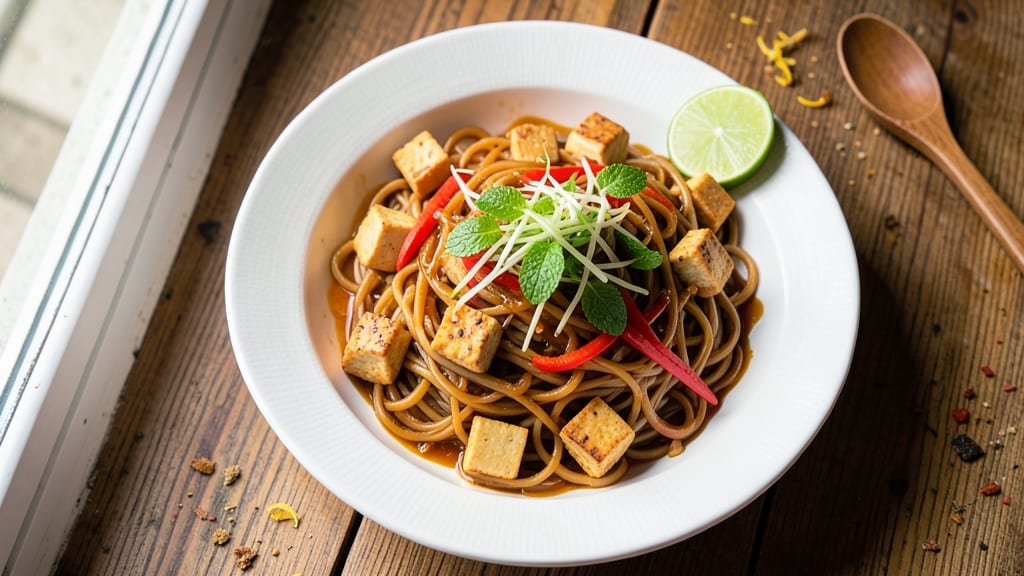
This brown rice Pad Thai noodles recipe transforms traditional Thai street food into a nutritious, protein-packed vegetarian dish without sacrificing that signature tamarind zing.
The key lies in perfectly wok-tossed brown rice noodles that stay chewy yet crisp at the edges, balanced by a vibrant sauce made with tamarind paste, lime, and a touch of maple syrup for depth.
I developed this version after realizing how easily brown rice could replace white rice while keeping the dish's signature texture and flavor—it's the perfect way to enjoy Pad Thai guilt-free.
What sets this recipe apart is the crunchy tofu that mimics traditional shrimp or chicken, combined with fresh vegetables that add both color and texture. The sauce, rich with tamarind's signature tang, is balanced with coconut aminos and a hint of chili for heat.
Every bite delivers a perfect harmony of flavors—sweet, sour, spicy, and umami—while the brown rice adds fiber and heartiness. This is vegetarian Pad Thai done right, with restaurant-quality results at home.
Ingredients for brown rice pad thai noodles
These premium ingredients transform traditional Pad Thai into a vegetarian masterpiece with authentic tamarind zing.
| Ingredient | Amount | Notes |
|---|---|---|
| Brown Rice Pad Thai Noodles 🍜 | 12 oz | Fresh or dried, 3-inch width |
| Extra-Firm Tofu 🍱 | 14 oz | Pressed, cubed for crunch |
| Tamarind Paste 🍋 | ¼ cup | Unadulterated, block or paste |
| Coconut Aminos 🌿 | ¼ cup | Substitute for soy sauce |
| Fresh Lime Juice 🍋 | ⅓ cup | About 3-4 limes, freshly squeezed |
| Pure Maple Syrup 🍁 | ⅛ cup | Grade B for depth of flavor |
| Red Chili Flakes 🌶️ | 1 tbsp | Adjust for heat preference |
| Garlic Cloves 🧄 | 4 cloves | Minced, fresh preferred |
| Fresh Bean Sprouts 🌱 | 2 cups | Rinsed, crisp texture |
| Carrot Julienne 🥕 | 1 cup | Thinly sliced, uniform pieces |
| Red Bell Pepper 🌶️ | ½ cup | Thinly sliced, seeds removed |
| Fresh Cilantro 🌿 | ¼ cup | Chopped, for garnish |
| Sesame Seeds 🌰 | 1 tbsp | Toasted, for crunch |
| Peanuts 🥜 | ⅓ cup | Crushed, unsalted |
| Vegetable Oil 🫒 | ¼ cup | High smoke point for wok |
The tamarind paste is non-negotiable for authentic flavor—look for unadulterated block tamarind at Asian markets or high-quality paste brands like Mae Ploy. Fresh bean sprouts should be bright white and crisp, not yellowed or limp. For the tofu, extra-firm pressed tofu is essential—it holds its shape during frying. If you can't find brown rice Pad Thai noodles, substitute brown rice linguine and reduce cooking time by half. The coconut aminos should be 100% coconut-based with no added sugar, like Kokoro brand for optimal umami balance.
No tamarind paste? A mix of lime juice and brown sugar (1:2 ratio) approximates the tang, though it won't be identical. Fresh bean sprouts wilt quickly—rinse them just before use and pat dry thoroughly. For extra crunch, marinate the tofu cubes in cornstarch slurry (2 tbsp cornstarch + 1 tbsp water) for 15 minutes before frying. The red chili flakes can be swapped for fresh Thai chilies (seeds in for heat), but reduce quantity by half. If you prefer less sweetness, reduce maple syrup to 2 tablespoons and add 1 teaspoon of rice vinegar for brightness.
Store tamarind paste in the fridge for up to 3 months or freeze for longer shelf life. Fresh bean sprouts keep for 5-7 days in the crisper drawer, but use within 3 days for best texture. The cooked noodle mixture reheats beautifully—microwave for 1-2 minutes with a splash of water to restore crispness. For meal prep, store sauce components separately and assemble just before serving to maintain freshness. The tofu stays crispy for 2 days refrigerated if stored in a single layer on parchment paper.
Why You'll Love This Recipe
- No-Fuss Assembly: I swear, this comes together faster than takeout—just toss the pre-cooked brown rice noodles with tofu, a splash of coconut aminos, and that tangy tamarind paste. The hardest part? Deciding who gets the last bite.
- Umami Bomb: That combo of tamarind and coconut aminos? It’s like a flavor explosion in your mouth—sweet, salty, and just a little funky. Honestly, I’d eat it plain if I had to.
- Lunchbox Hero: Between us, these noodles reheat like a dream—crispy tofu, chewy noodles, and no soggy edges. Pack them cold for work or warm them up in 90 seconds, and you’ve got a meal that’ll make your coworkers jealous.
- Budget Win: Tofu’s cheap, tamarind paste lasts forever, and you’re using brown rice noodles instead of white. I made four servings for under $8, and my wallet and my taste buds are happy.
Step-by-step instructions for wok-tossed brown rice Pad Thai
Master the art of wok-tossing with this precise method for vibrant, tamarind-infused noodles.
Prepare and Press the Tofu for Maximum Crunch
Begin by draining the 14 oz extra-firm tofu and wrapping it tightly in a clean kitchen towel. Place a heavy object like a cast-iron skillet on top for 15 minutes to remove excess moisture. This pressing step is crucial—it ensures your tofu develops that satisfying crunch when cooked.
Once pressed, unwrap the tofu and cut it into 1-inch cubes. I like to score the surface lightly with a sharp knife before cubing—this creates more surface area for browning. Keep the tofu cubes on a wire rack while you prepare the remaining ingredients to prevent sogginess.
Create the Tamarind-Glazed Sauce Base
In a small bowl, whisk together the 0.25 cup tamarind paste, 0.25 cup coconut aminos, 0.33 cup fresh lime juice, 0.125 cup pure maple syrup, and 1 tbsp red chili flakes. This sauce is the heart of your Pad Thai—tamarind provides that signature tangy depth while maple syrup balances with natural sweetness. Taste and adjust the balance of sweet, sour, and heat to your preference.
Set the sauce aside while you prepare the vegetables. The acidity in the tamarind will mellow slightly as it sits, so don't worry if it tastes intensely sour at first. This resting period also allows the flavors to meld slightly before they hit the hot wok.
Cook the Tofu and Aromatics in the Wok
Heat a wok or large skillet over medium-high heat until a drop of water sizzles violently when added. Add the 0.25 cup vegetable oil and swirl to coat. Working in batches if needed, add the pressed tofu cubes and cook for 4-5 minutes until golden brown on all sides. Remove the tofu and set aside on a paper towel-lined plate.
In the same wok, add the 4 cloves minced garlic and cook for 30 seconds until fragrant—don't let it brown or it'll turn bitter. Immediately add the 1 cup carrot julienne and 0.5 cup red bell pepper, stirring constantly for 2 minutes until the vegetables begin to soften but retain their vibrant color. This quick cooking preserves their crisp texture.
Assemble and Wok-Toss the Noodles
Return the cooked tofu to the wok along with the tamarind sauce. Stir vigorously for 1 minute to coat everything in the sauce. Add the 12 oz brown rice pad thai noodles and toss continuously for 2-3 minutes until they're evenly coated and heated through. The noodles should be tender but still hold some bite—this ensures they don't turn mushy.
Add the 2 cups fresh bean sprouts and toss for another 30 seconds. The sprouts will wilt slightly but maintain their signature crunch. Taste the mixture and adjust seasoning if needed—you may need to add a splash of water or more coconut aminos to achieve the perfect balance of sauce to noodle ratio.
Finish and Garnish for Restaurant-Quality Presentation
Remove the wok from heat and stir in the 0.33 cup crushed peanuts and 1 tbsp toasted sesame seeds. The residual heat will lightly toast the peanuts, enhancing their flavor. Divide the Pad Thai among four serving plates and immediately garnish with the 0.25 cup chopped fresh cilantro.
Serve while steaming hot, with additional lime wedges on the side. Each bite should deliver perfect texture contrast—crispy tofu, chewy noodles, crunchy sprouts and peanuts—all bound together by that vibrant tamarind sauce. The dish should be balanced in sweet, sour, salty, and spicy flavors with no single element overpowering.
Pro Tips For Making Brown Rice Pad Thai Noodles
- Press Tofu Properly: Skip the soggy tofu trap—wrap the extra-firm block in a clean kitchen towel, place it between two heavy pans, and press for 15 minutes. This removes excess moisture so it absorbs the sauce instead of turning your pad thai into a watery mess. (Yes, even if you’re impatient like me.)
- Prep Tamarind Paste: Tamarind paste is sticky business—measure it by weight (about 2 tablespoons) and dissolve it in ¼ cup hot water first. Stirring it into cold liquid later? You’ll end up with clumps that ruin the sauce’s silky texture. Trust me, this step makes a real difference.
- Cook Noodles Al Dente: Brown rice noodles turn mushy fast—test them 1 minute before the package says. They should still have a slight bite; they’ll soften more when tossed with sauce. Overcooking them is the fastest way to turn your dish into a sad, gluey pile. (Your future self will thank you.)
- Balance Sauce with Lime: Add lime juice after the sauce hits the noodles, not before. Start with 1 tablespoon, taste, then adjust—coconut aminos are salty, and tamarind’s tartness needs that bright cut. Too much lime upfront? You’ll regret it when the dish tastes one-note.
Creative variations of this recipe
Spicy Thai Chili
For those who love heat, add 1 tbsp fresh Thai bird's eye chilies (seeds in) to the wok with the garlic. Remove them after 10 seconds—just enough to infuse the oil with their fiery essence.
Finish with an extra ½ tsp red chili flakes—trust me, this version will wake up your taste buds! 🌶️
Sweet Coconut Twist
Swap ½ cup coconut milk—light, not heavy—for part of the sauce (replace ¼ cup water—if needed). Simmer this with the tamarind sauce for 2 minutes—it creates a luscious, velvety texture that pairs beautifully with the brown rice.
Garnish with toasted coconut flakes for extra tropical flair.
Mushroom Umami Boost
Sauté 1 cup sliced shiitake mushrooms—stems removed—with the garlic. Their earthy depth adds umami that rivals traditional shrimp. For extra richness, sprinkle 1 tsp soy sauce—or coconut aminos—over the mushrooms before adding them to the wok.
Crispy Rice Noodle Upgrade
For a restaurant-style crunch, pan-fry ½ cup dried brown rice noodles—separate from the main batch—in 1 tbsp oil—until golden and crispy. Scatter these over the finished Pad Thai like edible confetti. This trick adds a satisfying textural contrast that elevates the dish instantly. ✨
Peanut Sauce Fusion
Blend ¼ cup crushed peanuts, 1 tbsp peanut butter, 1 tsp maple syrup, and 1 tsp lime juice—just enough to make a thick paste.
Drizzle this over the finished Pad Thai and toss gently. The peanut sauce adds a creamy, nutty dimension that balances the tangy tamarind perfectly.
Herb-Infused Vinaigrette
Whisk 2 tbsp lime juice, 1 tbsp coconut aminos, 1 tbsp chopped Thai basil, and 1 tsp honey—for a bright, herbaceous dressing.
Drizzle this over the assembled noodles just before serving. It’s a refreshing twist that lets the brown rice shine while keeping the dish light and vibrant. 💛
Nutrition facts
Frequently asked questions
Can I use regular brown rice instead of brown rice noodles?
While you can incorporate cooked brown rice into the dish, it won't replace the noodles' signature texture. For best results, use brown rice Pad Thai noodles or brown rice linguine (cook for half the time since they're thicker). If you want to add rice, serve it on the side or mix in ½ cup cooked brown rice at the end for heartiness. The noodles are key for that perfect wok-tossed texture!
How do I make the tamarind sauce less sweet?
Reduce the maple syrup to 1 tablespoon and add 1 teaspoon rice vinegar or extra lime juice to brighten the tang. For more umami depth, stir in ½ teaspoon coconut aminos after cooking. Taste as you go—the sauce should balance sweet, sour, and savory without being cloying. Adjust gradually to avoid overpowering the dish.
Why is my tofu not crispy?
Crispy tofu requires proper pressing (15+ minutes with weight) and high heat. If it's still soggy, try this fix: Toss pressed tofu cubes in 1 tablespoon cornstarch before frying, then cook in batches at medium-high heat until golden brown. Avoid overcrowding the pan—work in small batches for even browning. The tofu should stay crisp for 2-3 days if stored properly.
Can I make this ahead of time?
Prepare components separately for best results: Cook the sauce and store it in the fridge for 3 days, press and cube the tofu (keep refrigerated), and chop all vegetables. Assemble and cook fresh to maintain crispness. If reheating, microwave for 1-2 minutes with a splash of water to restore texture. Never reheat the tofu—make it fresh for maximum crunch.
What's the best way to store leftovers?
Store the cooked noodle mixture in an airtight container for up to 3 days. Keep the sauce and garnishes separate. Reheat only the noodles (without tofu) in the microwave for 1-2 minutes, then add fresh tofu and garnishes when serving. For longer storage, freeze the sauce in ice cube trays and the noodles separately for up to 1 month. Thaw overnight in the fridge.