
Salads
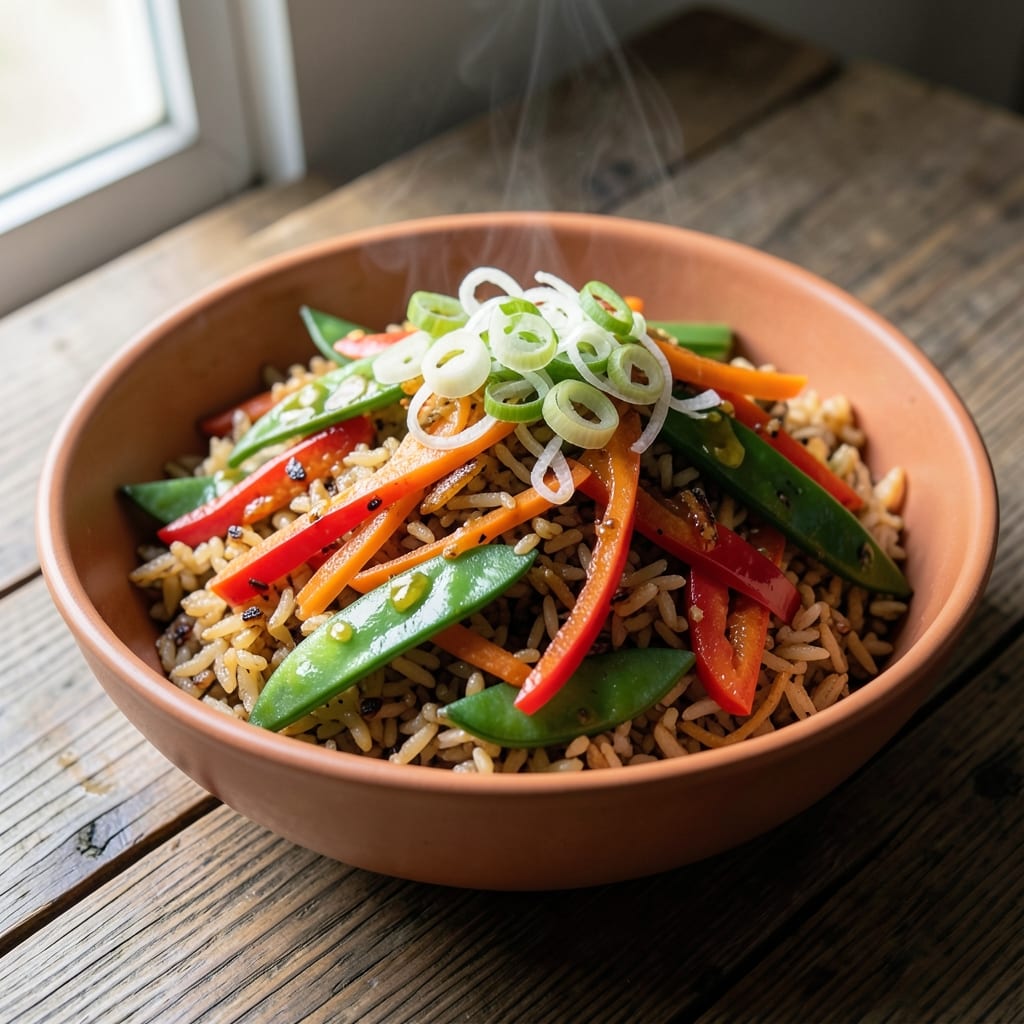
This Asian vegetable fried rice recipe transforms simple ingredients into a vibrant, restaurant-quality dish using the day-old rice trick. The key to perfect texture lies in using slightly stale rice that absorbs flavors beautifully while staying separate. I developed this recipe after realizing how much better homemade fried rice tasted compared to takeout—it's all about the technique and balance of fresh vegetables, aromatic seasonings, and a touch of protein.
The foundation of this dish is a proper stir-fry method that creates wok hei—those signature smoky, charred notes that elevate every bite. We'll use a combination of bell peppers, carrots, peas, and snap peas for color and crunch, all tossed in a savory sauce made with soy sauce, sesame oil, and a hint of ginger. The addition of scrambled eggs or crispy tofu adds protein without overpowering the vegetable medley, making this dish both satisfying and balanced.
What you'll achieve is a fragrant, colorful fried rice with perfectly cooked grains that stay distinct yet flavorful. The vegetables will be tender-crisp, the sauce will coat each bite evenly, and the overall flavor profile will be a harmonious blend of umami, sweetness, and freshness. This recipe is designed to be adaptable—swap in your favorite vegetables or proteins to make it your own while keeping the core technique intact.
The best part? This dish comes together in under 20 minutes, making it perfect for weeknight dinners or meal prep. Serve it as a main dish with a side of miso soup or as a light lunch with a simple salad. Here's everything you need to create this vibrant, flavorful fried rice at home.
Ingredients for asian vegetable fried rice
Day-old rice and vibrant veggies—this wok-fired medley delivers restaurant-quality flavor in minutes.
| Ingredient | Amount | Notes |
|---|---|---|
| Day-Old Cooked White Rice 🍚 | 4 cups | Cold or room temperature preferred |
| Bell Peppers 🧅 | 1 ½ cups | Red, yellow, or green, diced |
| Carrots 🥕 | 1 cup | Julienned or thinly sliced |
| Snap Peas 🌱 | 1 cup | Fresh or frozen, thawed |
| Green Onions 🧅 | ½ cup | Thinly sliced, white and green parts |
| Fresh Ginger 🧄 | 1 tbsp | Finely grated, aromatic |
| Sesame Oil 🫒 | 1 tbsp | Toasted, for aroma |
| Low-Sodium Soy Sauce 🍶 | 2 tbsp | For umami depth |
| Vegetable Oil 🫒 | 2 tbsp | High smoke point preferred |
| Scrambled Eggs 🥚 | 2 whole | Cooked separately, cut into chunks |
| Garlic Cloves 🧄 | 2 cloves | Minced for aromatic base |
| Salt 🧂 | ½ tsp | Kosher or sea salt |
| Black Pepper 🌶️ | ¼ tsp | Freshly ground |
| Sesame Seeds 🌾 | 1 tbsp | Toasted for garnish |
The rice is non-negotiable—day-old or slightly stale works best. Leftover rice from last night's dinner is perfect, or cook extra rice the day before. For the veggies, fresh snap peas add that signature crunch, but frozen works in a pinch—just thaw and drain well. Bell peppers should be firm and colorful; skip the pre-diced bags at the store—they're often waxy. Trader Joe's has great pre-sliced carrots if you're short on time, but julienne them yourself for better texture. The ginger? Fresh is a must—ground ginger won't give that bright, zesty kick.
No sesame oil? Toasted peanut oil adds a similar nutty depth. Short on snap peas? Green beans or edamame work beautifully—just cut them small so they cook quickly. The eggs are optional but add protein—silken tofu scrambled with a pinch of turmeric makes a great vegan swap. For the soy sauce, low-sodium is key—you can always add more, but you can't take it out. And if you're feeling fancy, swap the regular sesame seeds for black sesame seeds—they've got a deeper, nuttier flavor that pairs perfectly with the dish.
This keeps for 3 days in the fridge, but honestly, it's even better the next day as the flavors meld. Portion into containers for easy lunches—just reheat with a splash of water to keep it moist. For freezing, lay a paper towel on top before sealing to prevent sogginess. And here's a pro tip: toast your sesame seeds in a dry pan for 30 seconds before adding them—they'll be extra fragrant and add that wok hei aroma. Make a double batch; it disappears fast around here!
Why You'll Love This Recipe
- I’ll be real: carrots, bell peppers, and rice won’t break the bank, but they feel like a fancy meal. The umami from a little soy sauce or fish sauce (if you’re feeling fancy) turns simple veggies into something that tastes like it belongs on a restaurant menu. Plus, it’s the kind of dish that stretches into lunch the next day—no guilt, just satisfaction.
- No Leftovers Wasted: I swear by this trick—day-old rice is made for fried rice. That extra rice from last night’s dinner? Perfect. No sad, soggy rice here, just crispy edges and fluffy centers every time. (Yes, even if you’re the kind of person who forgets to eat half your plate.)
- Crowd-Pleaser Crunch: Between us, the snap peas and bell peppers add that just-right texture—crunchy enough to wake up your taste buds, but tender enough to disappear in one bite. Toss in those green onions at the end, and suddenly you’ve got a dish that even picky eaters can’t resist.
- One-Pan Magic: Honestly, this is the kind of recipe that makes me feel like a pro. One pan, five minutes of chopping, and boom—dinner’s done. The carrots soften just enough to caramelize, while the peppers stay bright. Minimal cleanup, maximum flavor. (My sink thanks me every time.)
Step-by-step instructions for Asian vegetable fried rice
Here's how to transform day-old rice into a vibrant, flavor-packed wok medley with perfect texture every time.
🍳 Step 1: Prep and Sear the Aromatics
Heat a wok or large skillet over medium-high heat until smoking hot. Add the 2 tablespoons vegetable oil and swirl to coat the pan completely. Toss in the 2 cloves minced garlic cloves and 1 tablespoon finely grated fresh ginger, stirring constantly for 30 seconds until fragrant—you'll smell that fresh, zesty aroma that's the soul of this dish.
Here's the thing—don't let the garlic burn. It should just sizzle and turn golden, not darken. If it starts to brown too quickly, reduce the heat slightly. Add the 1.5 cups diced bell peppers and 1 cup julienned carrots, stirring and cooking for 3-4 minutes until they begin to soften but still retain a slight crunch. This step builds the flavor foundation while keeping the vegetables vibrant.
🍳 Step 2: Cook the Vegetables and Eggs Separately
Push the cooked vegetables to one side of the wok, leaving space in the center. Add another 1 tablespoon vegetable oil to the empty space. Pour in the 2 whole scrambled eggs and scramble them quickly until just set—soft curds, not rubbery. Here's my trick: I like to keep the eggs slightly undercooked so they melt into the rice later, creating that perfect creamy texture.
While the eggs cook, add the 1 cup snap peas to the vegetables and stir-fry for 2 minutes until they brighten in color. Remove everything from the wok and set aside. This separation prevents overcooking the vegetables while we handle the rice separately—keeping everything crisp and vibrant.
🍳 Step 3: Stir-Fry the Day-Old Rice
In the same wok, increase heat to high and add the 4 cups day-old cooked white rice, breaking up any clumps with a spatula. Stir-fry vigorously for 3-4 minutes until the rice is heated through and begins to sizzle—you'll hear that satisfying sound of rice hitting the hot pan. This is where the magic happens: the day-old rice absorbs the oil and develops that perfect wok-hei flavor.
Add the 2 tablespoons low-sodium soy sauce and 0.5 teaspoon salt, stirring constantly to coat the rice evenly. Taste a grain—it should be seasoned but not salty. If needed, add a splash of water to help distribute the sauce. This is the moment that matters: the rice needs to be fully coated with sauce but still retain its individual grains.
🥘 Step 4: Combine Everything and Finish
Return the cooked vegetables and scrambled eggs to the wok with the rice. Add the 0.5 cup thinly sliced green onions and toss everything together for 1-2 minutes until everything is evenly distributed and heated through. Here's where it gets fun—taste and adjust seasoning with 0.25 teaspoon black pepper if needed. The dish should be balanced: savory from the soy sauce, slightly sweet from the vegetables, and fresh from the green onions.
Turn off the heat and stir in the 1 tablespoon toasted sesame oil and 1 tablespoon sesame seeds. This final touch adds depth and texture—you'll smell that nutty, toasty aroma that makes this dish irresistible. Serve immediately while still hot, garnished with extra sesame seeds if you're feeling fancy.
⏰ Step 5: Rest and Serve with Confidence
Let the fried rice sit for 1-2 minutes before serving—this allows the flavors to meld together. The rice should be slightly sticky but with distinct grains, the vegetables should be tender-crisp, and the eggs should be creamy. If it looks a bit dry, add a splash of water or a drizzle of sesame oil to loosen it up.
This vibrant wok-fired medley delivers all the flavors of an Asian street food stall in one perfect bowl. Each bite should offer a symphony of textures and tastes: the slight chew of day-old rice, the crunch of fresh vegetables, the creaminess of eggs, and that umami punch from the soy sauce. Serve with extra green onions on the side for garnish if you like—it's always better with a little freshness on top.
Pro Tips For Making Asian Vegetable Fried Rice
- STIR-FRY IN BATCHES: Don’t toss everything in at once—start with the carrots and bell peppers first (they need 2-3 minutes to soften), then add snap peas and green onions last (they cook in under a minute). I learned this the hard way when my peas turned into mush because I was impatient and dumped everything in together.
- USE COLD, DRY RICE: Spread your day-old rice on a tray and let it sit uncovered for 10 minutes before frying—this removes excess moisture so it sizzles instead of steams. I used to skip this and end up with sad, limp rice. (Yes, even if you’re in a rush.)
- SALT THE RICE FIRST: Toss the rice with ½ teaspoon salt before frying—it distributes evenly and enhances flavor as it cooks. I was skeptical until I tried it; now I can’t imagine making fried rice without this step. (Protein or egg? Add salt then too.)
- SAVE TIME WITH PRE-CUT VEGGIES: Buy pre-cut stir-fry veggie mixes (carrots, bell peppers, snap peas) to shave 15 minutes off prep—just rinse and chop the green onions fresh. I skip this when I’m lazy, but the dish is noticeably better when I don’t. (Your future self will thank you.)
Creative variations of this dish
Thai-Inspired Spicy Twist
Transform your fried rice into a Thai-inspired dish by adding 1 tbsp red curry paste (like Maesri or Thai Kitchen) when stir-frying the vegetables. Toss in ½ cup chopped Thai basil and 1 tbsp fish sauce (or soy sauce for vegetarian) at the end. Top with crushed peanuts and a squeeze of lime for that signature Thai street-food vibe. 🌶️
Japanese Teriyaki Fusion
Swap the soy sauce for 2 tbsp teriyaki sauce (like Kikkoman) and add 1 tbsp mirin when seasoning the rice. Stir in ½ cup sliced shiitake mushrooms> and 1 tbsp grated daikon radish for a Japanese-inspired twist. Garnish with toasted sesame seeds> and a sprinkle of furikake for extra umami. This version is sweeter and more delicate, perfect for a lighter meal.
Korean Gochujang Heat
For a Korean-inspired kick, mix 1 tbsp gochujang> (Korean chili paste) with the soy sauce before adding it to the rice. Stir in ½ cup kimchi> (chopped) and 1 tbsp toasted sesame oil> at the end. Top with sesame seeds> and sliced green onions. The tangy, spicy kick from the kimchi and gochujang makes this a standout dish. 🔥
Vegan Protein Swaps
Skip the eggs and replace them with ½ cup crumbled tofu> (pan-fried with a pinch of turmeric for color) or ½ cup chickpeas> (rinsed and lightly seasoned). For extra protein, add ¼ cup roasted edamame> or ½ cup baked tempeh> (cubed and crisped). These swaps keep the dish hearty and satisfying while staying fully plant-based.
Seasonal Vegetable Swaps
Spring: Replace snap peas with asparagus> (cut into 1-inch pieces) and add snow peas> for extra crunch. Summer: Swap carrots for zucchini> (thinly sliced) and add corn kernels> for sweetness. Fall: Use butternut squash> (cubed and roasted) and kale> (chopped and wilted). Winter: Add broccoli florets> and shredded cabbage> for heartiness.
Extra Flavor Boosters
Boost the depth of flavor with 1 tsp oyster sauce> (or vegetarian oyster sauce) mixed into the soy sauce. Add a ½ tsp white pepper> for a subtle kick or a ½ tsp five-spice powder> for warmth. For a smoky touch, finish with a drizzle of chili crisp or a sprinkle of smoked paprika**. These small additions elevate the dish to restaurant-quality in seconds. ✨
Nutrition facts
Frequently asked questions
Why does this recipe call for day-old rice instead of fresh?
Day-old rice is crucial because it's slightly drier and absorbs flavors better than fresh rice. When heated, it separates into distinct grains rather than turning mushy. If you only have fresh rice, spread it on a tray and refrigerate for 1 hour to dry it out first. Never skip this step—it makes all the difference in texture!
Can I make this vegetarian fried rice without eggs?
Swap the eggs for ½ cup crispy tofu (pan-fried with turmeric) or ½ cup chickpeas (lightly seasoned). For extra protein, add ¼ cup roasted edamame or ½ cup tempeh. These alternatives keep the dish hearty while maintaining that creamy texture when mixed with the rice.
What's the best way to prevent my fried rice from getting soggy?
Use high heat and stir constantly to create wok hei (smoky flavor). Avoid overcrowding the pan—cook ingredients in batches if needed. For storage, spread cooled fried rice on a tray before refrigerating to prevent moisture buildup. When reheating, add 1-2 teaspoons water and cover for 30 seconds in the microwave.
How do I adjust the heat level in this recipe?
For milder flavor, reduce soy sauce to 1.5 tablespoons and add ½ teaspoon honey or sugar. For extra heat, stir in ½ teaspoon chili flakes or 1 teaspoon sriracha at the end. For a spicy kick, try the Korean gochujang variation—it adds deep, tangy heat that pairs perfectly with the vegetables.
Can I use frozen vegetables in this recipe?
Yes, but thaw and drain them thoroughly first. Frozen snap peas and green beans work well—just pat them dry with a paper towel before stir-frying. For carrots, julienne them fresh for better texture. The key is ensuring all vegetables are crisp-tender when combined with the rice.