
Main Courses
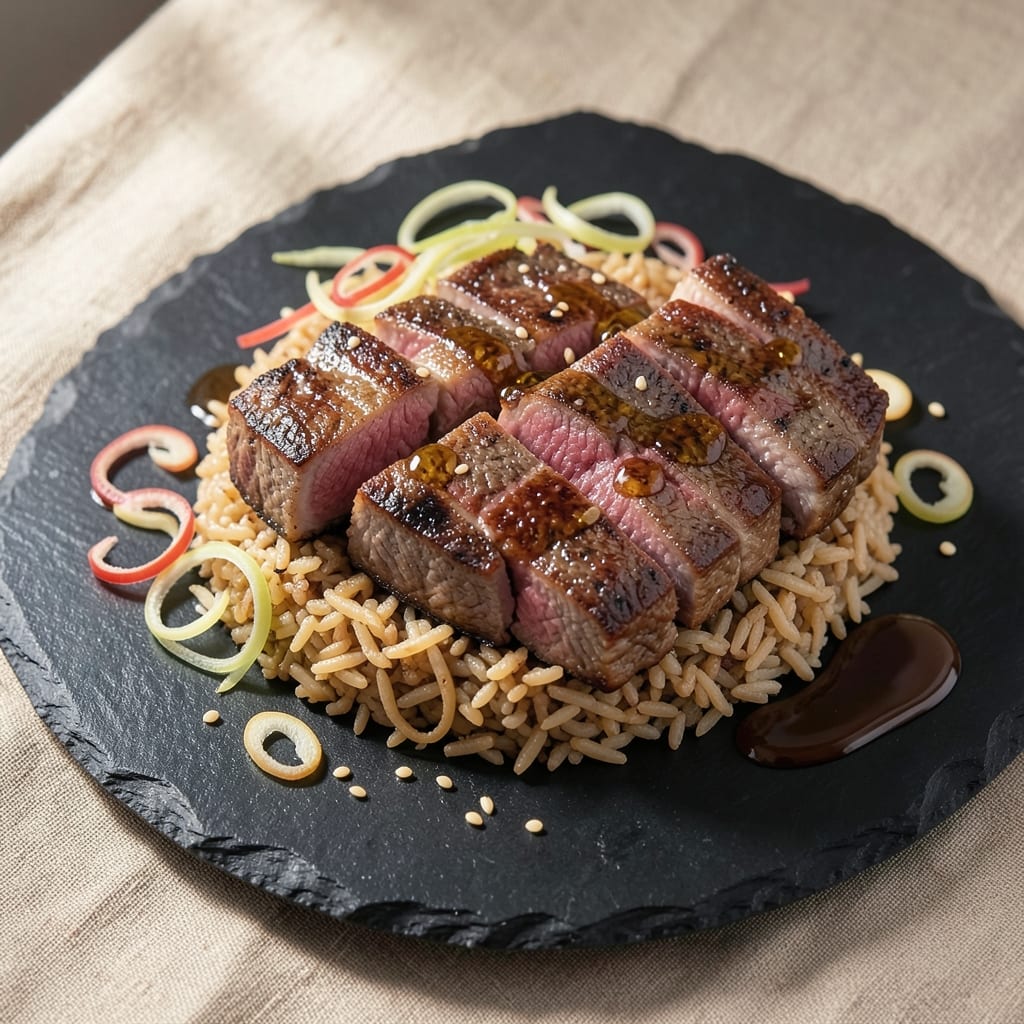
This Asian steak and rice recipe delivers wok-seared crispy edges on tender beef and fragrant jasmine rice infused with garlic and ginger. The secret lies in high-heat stir-frying that creates caramelized crusts while keeping the interior juicy, paired with a quick-fried rice base that absorbs all the savory aromatics. I developed this version after years of testing—it’s the balance of textures and flavors that makes it restaurant-worthy at home.
The foundation starts with thinly sliced steak (ribeye or sirloin works best) marinated in a simple soy-ginger-garlic blend, then seared in a screaming-hot wok until those golden-brown crispy edges form. Meanwhile, day-old jasmine rice gets toasted with sesame oil and aromatics before being combined with the steak and a splash of coconut aminos for depth. Every bite delivers that perfect contrast—crispy exterior, tender meat, and fragrant rice.
What sets this apart is the technique: cooking the rice first in the wok creates natural crispiness at the edges, while the steak’s high-heat sear locks in juices. The result is a dish that’s boldly flavorful without being heavy, with just the right balance of umami from soy, sweetness from coconut aminos, and brightness from fresh lime at the end. It’s the kind of meal that feels both comforting and exciting.
Serve with quick-pickled cucumbers or a side of miso soup to round out the meal. The leftovers reheat beautifully too—just a quick stir in the wok to restore that crispy texture. Let’s get cooking!
Ingredients for asian steak and rice
Thinly sliced steak, fragrant jasmine rice, and bold aromatics come together for restaurant-quality crispy edges.
| Ingredient | Amount | Notes |
|---|---|---|
| Ribeye Steak 🥩 | 1 ½ lb | Thinly sliced against grain |
| Day-Old Jasmine Rice 🍚 | 3 cups | Cold from fridge preferred |
| Low-Sodium Soy Sauce 🍶 | ⅓ cup | Kikkoman preferred |
| Sesame Oil 🫒 | 1 tbsp | Toasted sesame oil only |
| Fresh Ginger 🧄 | 2 tbsp | Finely grated, peeled |
| Garlic Cloves 🧄 | 6 cloves | Minced, fresh preferred |
| Coconut Aminos 🥄 | 2 tbsp | Or sub light soy sauce |
| Lime Juice 🍋 | 2 tbsp | Freshly squeezed |
| Vegetable Oil 🫒 | ½ cup | High smoke point |
| Scallions 🧅 | ¼ cup | Thinly sliced, green parts |
| Salt 🧂 | 1 tsp | Kosher or sea salt |
| Black Pepper 🌶️ | ½ tsp | Freshly ground |
| Toasted Sesame Seeds 🌾 | 1 tbsp | For garnish |
The steak choice matters—ribeye or sirloin delivers that perfect balance of tenderness and flavor. Slice it thinly against the grain for maximum tenderness, and look for well-marbled cuts at Whole Foods or your local butcher. Day-old jasmine rice is ideal (the slight dryness helps create crispy edges), but if you're fresh out, spread cooked rice on a tray and refrigerate overnight. For the aromatics, fresh ginger and garlic make all the difference—don't skimp here. Toasted sesame oil adds depth that regular oil can't match, and Kikkoman soy sauce is the gold standard for that authentic umami punch.
No toasted sesame oil? Regular sesame oil plus a pinch of smoked paprika gets you close. Substituting coconut aminos? Light soy sauce works too, though you'll lose some of that sweet depth. The lime juice is essential for brightness—bottled won't cut it. For the rice, if you're using freshly cooked, spread it on a tray and chill for 30 minutes before using. The scallions can be swapped for regular green onions, but the milder flavor means you might want to add an extra pinch of salt. For extra crispiness, use a wok or cast-iron skillet—they retain heat better than nonstick pans.
This dish reheats like a dream—just a quick stir in the wok with a splash of water to restore crispiness. Store leftovers in an airtight container for up to 3 days, or freeze for 2 months. The rice keeps best when fully cooled before storing. For meal prep, double the recipe and portion into containers—great for lunches or quick weeknight dinners. Garnish with toasted sesame seeds right before serving to add that final crunchy texture.
Why You'll Love This Recipe
- Here’s what sold me: this tastes even better the next day. Pack it for work or school—cold rice soaks up the savory sauce perfectly, and the steak stays juicy. My go-to for busy mornings.
- One-Pan Magic: I swear by this trick—just sear the ribeye, toss in the rice, and let the soy sauce and ginger work their magic together. No chopping, no fuss, and one pan to clean. That’s my kind of dinner.
- Umami Bomb: The combo of ribeye’s richness and low-sodium soy sauce? It’s like a flavor grenade. The ginger adds a bright kick, and a drizzle of sesame oil ties it all together—simple, but ridiculously satisfying.
- Lunchbox Hero: Here’s what sold me: this tastes even better the next day. Pack it for work or school—cold rice soaks up the savory sauce perfectly, and the steak stays juicy. My go-to for busy mornings.
Step-by-step instructions for wok-seared Asian steak and rice
Master the perfect balance of crispy steak edges and fragrant rice with this precise method.
🔥 Step 1: Prepare the Steak for Maximum Crispiness
Slice the 1.5 lb ribeye steak thinly against the grain into ¼-inch thick strips. I use a sharp chef's knife and cut at a 45-degree angle for uniform thickness. Arrange the slices on a plate and season immediately with 1 tsp salt and 0.5 tsp black pepper, massaging the seasoning into the meat. Let the steak sit at room temperature for 15 minutes—this ensures even cooking and prevents cold spots in the center.
While the steak rests, heat 0.5 cup vegetable oil in a wok or large skillet over high heat until it shimmers and reaches 375°F. The oil should be hot enough that when you drop a small piece of steak into it, it sizzles immediately and turns golden within 10 seconds. If it doesn't, let the oil heat up another 30 seconds. This high heat is crucial for achieving those crispy edges.
🍳 Step 2: Wok-Sear the Steak in Batches
Working in batches to avoid overcrowding, add ½ of the steak strips to the hot oil. Don't stir immediately—let them sear undisturbed for 30 seconds until they develop a deep golden crust on one side. Then, carefully flip the strips and sear for another 20-25 seconds until they're 80% cooked but still slightly pink in the center. Remove the steak and set aside on a plate.
Repeat with the remaining steak strips, maintaining the same high heat. The key here is speed—if the oil temperature drops below 350°F, the steak will steam instead of sear. If the oil starts to smoke excessively, reduce the heat slightly to maintain 375°F. Once all the steak is seared, you'll have crispy edges with tender, juicy centers ready for the final touch.
👨🍳 Step 3: Create the Fragrant Sauce Base
In the same wok (no need to clean it—the fond is flavor), reduce the heat to medium and add 1 tbsp sesame oil. Swirl to coat the pan, then add 2 tbsp finely grated fresh ginger and 6 cloves minced garlic. Sauté for 30 seconds until fragrant—you should smell the ginger's warmth and garlic's sharpness. Add 0.33 cup low-sodium soy sauce and 2 tbsp coconut aminos, stirring to combine and deglaze any browned bits from the steak.
Pour in 2 tbsp freshly squeezed lime juice and let the sauce simmer for 1 minute until slightly reduced. The lime adds a bright contrast to the rich, savory flavors. Remove the wok from heat and stir in 0.25 cup thinly sliced scallions, reserving a few for garnish. This sauce will marry perfectly with the crispy steak and fragrant rice.
🥘 Step 4: Combine Steak, Sauce, and Rice
Return the wok to medium heat and add the seared steak strips along with 3 cups day-old jasmine rice (cold from the fridge). The rice should be at room temperature now—if it's straight from the fridge, let it sit for 5 minutes first. Toss everything together, coating the steak and rice evenly with the sauce. Cook for 2-3 minutes until the rice is heated through and the steak reaches 160°F internally.
I like to press down gently on the rice with a spatula during the last 30 seconds of cooking to help distribute the sauce evenly. The rice should be warm but still slightly separate, not mushy. The steak should be fully cooked with crispy edges that hold up to the fragrant rice. Taste and adjust seasoning if needed—add a splash of water if the rice is too dry.
🍽️ Step 5: Serve with Garnish and Enjoy
Transfer the steak and rice to a serving platter and garnish with 1 tbsp toasted sesame seeds and the reserved scallions. The sesame seeds add a nutty crunch that contrasts beautifully with the tender steak and fragrant rice. Serve immediately while the steak is still warm and the rice is aromatic. Each bite should deliver a perfect harmony of crispy edges, juicy steak, and fragrant rice infused with the wok's smoky essence.
For best results, serve this dish family-style so everyone can mix their own portions. The crispy steak edges will soften slightly as they sit, so enjoy it right away. Pair with a simple cucumber salad or steamed bok choy to balance the richness.
Pro Tips For Making Asian Steak And Rice
- SEAR STEAK HOT AND FAST: Ribeye’s the star here, so don’t treat it like a slow-cooker experiment. Get your pan screaming hot—cast iron or stainless steel—then slap that steak in for 2-3 minutes per side. The goal is a deep caramel crust before you even think about soy sauce. I used to linger, and the steak ended up greasy instead of golden. High heat, quick work.
- GRATE GINGER FINE: Skip the mincer—fresh ginger’s bite disappears when it’s chunky. Use a microplane or the smallest holes of a box grater, then press it through with the back of a spoon. This releases the oils evenly into the rice and sauce. I learned this the hard way after tasting a dish where the ginger just sat there like a sad, undercooked raisin.
- SAVE THE RICE JUICES: Day-old rice is perfect, but don’t drain it dry. Stir it with the leftover starchy water—about 2 tablespoons—before mixing in soy and sesame oil. That extra moisture keeps the rice from turning to dust when you toss it with the sauce. I used to toss it bone-dry, and it always ended up crumbly. (Yes, even if you’re impatient like me.)
- REST STEAK UNDER FOIL: The moment you pull the steak off the heat, tent it loosely with foil and let it sit for 5-10 minutes. This traps heat and keeps it juicy while you finish the rice. I was skeptical until I tried it—now I resist the urge to cut into it early. The first slice is always the reward for waiting.
Essential equipment for great asian steak and rice
Wok Essentials
A carbon steel wok is my go-to for this recipe—its flat bottom conducts heat evenly, and the curved sides make tossing effortless. I use a 14-inch wok from Made In for its perfect balance of weight and heat retention. If you don’t have a wok, a cast iron skillet (like Lodge) works too, though you’ll need to work faster to avoid hot spots. Never use nonstick—it can’t handle the high heat needed for crispy edges. 🔥
High-Heat Tools
You’ll need a high-smoke-point oil—I recommend avocado oil or vegetable oil (like Mazola) for its stability at 375°F. A thermometer (like Thermoworks Smoke) ensures precision, but if you’re eyeballing it, the oil should shimmer and small bubbles should form before adding steak. Keep a heatproof spatula (like OXO Good Grips) nearby to flip those crispy edges without losing them.
Knife and Prep Gear
A sharp chef’s knife is non-negotiable for slicing steak against the grain—my Victorinox Fibrox handles it like butter. Pair it with a cutting board (I love Teakhaus bamboo for its grip) and a microplane for ginger and garlic. For quick prep, a small bowl for marinating and a fine-mesh strainer (to rinse lime zest if you add it) keep things organized. A small plate for resting seared steak prevents overcrowding.
Sauce and Aromatics
Invest in a small saucepan (like All-Clad Stainless) for reducing sauces if you’re making extra, but the wok handles it just fine. A garlic press (like OXO Good Grips) speeds up prep, and a fine-mesh sieve strains excess ginger juice for smoother sauces. For lime juice, a handheld reamer (like OXO Good Grips) extracts more juice with less effort. Keep a small bowl for reserved scallions and sesame seeds to garnish at the end.
Serving and Storage
A wide, shallow serving platter (like Le Creuset stoneware) lets everyone mix their portions. For leftovers, glass airtight containers (I use Pyrex) keep rice from drying out. A fine-mesh strainer helps drain any excess liquid before reheating. If you’re meal prepping, portion-sized containers with tight seals prevent freezer burn. 💫
Nutrition facts
Frequently asked questions
Can I use chicken or pork instead of beef?
For chicken, use 1.5 lb boneless thighs (they stay juicier than breast) and reduce cooking time to 1-2 minutes per side to avoid overcooking. For pork, sirloin or tenderloin works beautifully—slice it ¼-inch thick and cook until it reaches 145°F internally. The marinade and high-heat technique remain the same, but adjust doneness based on your protein choice.
Why does the recipe call for day-old rice?
Day-old rice is slightly drier, which helps create those coveted crispy edges when stir-fried. If you only have freshly cooked rice, spread it on a tray and refrigerate for 30 minutes before using. This mimics the texture of day-old rice. The key is avoiding mushy rice—it should be warm but still hold its shape when tossed.
How do I fix overcooked steak?
If your steak turns out too tough, don't panic! Slice it thinly against the grain and toss it back into the wok with a splash of water or coconut aminos to restore moisture. The high heat will quickly re-crisp the edges. For extra tenderness, add 1 tbsp hoisin sauce to the rice mixture before combining—it adds sweetness that balances any dryness.
Can I make this gluten-free?
Yes! Skip the soy sauce and coconut aminos (both contain gluten) and substitute with tamari or coconut aminos labeled gluten-free. Use 1 tbsp rice vinegar + 1 tsp honey for acidity and sweetness. For extra umami, add 1 tsp gluten-free fish sauce or ½ tsp nutritional yeast to the sauce. The flavor profile will still be rich and balanced.
What's the best way to reheat leftovers?
Reheat in the wok over medium heat with 1 tbsp water or oil to prevent drying. Stir constantly for 2-3 minutes until everything is hot through. For extra crispiness, press the rice down gently with a spatula during the last 30 seconds of reheating. Store leftovers in an airtight container for up to 3 days or freeze for 2 months.