
Main Courses
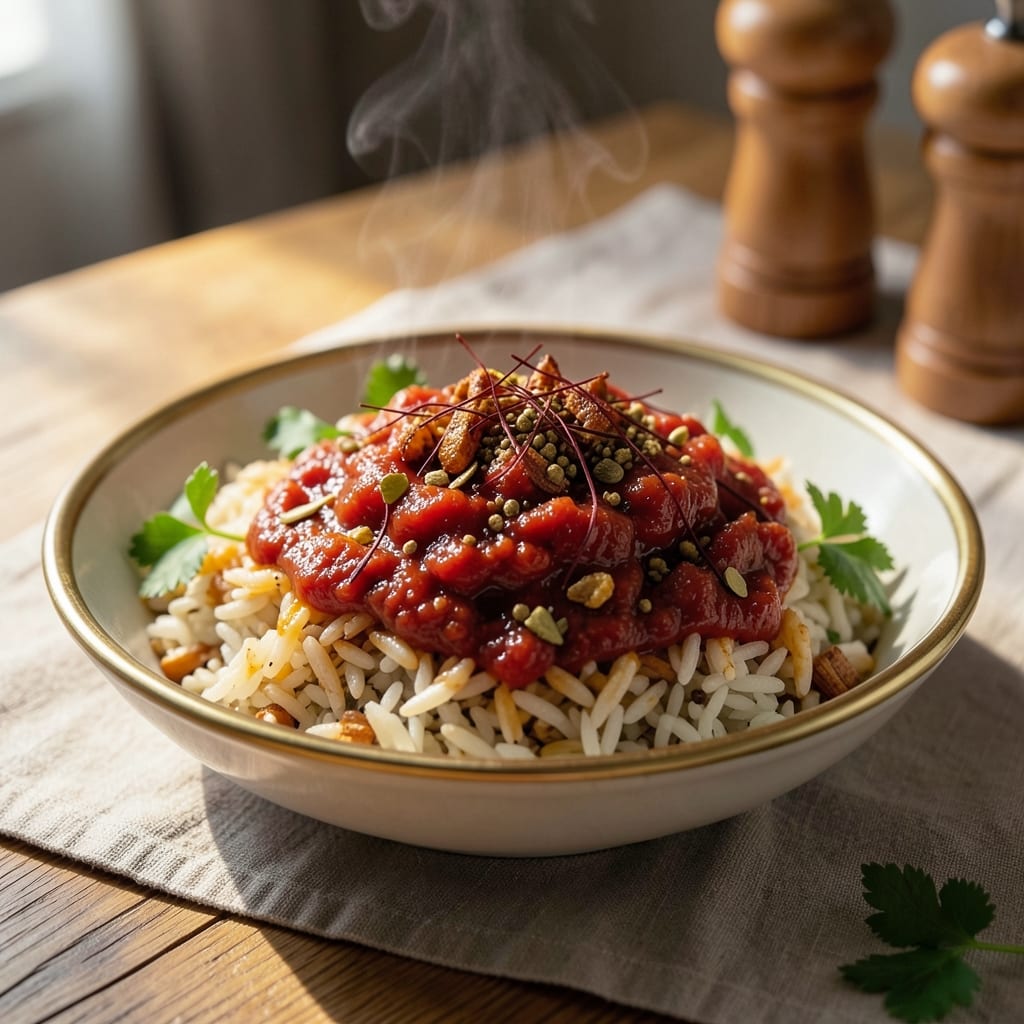
This Arabic red rice recipe transforms simple grains into a vibrant, spiced masterpiece that's the heart of Middle Eastern feasts. 🌟 The secret lies in soaking the rice overnight and cooking it with a rich blend of tomatoes, saffron, and warm spices that infuse every grain with deep, complex flavors. What makes this dish special is how the spices meld together during the slow cooking process, creating that signature reddish hue and aromatic profile that defines traditional Arabic cuisine.
Unlike many rice dishes, this recipe builds flavor through a tomato-based broth that simmers with the rice, allowing the grains to absorb the spices gradually. The saffron adds a delicate golden note, while turmeric and cumin provide earthy warmth that lingers on the palate. What you'll end up with is perfectly tender rice with each grain distinct and infused with layers of tomato, spice, and saffron essence.
This dish works beautifully as a centerpiece for family gatherings or special occasions, but it's also simple enough for weeknight dinners. The rich tomato-spice broth pairs perfectly with grilled meats, roasted vegetables, or even on its own as a satisfying vegetarian main. The aromatic steam alone will draw everyone to the table.
Ready in about 45 minutes after soaking, this recipe delivers restaurant-quality results with minimal effort. The key is patience—letting the spices and tomatoes work their magic during the cooking process. Here's everything you need to create this flavorful centerpiece for your table.
Ingredients for arabic red rice
Simple grains meet bold spices in this aromatic centerpiece of Middle Eastern feasts.
| Ingredient | Amount | Notes |
|---|---|---|
| Long-Grain White Rice 🍚 | 1 ½ cups | Uncooked, rinsed well |
| Canned Crushed Tomatoes 🍅 | 1 can (15 oz) | San Marzano preferred |
| Saffron Threads 🌼 | ¼ tsp | High-quality, food-grade |
| Ground Cumin 🌿 | 1 tbsp | Freshly toasted preferred |
| Ground Turmeric 🌶️ | ½ tbsp | Bright yellow powder |
| Ground Coriander 🌿 | ½ tbsp | Freshly ground preferred |
| Garlic Cloves 🧄 | 4 cloves | Peeled, minced finely |
| Yellow Onion 🧅 | 1 whole | Medium size, diced |
| Extra-Virgin Olive Oil 🫒 | ¼ cup | For saffron infusion |
| Vegetable Broth 💧 | 2 cups | Low-sodium preferred |
| Salt 🧂 | 1 ½ tsp | Kosher or sea salt |
| Black Pepper 🌶️ | ½ tsp | Freshly ground |
| Fresh Parsley 🌿 | ¼ cup | Chopped, for garnish |
The saffron is non-negotiable here—look for high-quality threads at specialty markets like Whole Foods or Middle Eastern grocers. A little goes a long way, so buy the best you can afford. For the tomatoes, San Marzano cans deliver that sweet, rich flavor that's essential for authentic depth. The rice should be long-grain and uncooked—jasmine or basmati both work beautifully. Toast your spices in a dry pan for 30 seconds before adding to the pot—this wakes up their flavors dramatically. I always double-check my cumin and coriander are fresh by smelling them; if they lack aroma, toss them.
No saffron? Turmeric at double the amount gives color, though it won't have the floral note. Short on crushed tomatoes? Fresh tomatoes blended with a splash of water work in a pinch. The onion and garlic can be swapped for 2 tbsp each of onion powder and garlic powder if needed, though fresh is ideal. For the broth, low-sodium versions help control the seasoning, and you can always add more salt at the end. The parsley is purely decorative but adds that fresh green pop—dried works in a bind, though it won't be as vibrant. Want extra richness? Stir in 2 tbsp tahini at the very end.
Rice soaks overnight, so plan ahead. Store the soaked rice in its water in the fridge for up to 2 days before cooking. The cooked rice keeps for 3 days in the fridge or 3 months frozen—portion into containers for easy reheating. For best texture, spread the rice on a tray to cool completely before refrigerating. The saffron-infused oil can be made ahead and stored in the fridge for 1 week—use it in other dishes too!
Why You'll Love This Recipe
- Pantry Magic: I swear by this recipe when I forget to grocery shop—just rice, crushed tomatoes, and spices from my shelf. That saffron? A single thread turns watery rice into something golden and luxurious, no fancy ingredients needed.
- One-Pot Wonder: No measuring cups, no extra bowls—just toast the cumin and turmeric in oil, add the tomatoes and rice, and let it simmer. Honestly, I’ve made it in a Dutch oven, a skillet, even a slow cooker on busy days. Minimal cleanup, maximum flavor.
- Weeknight Workhorse: This is my go-to when I need something hearty but not heavy—perfect for piling over grilled chicken or fish, or even spooning into wraps. (Yes, even on a Tuesday night.) The tomatoes soften just enough to coat every grain, so it’s never dry or boring.
- Budget Luxury: A can of tomatoes and a pinch of saffron stretch to feed four for under $5. Between us, this is the kind of dish that makes me feel like I’m eating at a restaurant without the price tag—especially when reheated the next day. The cumin deepens overnight, so leftovers taste even better.
Step-by-step instructions for Arabic red rice
Here's how to create this fragrant, tomato-infused rice with saffron's golden hue.
🍳 Step 1: Infuse the Saffron and Sauté Aromatics
In a small bowl, gently crush the 0.25 tsp saffron threads with your fingers to break them open, then steep in 2 tablespoons of the 0.25 cup extra-virgin olive oil for 10 minutes. This releases the saffron's vibrant color and delicate aroma—don't skip this step or your rice will lack that signature golden tint.
Heat the remaining 0.25 cup extra-virgin olive oil in a medium saucepan over medium heat. Add the 1 whole yellow onion (diced) and cook for 5-6 minutes until translucent. Add the 4 cloves garlic cloves (minced) and stir for 30 seconds until fragrant—you should smell that sweet garlic aroma wafting through your kitchen. This aromatics base forms the flavor foundation for your rice.
👨🍳 Step 2: Toast the Spices and Add Tomatoes
Reduce heat to low and add the 1 tbsp ground cumin, 0.5 tbsp ground turmeric, and 0.5 tbsp ground coriander. Toast for 30 seconds while stirring constantly—this activates the spices' essential oils and prevents bitterness. Watch carefully as spices burn quickly at higher heat.
Pour in the 1 can (15 oz) canned crushed tomatoes and stir to combine with the spices. Let it simmer for 5 minutes until the mixture thickens slightly and the raw tomato flavor mellows. This step develops the deep, complex tomato base that defines Arabic red rice. The sauce should coat the back of a spoon but still be loose enough to easily incorporate the rice.
🥘 Step 3: Layer Rice and Broth for Perfect Texture
Add the 1.5 cups long-grain white rice to the tomato mixture and stir gently to coat each grain with the spiced sauce. This ensures even flavor distribution and prevents dry spots. Pour in the 2 cups vegetable broth and add 1.5 tsp salt and 0.5 tsp black pepper. The rice should be submerged by about ½ inch—this creates the ideal balance between steamed and toasted texture.
Bring to a gentle boil, then immediately reduce heat to low. The rice should simmer gently with just a few bubbles breaking the surface—this prevents the grains from breaking or becoming mushy. Cover tightly with a lid and cook for 15 minutes without disturbing it. This initial cooking period allows the rice to absorb the initial liquid and begin developing its texture.
⏰ Step 4: Steam and Rest for Maximum Flavor
After 15 minutes, remove the lid and gently fluff the rice with a fork, being careful not to press down. Return the lid and let it steam undisturbed for another 10 minutes. The rice should be tender but still have a slight bite—this indicates it's ready for the final resting period. If you check too early, the rice will continue cooking off the heat.
Turn off the heat and let the rice sit covered for 5 minutes. This resting period allows the steam to redistribute and the flavors to meld completely. The rice should be tender with a slight resistance when pressed between your fingers—this is the perfect al dente texture. Fold in the saffron-infused oil and 0.25 cup fresh parsley (chopped) before serving for that final burst of color and freshness.
Pro Tips For Making Arabic Red Rice
- TOAST THE SPICES FIRST: Heat your cumin and turmeric in the pot for 30 seconds before adding oil—just until you smell that earthy warmth. I learned this the hard way: skipping this step makes the spices taste flat instead of rich. (Yes, even if you’re impatient like me.)
- SIMMER, DON’T BOIL: After adding the tomatoes and rice, keep the heat low enough that tiny bubbles barely break the surface. I used to crank it up, and the rice turned mushy. The saffron needs time to bloom, and the rice needs patience to absorb the sauce properly.
- CRUSH THE TOMATO SKINS: Before dumping the crushed tomatoes into the pot, give the can a quick mash with your fingers to break up any remaining skins. Those little fibrous bits turn to mush and make the rice grainy. (Your future self will thank you.)
- SOAK THE SAFFRON: Steep the saffron threads in 2 tablespoons of warm water for 10 minutes before adding them to the rice. Dry saffron? It’ll just sit there like decorative thread. Wet saffron? That golden, floral punch you actually taste. No shortcuts here.
Dietary considerations for this arabic red rice
Gluten-Free Adaptation
This dish is naturally gluten-free since it relies on rice, tomatoes, and spices—but always double-check your broth and spice blends. I use Imagine Foods gluten-free vegetable broth to ensure safety. The San Marzano crushed tomatoes and long-grain white rice are both gluten-free staples, so no substitutions are needed beyond verifying your ingredients. 🌱
Vegetarian-Friendly
The base recipe is already vegetarian, but you can boost protein by adding chickpeas (½ cup, drained) during the final 10-minute steam or tofu cubes (½ cup, pan-seared) for a meaty texture. The tomato-spice broth pairs beautifully with these plant-based additions. Just ensure your broth is vegetable-based to maintain the vegetarian profile.
Dairy-Free Notes
This recipe contains no dairy, making it perfect for lactose-intolerant diets. However, if you're serving alongside yogurt-based dishes (like labneh or tzatziki), keep them separate. The saffron-infused oil and tomato base are naturally dairy-free, so no modifications are needed unless you're adding dairy toppings like feta later.
Low-Sodium Options
To reduce sodium, skip added salt until the very end and use low-sodium vegetable broth. I recommend Pacific Foods unsalted broth for full control. Taste the rice before serving and adjust with kosher salt—you might need only ½ tsp instead of the full 1.5 tsp. The natural saltiness from tomatoes and spices will still shine through.
Allergen Awareness
This recipe contains saffron and parsley, which are rare allergens. If someone has a saffron allergy (extremely uncommon), omit it entirely—the turmeric will still provide color. For parsley allergies, substitute with cilantro or fresh dill. Always check spice blends for cross-contamination if allergies are severe.
Protein Pairings
For a complete meal, pair this rice with grilled chicken, lamb chops, or pan-seared shrimp. The tomato-spice flavors complement all three proteins beautifully. If adding meat, cook it separately and serve on the side to avoid overcooking the rice. For a vegetarian spread, include roasted eggplant or marinated artichokes.
Nutrition facts
Frequently asked questions
Why does Arabic red rice need soaking?
The overnight soak removes excess starch from the rice, preventing it from becoming gummy or sticky during cooking. This traditional step also helps the grains absorb the rich tomato-spice broth more evenly, creating that signature tender yet distinct texture. Without soaking, the rice might turn out mushy or clump together.
Can I substitute saffron with something else?
While nothing perfectly replaces saffron's floral aroma, you can use ½ tsp turmeric for color and warmth. For extra depth, add ¼ tsp cinnamon and pinch of cardamom. Just note the flavor will be earthier rather than the delicate floral note saffron provides. The rice will still look golden and taste aromatic!
How do I prevent the rice from burning?
Keep the heat at a gentle simmer—just a few bubbles breaking the surface—after the initial boil. Stirring occasionally helps distribute heat evenly. The key is patience: low heat prevents scorching while allowing the rice to cook through evenly. If you see browned bits, add 1-2 tbsp broth to deglaze immediately.
What's the best way to reheat leftovers?
Spread cold rice on a tray and microwave in 30-second bursts with 1 tbsp broth per cup, stirring between each interval. This prevents drying out. For stovetop reheating, cook over low heat with a splash of water or broth until hot through. Avoid high heat—it turns rice rubbery!
Can I make this in a rice cooker?
Yes! Follow the same steps until adding the rice, then combine everything in the cooker. Use the white rice setting and let it cook undisturbed. After it beeps, let it steam for 5 extra minutes before opening. The texture may be slightly firmer than stovetop, but it's still delicious!