
Main Courses
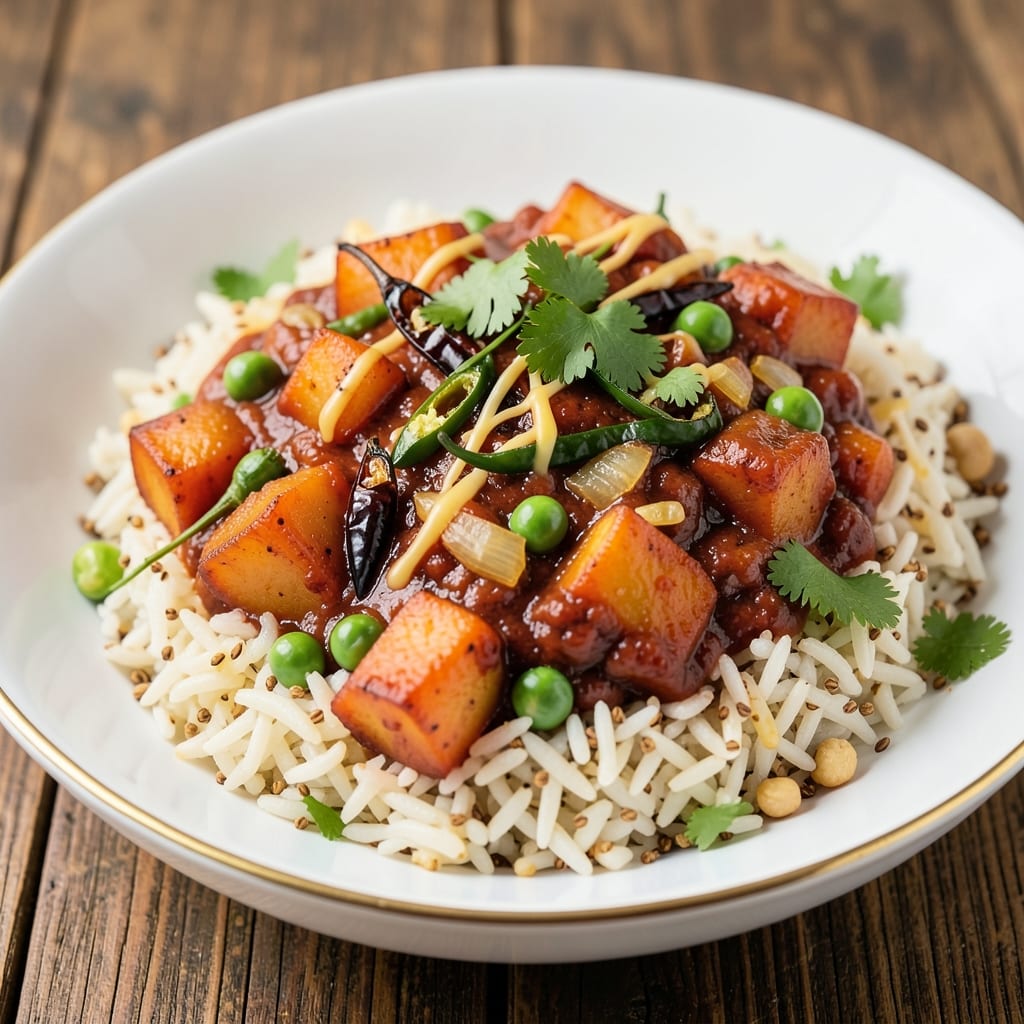
Aloo matar rice transforms humble potatoes and peas into a fragrant, spiced tomato gravy that pairs perfectly with fluffy basmati rice. This classic North Indian dish delivers comfort in every bite—creamy potatoes, tender peas, and a tangy tomato base that balances sweetness and acidity. The secret lies in slow-cooking the vegetables until they melt into the gravy, creating a texture that's both hearty and delicate.
What sets this recipe apart is the layered spice tempering that forms the foundation of the dish. Toasted cumin, mustard seeds, and dried red chilies release their aromas into the oil, while fresh ginger and garlic add depth. The tomatoes simmer until they break down into a rich, velvety sauce that coats every ingredient. Unlike quick stir-fries, this dish rewards patience with flavors that develop and meld beautifully over time.
By the time you serve this aloo matar rice, your kitchen will smell like home—warm spices, simmering tomatoes, and the earthy sweetness of cooked vegetables. The gravy clings to each grain of rice, creating a satisfying meal that's equally comforting as a weekday dinner or a special occasion treat. This recipe preserves the essence of traditional Indian home cooking while making it accessible for home kitchens.
The beauty of aloo matar rice lies in its versatility. Adjust the spice level to suit your palate, or add a squeeze of lemon at the end for brightness. Serve it with raita for cooling contrast or a side of papad to add crunch. The dish keeps well for up to three days, making it perfect for meal prep. Let's create this timeless vegetarian classic together.
Ingredients for aloo matar rice
These 17 ingredients create a fragrant, spiced tomato gravy that pairs perfectly with basmati rice.
| Ingredient | Amount | Notes |
|---|---|---|
| Basmati Rice 🍚 | 1 ½ cups | Uncooked, long-grain preferred |
| Yellow Onions 🧅 | 1 whole | Finely chopped, about 1.5 cups |
| Fresh Tomatoes 🍅 | 4 whole | Medium-sized, roughly chopped |
| Russet Potatoes 🥔 | 2 lbs | Peeled, cut into 1-inch cubes |
| Green Peas 🌿 | 1 ½ cups | Fresh or frozen, thawed |
| Green Chilies 🌶️ | 2 whole | Fresh, slit lengthwise |
| Ginger Root 🧄 | 1 inch | Fresh, grated |
| Garlic Cloves 🧄 | 6 cloves | Fresh, minced |
| Cumin Seeds 🌿 | 1 tbsp | Whole, toasted |
| Mustard Seeds 🌿 | ½ tbsp | Whole, toasted |
| Dried Red Chilies 🌶️ | 2 whole | Kashmiri or red chili |
| Ground Turmeric 🌿 | ½ tsp | Freshly ground preferred |
| Ground Coriander 🌿 | 1 tsp | Freshly ground preferred |
| Garam Masala 🌶️ | 1 tsp | Store-bought or homemade |
| Vegetable Oil 🫒 | ½ cup | Or ghee for richer flavor |
| Salt 🧂 | 1 ½ tsp | Adjust to taste |
| Lemon Juice 🍋 | 1 tbsp | Freshly squeezed |
The tomatoes and potatoes are the heart of this dish—look for ripe, red tomatoes at your local Indian grocery or farmers market. Russet potatoes hold up best to cooking, but Yukon golds add creaminess. Whole spices like cumin and mustard seeds make all the difference—buy them from bulk bins at stores like Patel Brothers or Whole Foods for the freshest flavor. Fresh ginger and garlic are non-negotiable here; frozen won't give you that bright, zesty punch. The green chilies can be swapped for bird's eye chilies if you like more heat, but the Kashmiri dried chilies add beautiful color and a mild sweetness.
No fresh tomatoes? Canned San Marzano tomatoes work perfectly—just drain well. Short on green peas? Frozen peas are fine, just thaw them first. The garam masala is the magic ingredient—if you can't find it, mix equal parts cumin, coriander, cinnamon, and cardamom. Vegetable oil works, but ghee adds incredible richness. For extra creaminess, stir in 2 tablespoons of coconut milk at the end. The dish tastes even better the next day as the flavors meld together, so don't hesitate to make extra for leftovers.
Store the cooked gravy in an airtight container in the fridge for up to 3 days. It reheats beautifully—just add a splash of water to loosen the gravy and warm through. The rice keeps well for 2 days in the fridge, but it's best served fresh. For meal prep, cook the rice separately and store it in one container, then keep the gravy in another. This way, you can reheat just the gravy and serve it over fresh rice whenever you're ready. The dish also freezes well for up to 3 months—just thaw overnight in the fridge before reheating.
Why You'll Love This Recipe
- No-Fuss Weeknight Win: I swear by this when I’m too tired to fuss—just chop onions, dice potatoes, and let the spices do the work while I stir. The rice cooks alongside, so no juggling pots or timers.
- Spice & Cream Balance: That smoky cumin and garam masala? Chef’s kiss. The potatoes stay tender but soak up the flavor, while the peas add a bright pop—like a hug in a bowl.
- Lunchbox Legend: Between us, this is my go-to for packed lunches. The rice stays fluffy, the potatoes hold their shape, and it reheats like a dream. (Yes, even on a Tuesday night.)
- Budget-Friendly Staples: Russets and peas are cheap, onions and tomatoes last days in the fridge, and basmati rice? A pantry essential. This feeds four for under $10 and still feels special.
Step-by-step instructions for aloo matar rice
Here's how to make this comforting dish with tender potatoes and peas in a rich tomato gravy.
Prepare the Base Ingredients
Start by washing the 1.5 cups basmati rice thoroughly until the water runs clear. Soak it in water for 20 minutes while you prep the rest. Chop the 1 whole yellow onion finely, roughly chop the 4 whole fresh tomatoes, peel and cube the 2 lbs russet potatoes into 1-inch pieces, and thaw the 1.5 cups green peas if using frozen.
Grating the 1 inch ginger root and mincing the 6 cloves garlic is next. Slit the 2 whole green chilies lengthwise and remove the seeds if you prefer less heat. Toast the 1 tbsp cumin seeds and 0.5 tbsp mustard seeds in a dry pan until fragrant—this adds incredible depth to the dish. Keep these prepped ingredients ready for the next steps.
Cook the Spiced Gravy
Heat the 0.5 cup vegetable oil in a large pot over medium heat. Add the toasted cumin seeds and mustard seeds, letting them sizzle for 30 seconds until they pop. Toss in the 2 whole dried red chilies, finely chopped onion, and sauté for 5 minutes until the onions turn golden brown.
Add the grated ginger root, minced garlic, and slit green chilies, cooking for another 2 minutes until the raw garlic smell disappears. Stir in the 0.5 tsp ground turmeric, 1 tsp ground coriander, and 1.5 tsp salt, mixing well. This is where the flavors start to meld beautifully—don't rush this step.
Simmer the Potatoes and Peas
Pour in the roughly chopped tomatoes and cook for 5-6 minutes until they soften and release their juices. Add the cubed russet potatoes and green peas, stirring gently to coat them in the spiced tomato mixture. Pour in 3 cups of water (enough to cover the ingredients) and bring to a gentle boil.
Once boiling, reduce the heat to low and let it simmer uncovered for 15 minutes, stirring occasionally. The potatoes should be tender but not mushy, and the peas should be bright green. If the gravy thickens too much, add a splash of water. This simmering step ensures the flavors blend perfectly and the vegetables cook evenly.
Cook the Rice and Finish
Drain the soaked basmati rice and add it to the pot with the potato-pea mixture. Stir gently to combine, then add 1 more cup of water (the rice should be just covered). Bring to a boil, then reduce the heat to low, cover the pot with a tight lid, and let it cook for 12-15 minutes on low heat.
Once the rice is tender and the water is absorbed, stir in the 1 tsp garam masala and 1 tbsp freshly squeezed lemon juice. Let it sit covered for 5 minutes to allow the flavors to settle. The lemon juice brightens the dish, cutting through the richness of the tomatoes and spices. Serve hot with a dollop of yogurt or a sprinkle of fresh cilantro if you like.
Pro Tips For Making Aloo Matar Rice
- SOAK RICE 20 MINUTES: I used to skip this, but basmati rice absorbs water faster when soaked—just 20 minutes in warm water before cooking. This guarantees fluffier grains that won’t turn mushy when mixed with the potato-tomato gravy later.
- CUT POTATOES SMALLER: Big chunks stay undercooked or turn to mush. Dice them into 1-inch pieces—they’ll soften evenly while the peas stay crisp. (Yes, even if it looks like baby food at first.)
- SAUTÉ ONIONS UNTIL GOLDEN: Low heat turns them mushy; high heat burns them. Cook them on medium-high until deep golden (about 8-10 minutes), stirring often. That’s the flavor base—rush it, and the whole dish tastes flat.
- ADD PEAS LAST: They cook in 2 minutes. Toss them in just before serving so they stay bright green and crunchy—not sad, gray mush. (I learned this after one disastrous batch where I added them too early.)
Creative variations of this dish
North Indian Style
This traditional version uses a rich, tomato-based gravy with whole spices like cumin seeds and mustard seeds that are toasted until fragrant. The dish often includes Kashmiri red chilies for color and mild heat, along with fresh green chilies for a tangy kick. The potatoes are cooked until tender but hold their shape, while the peas add a pop of color and texture. I love finishing this version with a squeeze of lemon juice to brighten the flavors—it’s a classic touch that makes all the difference. 🌶️
South Indian Twist
In South India, you’ll often find a lighter, coconut-infused version where the gravy includes grated coconut or a splash of coconut milk at the end. The spices lean more toward curry leaves and black pepper, giving it a distinct aroma. The potatoes are sometimes boiled separately and then added to the gravy to keep them firmer. I’ve made this version with tender coconut water instead of lemon juice for a sweeter, creamier finish—it’s a game-changer for those who prefer milder flavors. 🥥
Punjabi Home-Style
The Punjabi version is heartier, with a thicker gravy and more garlic and ginger for depth. It often includes carrots or cauliflower alongside the potatoes and peas, making it a one-pot meal. The dish is finished with a generous sprinkle of fresh coriander and a pinch of asafoetida (hing) for an umami boost. I’ve found that adding a tablespoon of yogurt at the end balances the richness beautifully—it’s a trick I picked up from my grandmother’s recipe. 💛
Spicy Vegan Adaptation
For a vegan-friendly version, skip the ghee and use vegetable oil or coconut oil. Boost the heat with extra green chilies or a dash of cayenne pepper, and add tofu or paneer for protein. I’ve also experimented with smoked paprika for a deeper flavor profile—it adds a subtle smokiness that pairs perfectly with the tomatoes. Finish with a sprinkle of nutritional yeast for a cheesy, umami kick without dairy. 🌱
Quick Weeknight Shortcut
When I’m short on time, I swap fresh tomatoes for 1 can (14 oz) crushed tomatoes and use pre-cut frozen peas and diced potatoes to save prep time. The spices stay the same, but I add a splash of tomato paste for extra richness. Cook the potatoes and peas together in the gravy for 10 minutes less (around 10-12 minutes total) to keep them slightly firmer. Serve with store-bought basmati rice or even microwaveable rice for a faster meal—it’s still delicious and satisfying. ⏰
Regional Spice Blends
In Rajasthan, the dish often includes fenugreek leaves (kasuri methi) for a unique aroma, while Gujarat versions might use dhania (coriander powder) and sesame seeds for a nutty flavor. For a Bengali touch, add mustard oil to the tempering and finish with mustard paste—it’s bold but addictive. I’ve also seen Hyderabadi adaptations where the gravy is spiced with biryani masala instead of garam masala, giving it a fragrant, floral note. 🗺️
Nutrition facts
Frequently asked questions
Can I make this dish without tomatoes?
The tomatoes are essential for the classic flavor, but you can substitute 1 can (14 oz) tomato sauce or 2 tbsp tomato paste mixed with 1 cup water if fresh tomatoes aren't available. For a non-tomato version, try 1 cup coconut milk or yogurt-based gravy with added spices like turmeric and coriander—just adjust the water to maintain consistency.
Why does my aloo matar gravy turn watery?
This usually happens if you add too much water or don't simmer long enough. The potatoes should release enough starch to thicken the gravy naturally. If it's still watery, simmer uncovered for 5-10 extra minutes to reduce the liquid. For instant thickening, mix 1 tsp cornstarch with 2 tbsp water and stir it in at the end.
Can I use frozen peas instead of fresh?
Frozen peas work perfectly—just thaw them first by soaking in warm water for 5 minutes before adding to the gravy. They'll maintain their bright green color and texture. For even better results, add them only in the last 5 minutes of cooking to prevent mushiness.
What's the best way to store leftovers?
Store the cooked gravy and rice separately in airtight containers in the fridge for up to 3 days. The gravy reheats beautifully—just add 2-3 tbsp water and warm through on low heat. For freezing, portion the gravy into containers and freeze for up to 3 months. Thaw overnight in the fridge before reheating. The rice keeps well for 2 days in the fridge but is best served fresh.
How can I make this dish less spicy?
Reduce the green chilies to just 1 or swap them for mild bell peppers. Skip the dried red chilies or use 1 tsp mild paprika instead. For extra mildness, add 1/4 cup yogurt at the end to cool the heat. Always taste as you go—you can adjust the spice level at any point.