
Salads
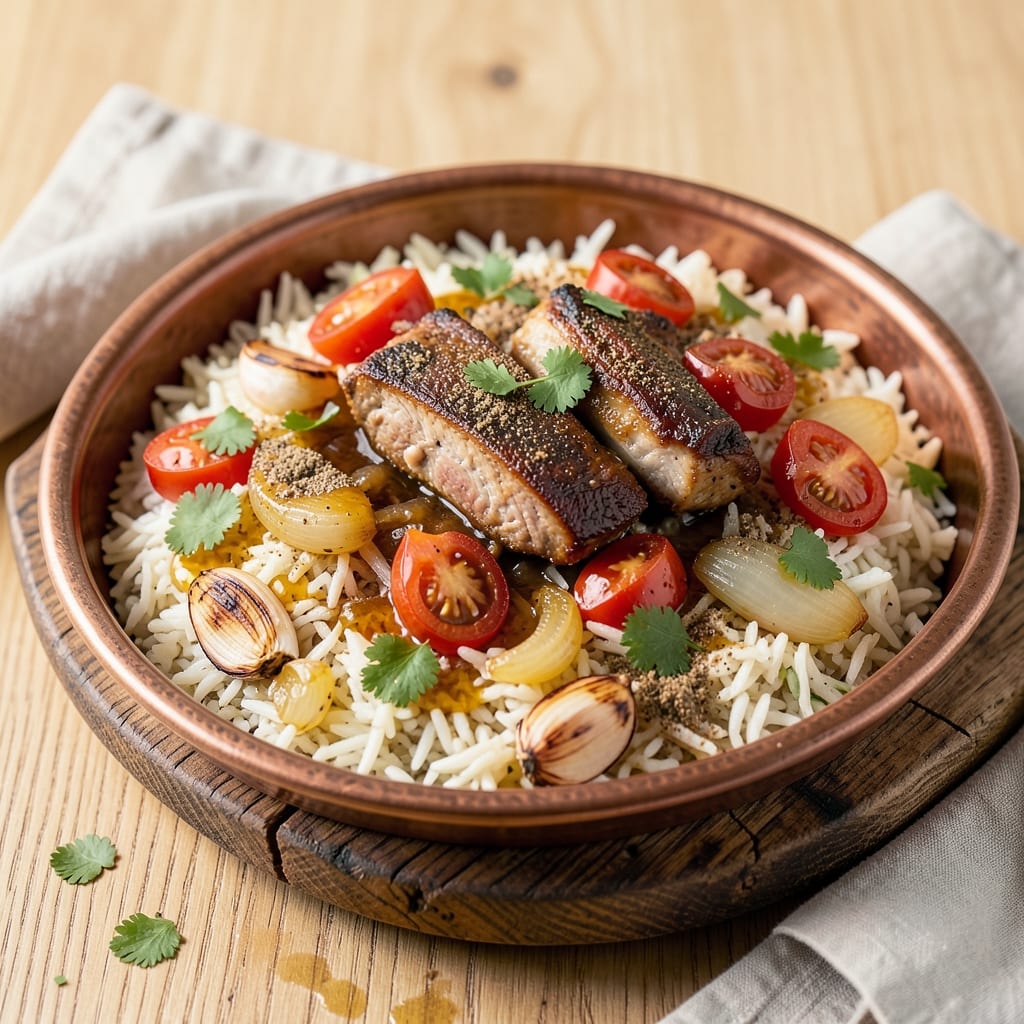
This Al Kabsa rice recipe transforms a simple meal into a celebration of Saudi Arabian hospitality, where fragrant basmati rice, tender lamb, and a rich tomato-spiced sauce come together in perfect harmony. 🌟 The dish isn’t just food—it’s tradition, served during gatherings and special occasions, where every bite carries the warmth of shared moments and aromatic spices that transport you to the Arabian Peninsula.
The secret to authentic Al Kabsa lies in its layers: the rice must be perfectly fluffy, the lamb marinated in a blend of warm spices like cumin, cardamom, and cloves, and the sauce simmered until it achieves that signature depth. What sets this recipe apart is the balance—savory meat, fragrant rice, and a sauce that’s neither too sweet nor too tangy, but just right. It’s a dish that rewards patience, with flavors that develop as they cook.
By the time you’re done, you’ll have a platter that’s as visually stunning as it is delicious—golden rice speckled with tender lamb, topped with a glossy, spiced sauce that’s impossible to resist. The aroma alone will have everyone gathered around the table, eager to taste the result of hours spent perfecting this timeless classic. This isn’t just dinner; it’s an experience.
Whether you’re hosting a feast or simply craving a taste of Saudi Arabia, this recipe delivers restaurant-quality results with a few key techniques. Let’s bring Al Kabsa to your kitchen—where every bite tells a story.
Ingredients for al kabsa rice
Six servings of fragrant basmati rice and tender lamb—where every spice tells a story.
| Ingredient | Amount | Notes |
|---|---|---|
| Lamb Shoulder 🐑 | 3 lb | Bone-in for flavor, cut into chunks |
| Basmati Rice 🍚 | 2 cups | Uncooked, long-grain preferred |
| Ripe Tomatoes 🍅 | 2 lb | Fresh, peeled and chopped |
| Yellow Onions 🧅 | 3 whole | Medium size, finely chopped |
| Garlic Cloves 🧄 | 8 cloves | Fresh, minced for marinade |
| Ground Cumin 🌿 | 2 tbsp | Toasted for deeper aroma |
| Ground Coriander 🌿 | 1 ½ tbsp | Freshly ground preferred |
| Cardamom Pods 🌿 | 10 whole | Lightly crushed, seeds only |
| Cloves 🌶️ | 4 whole | Whole, lightly crushed |
| Ginger Root 🌿 | 1 inch | Fresh, peeled and grated |
| Cinnamon Sticks 🌿 | 2 whole | For sauce depth, optional |
| Vegetable Oil 🫒 | ½ cup | For frying lamb pieces |
| Salt 🧂 | 1 ½ tbsp | Kosher or sea salt |
| Black Pepper 🌶️ | 1 tbsp | Freshly ground for heat |
| Lemon Juice 🍋 | 2 tbsp | Freshly squeezed for brightness |
| Fresh Parsley 🌿 | ¼ cup | Chopped, for garnish |
The lamb is the heart of Al Kabsa, so bone-in shoulder is non-negotiable—it adds depth and stays juicy. Grab it from Middle Eastern markets if possible; they often have pre-cut chunks ready for slow cooking. For the basmati rice, Indian Basmati from Patel Brothers is my go-to—it stays separate and fragrant. The tomatoes? Heirloom varieties from the farmers market make the sauce sing, but grocery store tomatoes work fine if you peel and seed them well. Cardamom and cloves are the soul of this dish—buy whole pods and crush them yourself for maximum flavor. I always double-check my spice cabinet for these before starting.
No fresh ginger? Powdered works at half the amount, but it won't have that same zing. Running low on cardamom? Allspice berries in a pinch (use one-third the quantity). The sauce can be made ahead—it actually tastes better the next day as flavors meld. For the onions, yellow or red work best; white gets bitter when cooked slow. The cinnamon sticks are optional but worth the extra 10 minutes to toast lightly before adding to the sauce. Pro tip: Toast your spices in the oil first—they'll perfume the whole dish.
Lamb keeps 3 days in the fridge if marinated overnight, but the rice should be cooked fresh. The sauce freezes beautifully for up to 3 months, so make extra for lazy weeknights. Store rice in an airtight container with a damp towel on top to keep it fluffy. Reheat gently—microwaving turns it mushy. The parsley wilts fast, so keep it wrapped in damp paper towels in the fridge. This dish tastes even better the next day, when all those spices have time to work their magic.
Why You'll Love This Recipe
- One-Pot Magic: I swear by this recipe because it’s actually one-pot—no rice burner, no sticky mess. Just toss everything in, let it simmer, and the lamb falls off the bone while the rice soaks up that rich, garlicky tomato sauce. Honestly, the cleanup is half the battle won.
- Lamb So Tender: The slow-cooked lamb shoulder? Chef’s kiss. It’s not just flavor—it’s texture. You get that melt-in-your-mouth richness from hours of simmering, but the onions and garlic caramelize into a sticky, savory glaze that clings to every grain of rice. (Yes, even on a Tuesday night.)
- Weekend Feast or Meal Prep: This is my go-to for big gatherings and lazy Sundays. For parties, double the batch—it feeds a crowd without tasting like leftovers. For me? I make a big pot, portion it out, and reheat it all week. The rice stays fluffy, the lamb stays juicy, and no one complains.
- Budget-Friendly Luxury: Lamb shoulder is often cheaper than cuts like chops, and a single roast stretches across three meals for my family. The tomatoes and onions bulk it up, so you’re not just paying for meat—you’re getting a full, satisfying dish that tastes like you spent hours (but didn’t). My secret weapon, really.
Step-by-step instructions for Al Kabsa rice
Here's how to create this aromatic Middle Eastern masterpiece—rich lamb, fragrant spices, and perfectly fluffy basmati.
👨🍳 Step 1: Marinate and Prepare the Lamb
Cut the 3 lb lamb shoulder into 2-inch chunks and place in a large bowl. In a small bowl, combine 2 tbsp ground cumin, 1.5 tbsp ground coriander, 1.5 tbsp salt, 1 tbsp black pepper, 8 cloves minced garlic cloves, 1 inch grated ginger root, 10 lightly crushed cardamom pods, 4 lightly crushed cloves, and 2 whole cinnamon sticks. Rub this spice mixture all over the lamb pieces until fully coated.
Add 2 tbsp lemon juice and 0.5 cup vegetable oil to the bowl, then mix gently to distribute evenly. Cover and refrigerate for at least 4 hours (overnight is best)—this allows the spices to penetrate deeply and tenderize the meat. The lamb will develop intense, complex flavors from the slow marinating process.
🔥 Step 2: Sear and Brown the Lamb
Heat a large, heavy-bottomed pot (like a Dutch oven) over medium-high heat. Add the marinated lamb pieces in batches, letting them sear undisturbed for 3-4 minutes per side until they develop a deep golden-brown crust. This step is crucial—it locks in juices and creates that signature caramelized flavor.
Once all lamb is browned, remove it from the pot and set aside. In the same pot, add 3 whole finely chopped yellow onions and cook for 5 minutes until softened. Add 2 lb peeled and chopped ripe tomatoes and cook for another 8-10 minutes until the mixture darkens and thickens into a rich sauce. The tomatoes will break down completely, creating the base for your kabsa.
🍳 Step 3: Build the Spiced Sauce
Return the seared lamb to the pot along with any accumulated juices. Add 2 cups uncooked basmati rice and stir gently to coat the lamb and rice with the tomato-onion mixture. Pour in 4 cups hot water (or enough to cover the rice by about 1 inch). Bring to a boil, then reduce heat to low and cover tightly with a lid.
Simmer for 25 minutes without stirring—this allows the rice to absorb the flavors and cook evenly. The lid creates steam that prevents the rice from drying out. After 25 minutes, check the rice—it should be tender but still slightly firm in the center. If it's not quite done, add ½ cup hot water and cook for another 5-10 minutes.
⏰ Step 4: Rest and Garnish
Once the rice is perfectly tender (about 30-35 minutes total cooking time), remove the pot from heat and let it rest for 10 minutes covered. This resting period allows the rice to finish steaming and the lamb to reabsorb its juices. The flavors will meld together beautifully during this time.
Garnish with 0.25 cup chopped fresh parsley just before serving. The parsley adds a bright, fresh contrast to the rich, spiced lamb and rice. Serve immediately with warm flatbread or crusty bread to soak up every last bit of that delicious sauce.
Pro Tips For Making Al Kabsa Rice
- Sear the Lamb First: After cutting your lamb shoulder into chunks, don’t rush the searing—let that meat hit the pot with a screaming-hot oil (about 2 tablespoons) until every side turns a deep golden brown. I used to skip this because it takes time, but those caramelized edges hold the flavor together when the rice soaks it all up later.
- Blanch the Tomatoes: Drop your ripe tomatoes into boiling water for 30 seconds, then shock them in ice water before peeling and chopping. This removes the skins cleanly and keeps their sweetness from turning bitter when they simmer in the sauce—trust me, your kabsa will taste brighter if you do this.
- Layer the Rice Dry: When adding basmati rice to the pot, spread it out in an even layer over the liquid instead of dumping it all at once. This guarantees every grain gets equal access to the lamb broth and spices, so you don’t end up with a mushy bottom and dry top.
- Skip the Pre-Cooked Lamb: I know it’s tempting to boil the lamb first to tenderize it, but that dilutes the flavor and turns your broth into weak tea. Instead, start with a high heat to render fat, then let the slow cook (or low simmer) do the work—your lamb will stay juicy and the sauce rich.
Dietary considerations for these flavors
Vegetarian Adaptation
Swap the lamb for chickpeas or firm tofu—both hold up well in the spiced sauce. Use 2 cans (15 oz each) chickpeas, drained and lightly crushed, or 1 lb extra-firm tofu pressed and cubed. Marinate them in the same spice blend for 2 hours (no need for overnight). The chickpeas absorb the flavors beautifully, while tofu adds a satisfying texture. 🌱
Gluten-Free Assurance
Al Kabsa is naturally gluten-free, but always double-check your spices for hidden additives. I use Penzeys Spices for their certified gluten-free blends. The basmati rice and lamb are inherently safe, and the sauce ingredients are all gluten-free. Serve with gluten-free flatbread (like Schar brand) to keep the meal entirely gluten-free. 💯
Dairy-Free Options
This dish requires no dairy, but if you're avoiding it entirely, skip the yogurt-based garnishes some recipes suggest. Instead, finish with extra lemon juice (1 tbsp) for brightness. The natural richness of the lamb and spices carries the dish without dairy. For a vegetarian version, use cashew cream (blend ½ cup soaked cashews with ¼ cup water) as a topping instead.
Spice Sensitivity
Adjust the heat by reducing the black pepper to ½ tsp and omitting the whole cloves if needed. For milder cardamom flavor, use 5 pods instead of 10. The sauce can be toned down by adding ½ cup extra tomatoes to balance the spices. Always taste as you go—Al Kabsa can be made as gentle or bold as you prefer. 🌶️
Nut-Free Considerations
This recipe is naturally nut-free, but if serving to guests with allergies, avoid garnishes like pine nuts or almonds. Stick to parsley and lemon wedges for serving. Cross-contamination is the bigger risk—use clean utensils and surfaces if other nut-based dishes are nearby. The spices and lamb are safe, but always confirm with guests about their specific concerns.
Meal Prep Tips
Cook the lamb and sauce ahead, then refrigerate for up to 3 days in an airtight container. Store the rice separately in a sealed container with a damp towel on top to maintain moisture. When reheating, add 2 tbsp water per cup of rice and simmer covered for 10 minutes. The flavors deepen overnight, making it perfect for busy weeknights. 📅
Nutrition facts
Frequently asked questions
What makes Al Kabsa different from regular rice dishes?
Al Kabsa stands out with its three essential layers: tender lamb marinated in warm spices, fragrant basmati rice cooked in a rich tomato-onion sauce, and a perfectly balanced blend of cumin, cardamom, and cloves. Unlike plain rice dishes, it's a complete meal where every component—meat, rice, and sauce—works together harmoniously. The slow cooking process develops deep, complex flavors that set it apart from one-pot meals.
Can I use chicken instead of lamb for Al Kabsa?
Yes! Chicken works beautifully—just use 3 lb bone-in chicken thighs instead of lamb. The cooking time will be shorter (20 minutes after browning), but the marinade and spice blend remain the same. Chicken absorbs the flavors quickly, making it a great option for weeknight meals. For extra richness, add 1 tbsp yogurt to the marinade.
Why does my Al Kabsa rice turn out mushy?
Mushy rice usually happens from overcooking or stirring too much while simmering. Let the rice cook undisturbed for 25 minutes after boiling, then check for doneness. If it's still firm, add ½ cup hot water and cook 5 more minutes. Never uncover the pot while cooking—steam is key to keeping it fluffy. Also, use hot water (not cold) when cooking the rice.
How do I make the sauce less acidic?
If the sauce tastes too tangy, balance it by adding 1 tbsp sugar or ½ cup extra tomatoes during cooking. For a smoother texture, blend the sauce after cooking and strain it through a fine-mesh sieve. The key is patience—let the sauce simmer until the acidity mellows naturally. You can also add 1 tsp ground cinnamon to round out the flavors.
What's the best way to serve Al Kabsa?
Traditionally, Al Kabsa is served on a large platter with the rice and lamb arranged together, allowing everyone to mix their portions. Garnish with fresh parsley and serve with warm flatbread or naan for scooping up the sauce. For extra presentation, add lemon wedges on the side. In Saudi Arabia, it's often accompanied by salads like fattoush to cut through the richness.