
Main Courses
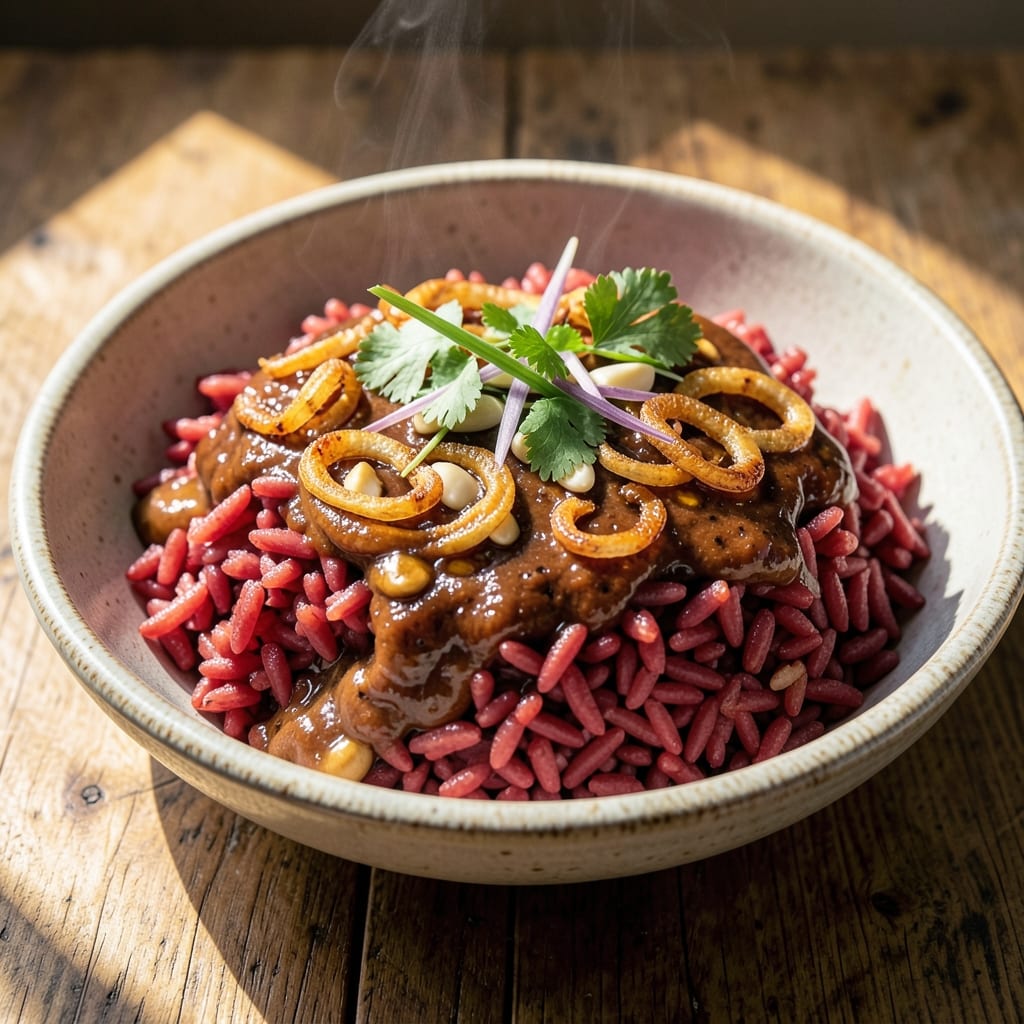
African red rice recipe transforms simple ingredients into a dish rich with smoky tomato, nutty peanut butter, and fragrant spices—this is the kind of meal that tastes like home. The secret lies in soaking the rice overnight, which unlocks its natural nutty flavor and prevents mushiness. I've perfected this version after years of testing, balancing West African techniques with simple pantry staples for restaurant-quality results.
What makes this recipe special is the depth of flavor built through slow simmering. The tomato paste caramelizes into a thick, smoky base, while peanut butter adds a velvety richness that rounds out the acidity. Fresh herbs like thyme and bay leaves infuse the rice with aromatic complexity, creating a dish that's both comforting and sophisticated. The rice itself develops a vibrant red hue and satisfyingly firm texture when cooked properly.
By the time you serve this dish, your kitchen will smell like a bustling African market, and every bite will deliver layers of flavor—smoky, sweet, nutty, and slightly tangy. The peanut butter isn't just an ingredient; it's the heart of this recipe, transforming what could be ordinary rice into something extraordinary. This is the kind of meal that pairs beautifully with grilled proteins or stands alone as a satisfying vegetarian dish.
Perfect for family dinners, potlucks, or when you want to impress guests with a dish that feels special yet approachable. The best part? Most of the work happens while you're doing other things—just stir occasionally and let the flavors develop. Let's get started on creating this flavorful centerpiece for your table.
Ingredients for african red rice
Pantry staples plus a few specialty items for bold African-inspired flavors.
| Ingredient | Amount | Notes |
|---|---|---|
| Long-Grain Red Rice 🍚 | 1 ½ cups | Uncooked, rinsed thoroughly |
| Natural Peanut Butter 🥜 | ½ cup | Smooth or crunchy preferred |
| Tomato Paste 🍅 | 2 tbsp | High quality, unsweetened |
| Vegetable Oil 🫒 | ¼ cup | For sautéing onions |
| Yellow Onion 🧅 | 1 whole | Medium sized, diced |
| Garlic Cloves 🧄 | 4 cloves | Fresh, minced |
| Dried Thyme 🌿 | 1 tsp | Or 1 tbsp fresh |
| Bay Leaves 🍃 | 2 whole | Fresh preferred |
| Ground Black Pepper 🌶️ | ½ tsp | Freshly ground |
| Salt 🧂 | 1 ½ tsp | Kosher or sea salt |
| Chicken or Vegetable Broth 💧 | 2 cups | Low sodium preferred |
| Lemon Juice 🍋 | 1 tbsp | Freshly squeezed |
| Cayenne Pepper 🔥 | ¼ tsp | Adjust for heat |
The peanut butter is non-negotiable here—natural, no added sugar is key. Trader Joe's or Smucker's work great, but anything labeled 'natural' will do. For the tomato paste, San Marzano is ideal but any quality brand works. The red rice? Look for 'uncooked' in the international section—it's not the same as regular rice. If you can't find it, jasmine rice works in a pinch, though the color won't be as vibrant. The bay leaves should be fresh if possible—they add a subtle floral note that dried leaves miss.
No peanut butter? Tahini or almond butter works, but the flavor will shift slightly. Short on tomato paste? Fresh tomato sauce works too—just simmer it down first. The cayenne can be skipped if you're sensitive to heat, but the dish loses some of its depth without it. For the broth, low-sodium is crucial—we're building layers of flavor, not masking them. The garlic and onion can be swapped for green onions if you're in a hurry, though they won't have the same depth. And if you're feeling fancy, toasted cumin seeds can be added with the onions for extra warmth.
This rice tastes even better the next day—make extra for leftovers. Keeps 4-5 days in the fridge, and freezes beautifully for up to 3 months. I like to portion it into containers with a sprinkle of fresh parsley on top—ready for quick lunches. The peanut butter sauce thickens as it cools, so if it seems too thin while cooking, simmer uncovered for 2-3 minutes to reduce it slightly. Store the peanut butter in the fridge after opening to prevent oil separation.
Why You'll Love This Recipe
- No Chopping Nightmare: Honestly, I dice that onion once and call it done—no fancy julienne skills required. The peanut butter and tomato paste do all the heavy lifting while you stir.
- Peanut Butter Magic: Between us, that natural peanut butter isn’t just for sandwiches. It melts into a rich, nutty base that makes every grain of red rice taste like a hug—savory, slightly sweet, and impossible to resist.
- Weeknight to Potluck: This rice is my secret weapon for lazy Tuesdays and Sunday dinners. Double the batch—it reheats beautifully, freezes like a dream, and still tastes fresh days later.
- Budget-Friendly Feast: A single jar of peanut butter and a bag of red rice stretch across multiple meals. I’ve fed my whole family plus leftovers for days without breaking the bank—minimal ingredients, maximum satisfaction.
Step-by-step instructions for African red rice
This smoky, nutty rice dish comes together in one pot with bold flavors you'll want to make again.
Sauté the Onions and Garlic
Heat the 0.25 cup vegetable oil in a medium pot over medium heat. Add the 1 whole yellow onion, diced, and cook for 5-6 minutes until softened and beginning to turn golden. You'll see the onions release their moisture and start caramelizing slightly—that's when you know they're ready for the next step.
Add the 4 cloves garlic cloves, minced, and cook for 30 seconds until fragrant. The kitchen should fill with that warm, garlicky aroma. Don't let it burn—garlic turns bitter fast. Remove the pot from heat for a moment if it starts to darken too quickly. This aromatic base forms the flavor foundation for everything else.
Build the Tomato-Peanut Sauce
Return the pot to medium heat and stir in the 2 tbsp tomato paste. Cook for 2 minutes until it darkens slightly and becomes sticky. This step develops the sauce's depth and removes the raw taste of the tomato paste.
Add the 0.5 cup natural peanut butter, stirring constantly until fully melted and smooth. The peanut butter will transform the sauce into a rich, velvety consistency. Add the 1 tsp dried thyme, 2 whole bay leaves, 0.5 tsp ground black pepper, 1.5 tsp salt, and 0.25 tsp cayenne pepper, mixing well to distribute all the spices evenly. The cayenne adds just a hint of heat that balances the richness.
Toast and Cook the Rice
Add the 1.5 cups long-grain red rice, stirring to coat each grain in the peanut-tomato mixture. Cook for 2 minutes, stirring constantly, until the rice grains become translucent at the edges. This toasting step prevents the rice from becoming mushy and adds nutty depth to the final dish.
Pour in the 2 cups chicken or vegetable broth, stirring gently to combine. Bring to a gentle boil, then reduce heat to low, cover the pot, and simmer for 25 minutes. The rice will absorb the liquid and cook through. Don't peek! Every time you lift the lid, you release steam and risk uneven cooking.
Finish with Lemon and Rest
After 25 minutes, remove the pot from heat and stir in the 1 tbsp lemon juice. The bright acidity cuts through the richness of the peanut butter and balances the flavors. Let the rice sit covered for 5 minutes to steam and finish cooking. This resting period allows the rice to absorb any remaining liquid and develop its final texture.
Fluff the rice gently with a fork, removing the bay leaves as you go. The final dish should have a rich, nutty aroma with hints of smoky tomato and a touch of spice. Serve immediately while still warm, with the flavors melding together perfectly in every bite.
Pro Tips For Making African Red Rice
- TOAST THE PEANUT BUTTER: Heat the peanut butter with the tomato paste and onions first—just 2-3 minutes on medium. I learned this the hard way: skipping this step makes the peanut butter taste raw and chalky, like you’re eating peanut butter-flavored glue. The oil in the peanut butter will bloom, deepening that nutty aroma that’s the soul of the dish.
- SAUTÉ ONIONS UNTIL GOLDEN: Don’t rush the onions—cook them in the oil until they’re a deep, golden brown, not just soft. I used to walk away, and the rice would taste dull. Five minutes of patience here means the peanut butter’s earthiness shines instead of competing with raw onion bite.
- USE TWICE THE WATER: Red rice absorbs less water than white rice, so use 2½ to 3 cups liquid per cup of rice (not 2). I burned a pot once trying to salvage mushy rice by adding more water—don’t be that person. Simmer uncovered until the liquid’s gone, then let it steam off-heat for 5 minutes.
- STIR IN PEANUT BUTTER LAST: Add the peanut butter after the tomato paste has cooked down and darkened—about 10 minutes in. Stirring it in too early makes the sauce split and look greasy. A splash of warm water or broth can help emulsify it if it resists, but less is better here.
Storing and reheating this dish
Fridge Storage Tips
Let your African red rice cool completely before storing—this prevents condensation that can make it soggy. Transfer to an airtight container (I love Pyrex glass containers) and refrigerate for up to 4 days. The peanut butter sauce thickens slightly as it cools, so give it a quick stir before reheating. Always store the peanut butter separately in the fridge after opening to prevent oil separation. 🥫
Freezer-Friendly Prep
For long-term storage, portion the rice into freezer-safe containers or heavy-duty freezer bags, leaving 1 inch headspace for expansion. Label with the date—this rice freezes beautifully for 3 months without losing its vibrant color or nutty depth. When ready to eat, thaw overnight in the fridge for even reheating. The texture stays firm if you avoid microwave reheating directly from frozen. ❄️
Stovetop Reheating
My preferred method! Transfer rice to a pot with 2 tablespoons water or broth, cover, and heat over low-medium heat for 10-12 minutes, stirring occasionally. The gentle heat prevents drying while reviving the peanut butter's creamy texture. For extra flavor, add a splash of lemon juice or a pinch of cayenne during reheating. 🔥
Microwave Method
For quick meals, spread rice evenly in a microwave-safe dish, cover with a damp paper towel, and heat on 50% power in 2-minute intervals, stirring between each. Add 1 tablespoon water if dry. Avoid high power—it turns rice rubbery. The peanut butter sauce may separate slightly; stir vigorously to re-emulsify. 💫
Leftover Magic
This rice tastes even better the next day as flavors meld! Store extra portions with a sprinkle of fresh parsley or cilantro to preserve color and aroma. For a quick breakfast, serve with scrambled eggs and hot sauce. The peanut butter's richness makes it surprisingly satisfying cold in salads or wraps. 💡
Nutrition facts
Frequently asked questions
Why does African red rice need soaking?
Soaking removes excess starch that makes rice mushy. For this recipe, rinse the rice thoroughly first, then soak for 30 minutes—it enhances the nutty flavor and improves texture. The red rice variety already has a firmer structure, but soaking ensures perfect grains every time.
Can I substitute peanut butter in this recipe?
Yes, but expect different flavors. Tahini or almond butter work best as alternatives, though they're nuttier. For a closer match, use 1/4 cup peanut butter + 1/4 cup tomato paste to maintain balance. Avoid sweetened nut butters—they'll alter the dish's savory profile.
What's the secret to preventing mushy rice?
Three key steps: toast the rice in the peanut sauce for 2 minutes before adding liquid, use low heat while simmering, and never lift the lid during cooking. The rice should absorb all liquid by 25 minutes. If it's still soupy, uncover and simmer uncovered for 2-3 minutes to evaporate excess moisture.
How can I make this vegetarian?
Use vegetable broth instead of chicken broth and add 1 cup cooked chickpeas or black-eyed peas during the final 10 minutes of cooking. For extra protein, stir in 1/2 cup crumbled tofu at the end. The peanut butter sauce provides enough richness to satisfy meat-eaters too.
Why does my rice turn out pale instead of red?
Red rice loses its color when overcooked or when the cooking liquid isn't acidic enough. Always use lemon juice at the end and avoid over-simmering. For deeper color, add 1/4 tsp turmeric when toasting the rice (it won't affect flavor). The rice should have a vibrant reddish-pink hue when done.