
Main Courses
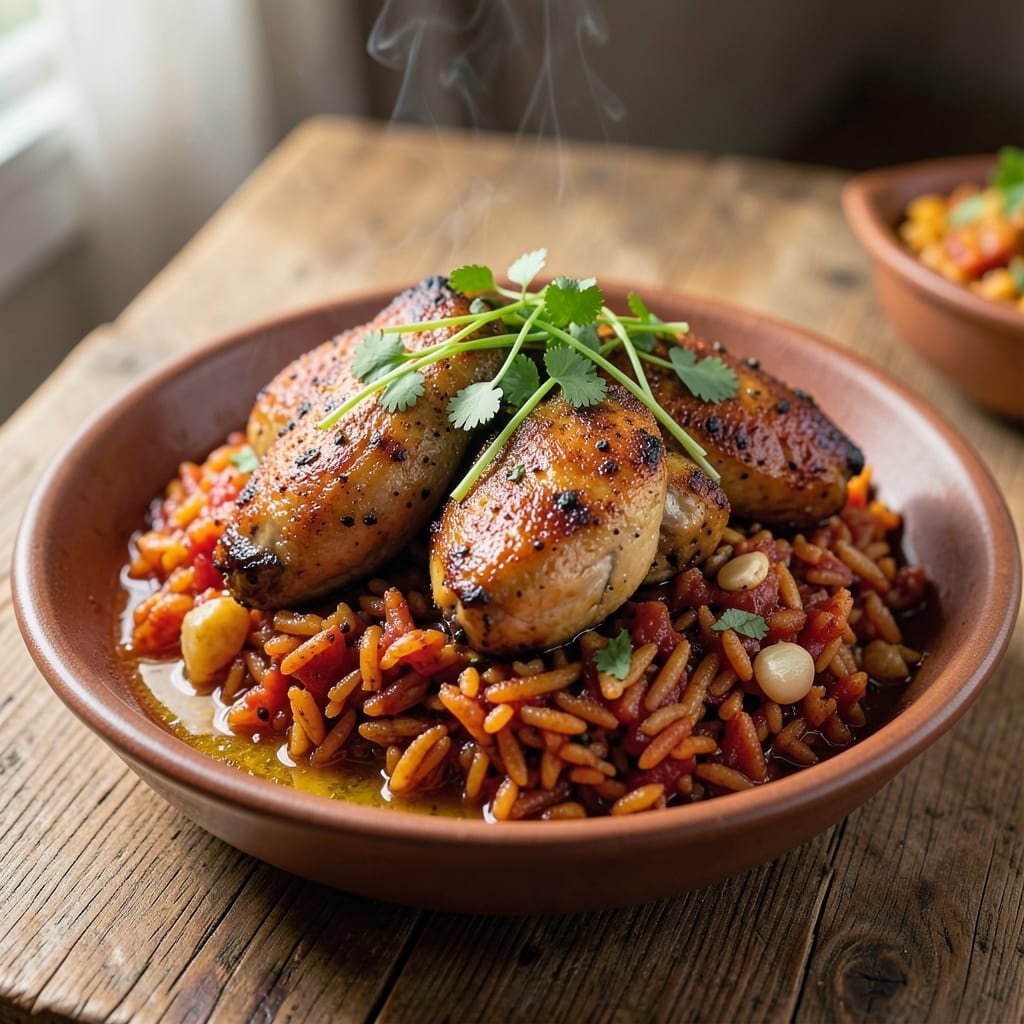
This African jollof rice and chicken recipe delivers the bold, spice-infused flavors that make it a West African staple. The secret lies in the layered tomato-based broth, where smoked paprika and thyme create that signature depth. I've perfected a one-pot method that keeps all those complex flavors intact while simplifying the process—no need for multiple pans or complicated techniques.
The chicken marinates overnight in a blend of garlic, ginger, and Scotch bonnet peppers, ensuring tender meat infused with heat. Meanwhile, the rice cooks in that rich tomato broth, absorbing all the smoky, savory goodness. This isn't just a meal—it's a celebration of West African flavors that'll have everyone reaching for seconds.
What makes this recipe special is how the spices develop over time, creating a harmony of sweet, smoky, and slightly spicy notes. The result is perfectly tender chicken, fragrant rice with just the right texture, and a sauce that clings to every bite. It's the kind of dish that transforms ordinary weeknights into special occasions.
The best part? This one-pot method means minimal cleanup while delivering restaurant-quality results. Whether you're cooking for family gatherings or simply craving bold flavors, this recipe delivers every time. Let's get started on creating your own flavor-packed jollof feast.
Ingredients for african jollof rice and chicken
Sixteen ingredients, one pot, unforgettable West African flavors waiting to unfold.
| Ingredient | Amount | Notes |
|---|---|---|
| Boneless Chicken Thighs 🍗 | 2 ½ lb | Skin-on for extra flavor |
| Long-Grain White Rice 🍚 | 2 cups | Uncooked, jasmine or basmati preferred |
| Tomato Paste 🍅 | ½ cup | Squeeze tube or canned |
| Smoked Paprika 🌶️ | 2 tbsp | Key for authentic smoky flavor |
| Fresh Ginger 🧄 | 2 tbsp | Grated, aromatic and fresh |
| Garlic Cloves 🧄 | 8 cloves | Minced, for deep flavor base |
| Scotch Bonnet Peppers 🌶️ | 2 whole | Seeds removed for less heat |
| Fresh Thyme 🌿 | ¼ cup | Chopped, stems removed |
| Dried Bay Leaves 🌿 | 2 whole | For subtle earthy depth |
| Chicken Bouillon Cubes 🧂 | 2 whole | Dissolved in 2 cups hot water |
| Vegetable Oil 🫒 | ¼ cup | For sautéing, neutral flavor |
| Salt 🧂 | 1 ½ tsp | Adjust to taste, kosher preferred |
| Black Pepper 🌶️ | ½ tsp | Freshly ground for best flavor |
| Onion 🧅 | 1 whole | Medium, diced for base |
| Fresh Cilantro 🌿 | ¼ cup | Chopped, for garnish |
The chicken thighs are the heart of this dish—skin-on for that crispy, flavorful crust. Look for plump, well-marbled thighs at the meat counter, not the pre-cut packages. Whole Foods or your local butcher often carry the best quality. The Scotch bonnet peppers are non-negotiable for authentic heat, but if you can't find them, Habanero peppers work in a pinch (use half the amount). Fresh ginger and garlic are essential—don't use powdered substitutes—they're the flavor foundation. For the smoked paprika, Penzeys or the bulk section at Trader Joe's have reliable options.
No fresh thyme? Dried works at half the amount, but it won't have the same depth. The tomato paste can be the squeeze tube kind from Trader Joe's—it's perfect for this recipe and lasts forever. If you're short on time, pre-minced garlic saves steps, though fresh is always better. The chicken bouillon cubes add umami depth—Knorr or Maggi are the go-to brands. For the rice, jasmine or basmati absorb the flavors beautifully, but long-grain white works fine. Want to reduce sodium? Use low-sodium bouillon and skip the added salt in the recipe.
This dish tastes even better the next day as the flavors meld—plan ahead. Store leftovers in an airtight container in the fridge for up to 4 days. The rice will dry out, so sprinkle a little water and microwave for 30 seconds to revive. For freezer storage, portion into single-serving containers and freeze for up to 3 months. Garnish with fresh cilantro right before serving—it brightens up the dish and adds that restaurant-quality finish. The one-pot method means easy cleanup, but soak the pot for 10 minutes before washing to remove stubborn sauce.
Why You'll Love This Recipe
- One-Pot Magic: I swear by this recipe—just brown the chicken, dump everything in one pot, and walk away. No chopping onions into oblivion or stirring every five minutes like some fancy stew.
- Smoky-Sweet Obsession: That smoked paprika and ginger? It’s the secret weapon—deep, slightly spicy, with a warmth that lingers. The tomato paste gives it this rich, jammy depth that makes every bite taste like a hug.
- Weeknight Wonder: Between us, this feeds six with minimal effort and costs less than takeout. Use leftovers for lunch the next day (they’re even better cold, honestly) or freeze portions for lazy Mondays.
- Budget Crowd-Pleaser: Chicken thighs stay juicy, rice stretches forever, and you’re using pantry staples. My college friends still ask for this—it’s the dish that proves you don’t need fancy ingredients for flavor that sticks.
Step-by-step instructions for African jollof rice and chicken
This vibrant one-pot dish delivers bold West African flavors with minimal cleanup.
Prepare the Chicken and Aromatics
Pat the 2.5 lb boneless chicken thighs dry with paper towels and season generously with 1.5 tsp salt and 0.5 tsp black pepper. In a large pot or Dutch oven, heat 0.25 cup vegetable oil over medium-high heat until shimmering. Add the chicken and cook for 5-6 minutes per side until golden brown and cooked through. Remove chicken and set aside.
In the same pot, add 1 whole diced onion and cook for 3-4 minutes until softened. Add 8 cloves minced garlic, 2 tbsp grated fresh ginger, and 2 whole Scotch bonnet peppers (seeds removed). Stir for 1 minute until fragrant and the onions begin to caramelize slightly. This aromatic base forms the flavor foundation of your jollof.
Build the Jollof Base
Reduce heat to medium and stir in 0.5 cup tomato paste, spreading it evenly across the bottom of the pot. Cook for 2-3 minutes, stirring constantly, until it darkens slightly and releases its deep flavor. Add 2 tbsp smoked paprika, 0.25 cup chopped fresh thyme, and 2 whole dried bay leaves. Stir for 1 minute to toast the spices and release their aromatic oils.
Pour in 2 cups hot water (from dissolving the 2 whole chicken bouillon cubes) and scrape up any browned bits from the bottom. This deglazing step captures all the flavor you've built so far. Bring the mixture to a gentle simmer for 5 minutes to let the spices meld together. The pot should smell rich and complex at this stage.
Combine and Simmer
Return the chicken to the pot along with any accumulated juices. Add 2 cups uncooked long-grain white rice, stirring gently to coat each grain with the flavorful liquid. The rice should absorb the liquid immediately. Bring the mixture to a boil, then reduce heat to low, cover tightly with a lid, and simmer for 20 minutes without disturbing it.
After 20 minutes, check the rice. It should be tender but still slightly firm in the center. If the liquid has completely absorbed, add ½ cup hot water to prevent burning. Continue simmering for another 10-15 minutes until the rice is fully cooked and the liquid is absorbed. The dish should have a slightly crispy, caramelized top layer when uncovered.
Rest and Serve
Remove from heat and let the jollof rest covered for 10 minutes. This resting period allows the flavors to fully meld and the rice to finish steaming. Fluff the rice gently with a fork, then garnish with 0.25 cup chopped fresh cilantro. The final dish should have a vibrant red-orange color from the tomato paste and spices, with tender chicken and perfectly cooked rice.
Serve immediately with a side of fried plantains or coleslaw for a complete West African meal experience. The one-pot method ensures all the flavors are perfectly balanced in every bite, with the chicken infused with the rich jollof sauce and the rice absorbing all the aromatic spices.
Pro Tips For Making African Jollof Rice And Chicken
- Sear Chicken Skin-Side Down: The crispy skin is what makes jollof rice feel special, but it’s easy to mess up. Pat the thighs very dry first, then sear them skin-side down in a hot pot with just a little oil—no crowding—until golden in 8-10 minutes. I used to skip this and ended up with sad, rubbery skin every time.
- Toast Tomato Paste First: Skip the raw paste—it makes the sauce taste flat. Heat your pot over medium-high, add 2 tablespoons of oil, then dump in the tomato paste. Let it bubble and darken for 3-4 minutes until it smells deeply caramelized. This builds flavor faster than stirring it in later.
- Use Ginger-Garlic Paste, Not Fresh: Fresh ginger burns before it releases its aroma, and mincing it takes forever. Buy a good-quality ginger-garlic paste (or make your own with 2 tablespoons each) and add it after the onions soften but before the tomato paste. It blends in smoothly without bitterness.
- Stir the Rice Often: Jollof rice turns out mushy when you let it sit undisturbed. Once the liquid starts simmering, stir the rice every 2-3 minutes for the first 10 minutes—yes, even if it feels annoying. This breaks up the starches and keeps the grains separate. I learned this after serving a pot where half the rice had turned to glue.
Common mistakes when making great african jollof rice and chicken
Overcooking the Rice
One of the biggest mistakes is letting the rice simmer too long after it's fully cooked. The goal is tender, separate grains—not mushy rice. I've seen many cooks walk away and forget about their pot, only to return to find a gluey mess. After the initial 20 minutes of simmering, check the rice frequently. If it's still firm in the center, cover and let it steam for another 5-10 minutes off the heat. The rice should be cooked through but still hold its shape. 🌶️
Skipping the Resting Time
Rushing to serve immediately after cooking is another common error. The 10-minute rest is crucial—it lets the rice finish steaming and the flavors meld together. I learned this lesson the hard way during my first jollof competition. When I served it too soon, the rice was undercooked and the sauce was uneven. Trust the process: cover that pot and let it sit. The patience pays off with perfectly infused rice.
Using the Wrong Heat Level
Many home cooks either boil jollof too vigorously or simmer it too gently. The key is a gentle simmer—you should see small bubbles at the edges, not a rolling boil. I recommend using a low heat setting once the rice is added. Too much heat can cause the rice to cook unevenly or even burn at the bottom. If you notice the sauce is reducing too quickly, lower the heat further or add a splash of hot water.
Neglecting the Aromatics
Some cooks rush through the garlic and ginger step, but this is where the magic happens. Those 8 cloves of garlic and 2 tbsp of ginger need time to bloom and release their flavors. Don't just toss them in and move on—let them cook for at least 1 minute until fragrant. I like to smell the pot at this stage; it should be aromatic and inviting. Skipping this step results in bland, underseasoned jollof.
Incorrect Rice-to-Liquid Ratio
The rice-to-liquid ratio is critical for perfect jollof. Using too much liquid can make the rice mushy, while too little results in dry, undercooked grains. For this recipe, the 2 cups of rice should be cooked with just enough liquid to reach the bottom of the pot when the rice is added. The chicken and spices contribute additional moisture, but don't add extra water unless necessary. If you're unsure, start with the recipe's measurements and adjust as needed.
Underseasoning the Chicken
Many cooks focus so much on the rice that they forget to properly season the chicken. Those 2.5 lb of chicken thighs need generous seasoning with 1.5 tsp salt and 0.5 tsp black pepper before cooking. I also recommend adding a pinch of smoked paprika to the chicken marinade for extra depth. Underseasoned chicken will taste bland compared to the rich, spicy rice. Don't skip this step—season it well before it hits the pot!
Nutrition facts
Frequently asked questions
Can I substitute boneless chicken thighs with breasts?
While you can use chicken breasts, they'll be much drier and less flavorful. For best results, stick with thighs—they stay juicier during the long cooking process. If you must use breasts, pound them to ½-inch thickness and add 1 tablespoon olive oil to the pot when returning them to the jollof sauce to prevent drying.
What makes this jollof recipe different from others?
This recipe emphasizes the authentic West African technique of building flavors in layers. The overnight marinade for the chicken and the careful toasting of spices like smoked paprika create that signature depth. Unlike many recipes, we use Scotch bonnet peppers (not habanero) and let the rice cook in the rich tomato broth rather than separate sauces.
How can I make this dish less spicy?
Remove the seeds and membranes from the Scotch bonnet peppers before using, and reduce the amount to just 1 pepper instead of 2. For extra mildness, substitute with 1 teaspoon mild paprika instead of smoked. Always taste the sauce before adding the rice—you can adjust heat levels at any point.
Can I prepare this jollof ahead of time?
Yes! This dish actually tastes better the next day as flavors meld. Cook it completely, then refrigerate in an airtight container for up to 4 days. Reheat gently on low heat with 2 tablespoons water per cup of rice, covered for 10 minutes. For freezer storage, portion into single servings and freeze for up to 3 months—thaw overnight in the fridge.
What's the secret to getting that perfect crispy bottom layer?
Use a heavy-bottomed pot or Dutch oven and cook the rice at low heat after the initial simmer. When the rice is nearly done, uncover for the last 5 minutes of cooking. This lets the top layer dry out slightly and develop that delicious caramelized crust. A splash of oil on the bottom before adding rice also helps!